



It's that time of the year again! No, not cybersecurity awareness month, Black October, of whatever they're calling it these days. It's the fourth installment of the Huntress Capture the Flag (CTF) competition.
Over the last three years this event has drawn fierce competition. This year's event was no different, with 2,715 registered users and 1,602 teams.
But what was different this year? If your answer isn't AI, you're likely living under a rock. By now, AI can chew through a classic CTF challenge before you have time to refill your coffee. So this year, we leaned into that reality and built the Huntress CTF around it: through a special AI Arena.
Participants could bring Claude, another model, or no AI at all, then decide how much they wanted to put their new tooling to work. We provided the stage, complete with tokens, so competitors could experiment without racking up a hefty bill.
But most importantly, our goal wasn't to just let models submit flags: we wanted to help players hone their skills around directing, validating, and working alongside AI during technical investigations. And, as we'll highlight below, participants came up with some pretty neat results.
But first, what's Capture the Flag again?
Capture the Flag, or CTF, is a cybersecurity competition built around solving technical challenges and finding a hidden "flag," usually a unique string of text. Players earn points by locating and submitting those flags. But getting there is the real work, and involves a good level of technical expertise, a little bit of creativity, and a lot of drive.
The Huntress CTF as a whole started with a simple question during cybersecurity awareness month planning four years ago: how do we give people more than another reminder to turn on MFA or stop reusing passwords? We wanted to create something people could actually dig into, learn from, and come back to throughout October. The answer was a CTF that brought defenders together for a full month of hands-on problem-solving.
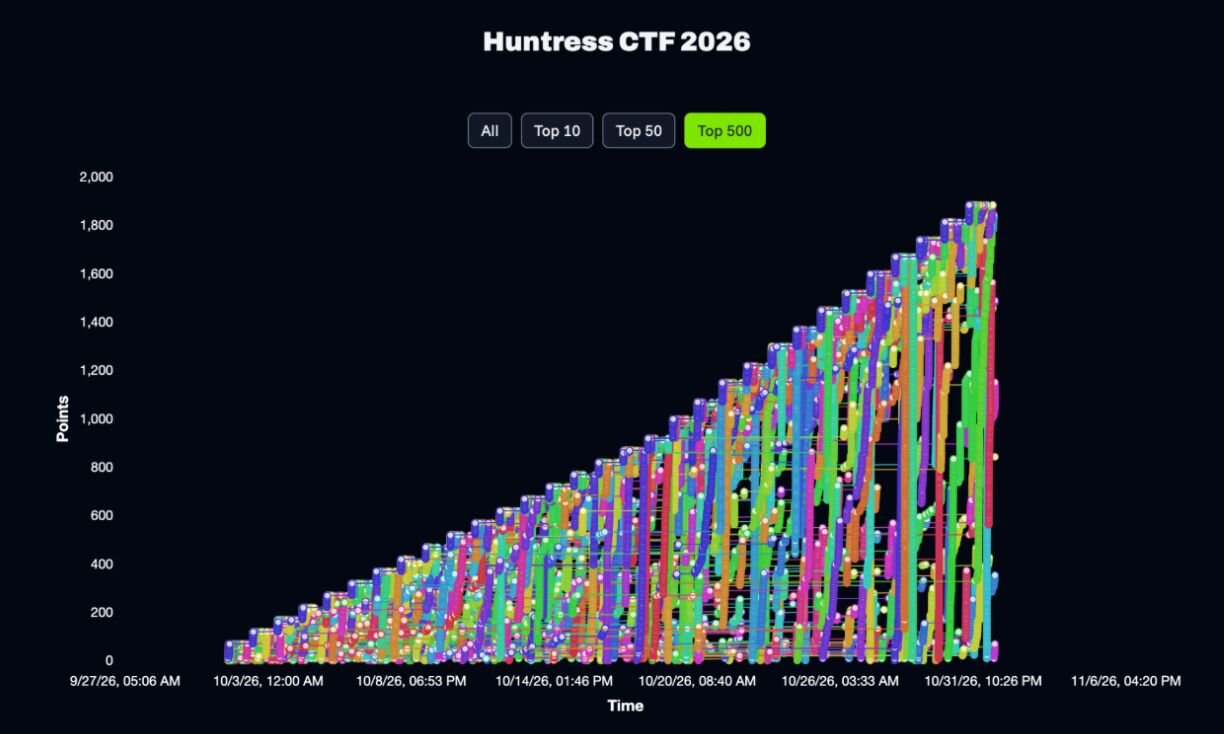
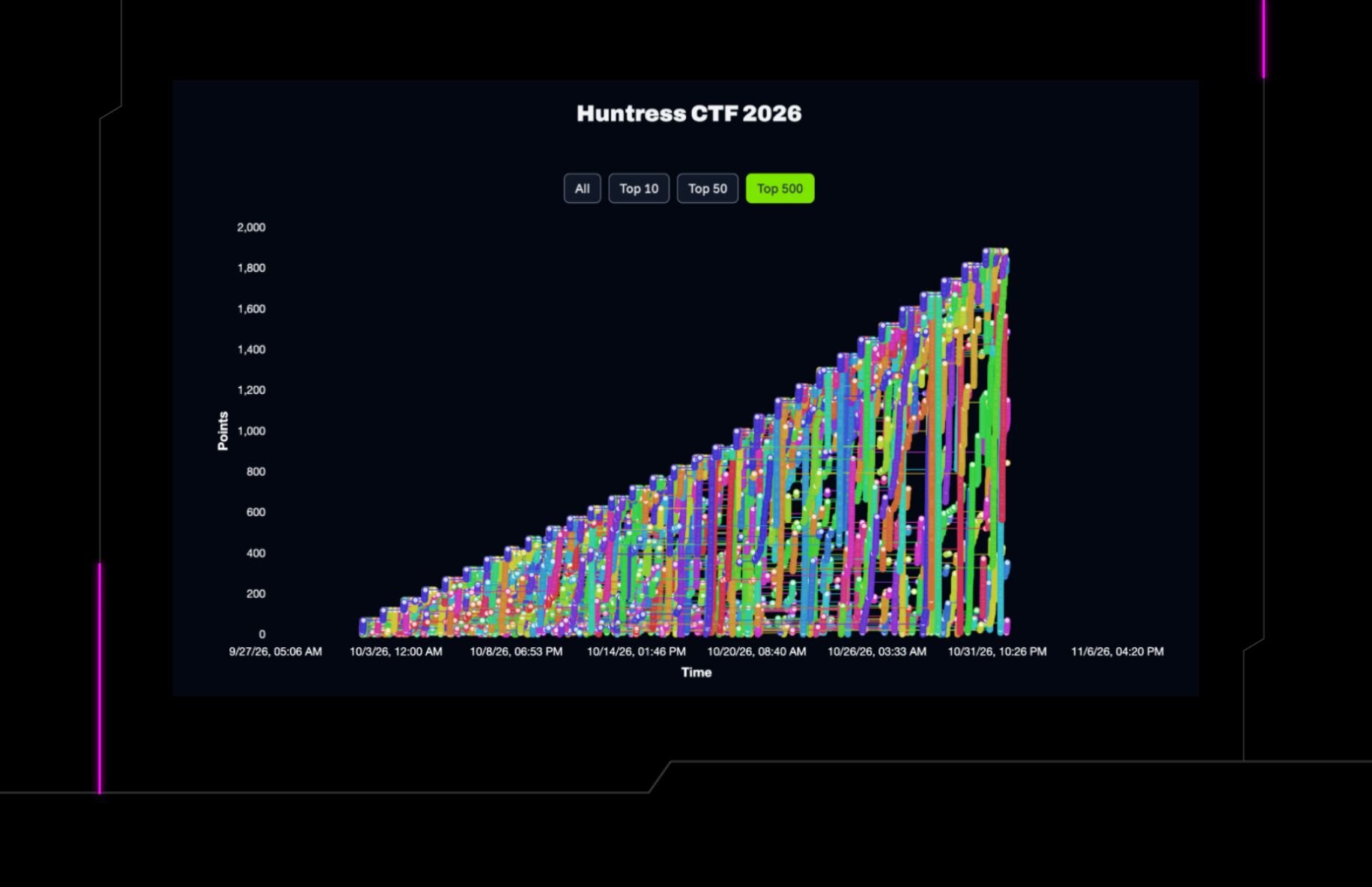
Figure 1: This year's CTF Leaderboard
A challenge might ask competitors to untangle an obfuscated malware sample, pull apart an executable, trace suspicious activity through logs, or spot the clue buried in a web application. The goal is for players to feel like they're working through the same kinds of puzzles that show up in real investigations.
CTFs are a useful place to build technical instincts without the pressure of a live incident. They reward persistence, curiosity, and the willingness to change course when one idea goes nowhere. Some people compete for points, prizes, and a place on the leaderboard. Others are there to sharpen their skills and learn from the community.
How does AI change the whole concept of CTF?
Teams are increasingly using AI models in CTFs to make sense of unfamiliar code, test ideas, and automate routine analysis. Some competitions now even put autonomous agents on the scoreboard.
This year, Huntress fully leaned into the use of AI; but we tried to do so tactfully. While AI is changing CTF competitions, it hasn't made human competitors obsolete. AI models can help a team get unstuck or move through routine analysis, but it doesn't guarantee a flag. AI tools can still misread a challenge, produce broken code, or confidently send players down the wrong path. The strongest use is often collaborative, with a human operator making the judgement calls, bringing important context into the challenge, and verifying information.
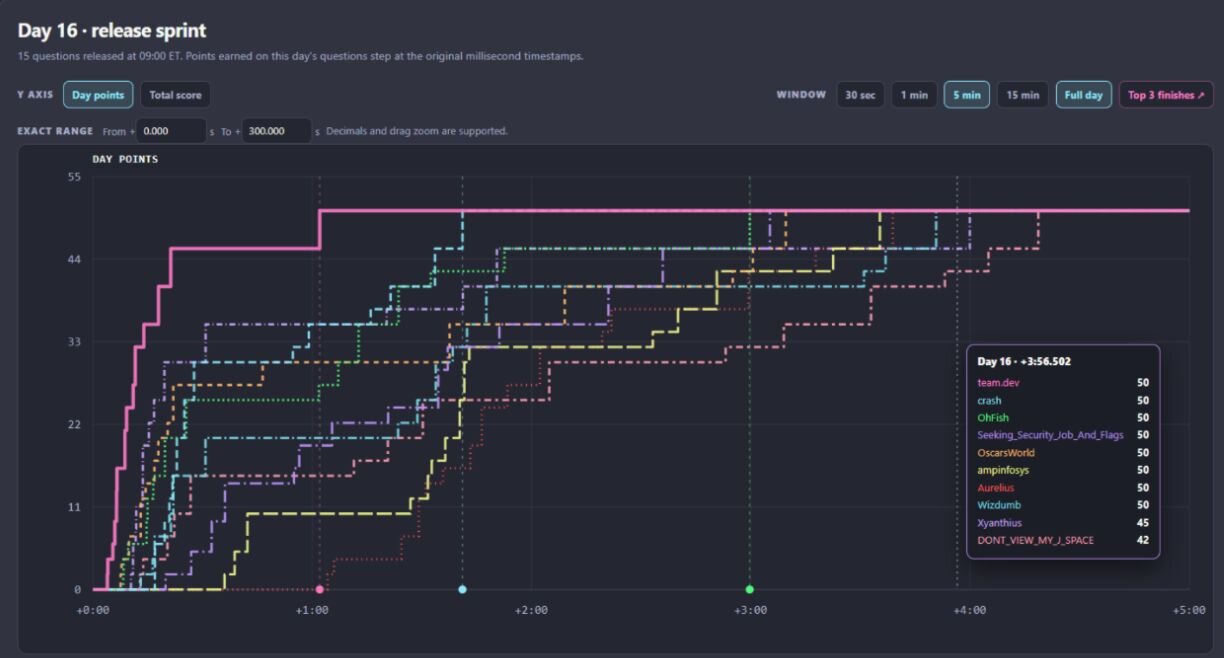
Figure 2: A snippet from a participant's (team.dev) custom scoreboard tracking tiny timing differences between their solves and submissions and those of other teams
As one way to help players see the speed at which teams were solving challenges, we included a "Hall of Fame" that would list every player's fastest solve times in the "Time Trial" mode. The aim here was to encourage players to optimize their engines even more.
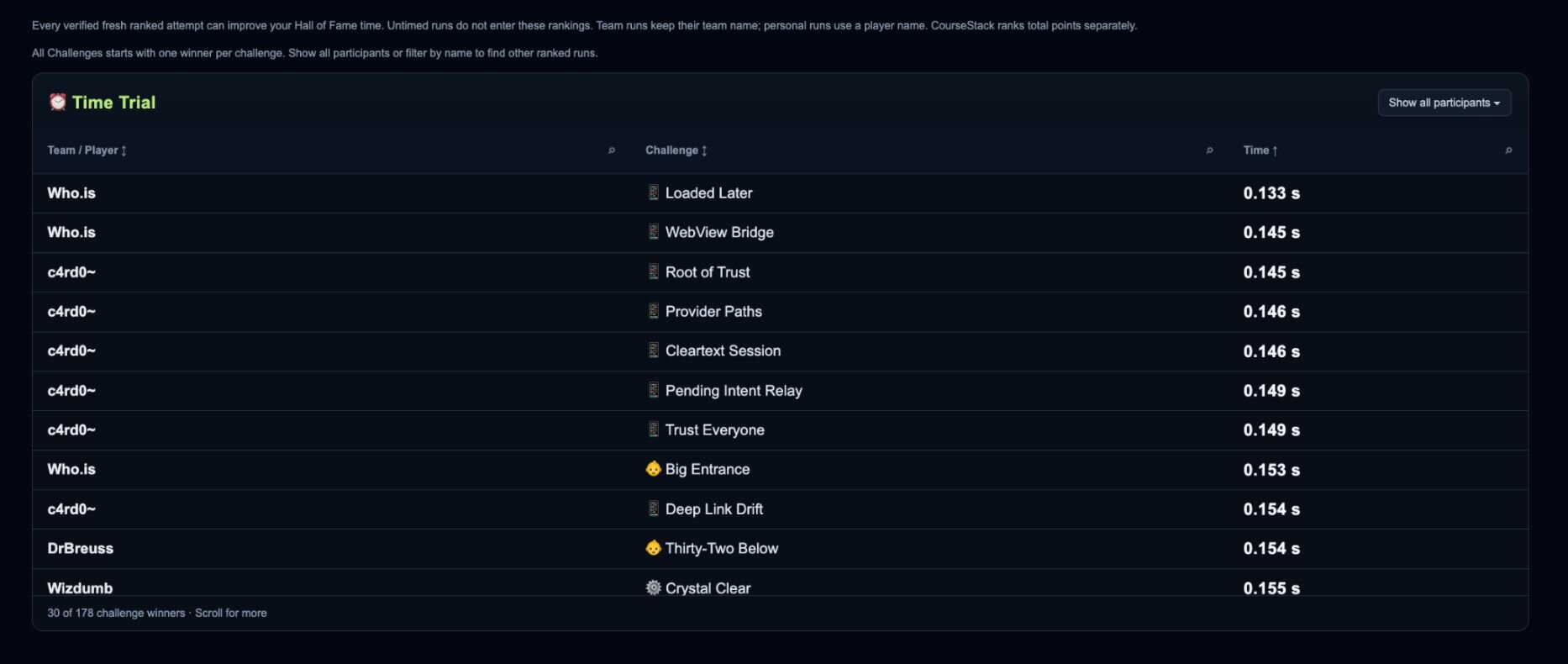
Figure 3: "Time trial" mode showing Hall of Fame speeds
Highlights from Huntress Capture the Flag 2026
This year's competition featured hands-on malware analysis, threat hunting, and other exercises based on real-world malware samples, CVEs, and active exploits. A few of our favorite challenges included:
SHA1-Hulud: "SHA1-Hulud" (by Nordgaren) is a reverse-engineering CTF challenge. Solvers got one password-protected ZIP with a single executable, and had to reconstruct a runtime-generated flag while working around anti-debugging and self-modifying code.
In this challenge, the flag wasn't encrypted anywhere in the binary: only a chain of SHA-1 "mined" nonces were stored, and replaying the hash chain at runtime would regenerate the bytes.
Most classic reverse engineering shortcuts (like static string extraction, breakpoints, or memory dumps) were purposefully blocked. Instead, solvers had to look at the bigger picture of the entire key-derivation pipeline and reproduce it without disturbing the program.
Framework Roulette: This was a multi-stage web security CTF challenge. Players had to find and exploit a different vulnerability in each of six live applications, adapting across several frameworks and languages.
Framework Roulette served as the CTF Web Track's final exam, bringing the month's bug classes together in one ranked challenge. As seen in Figure 4, each player tackled six different stacks, each hiding a different flaw.
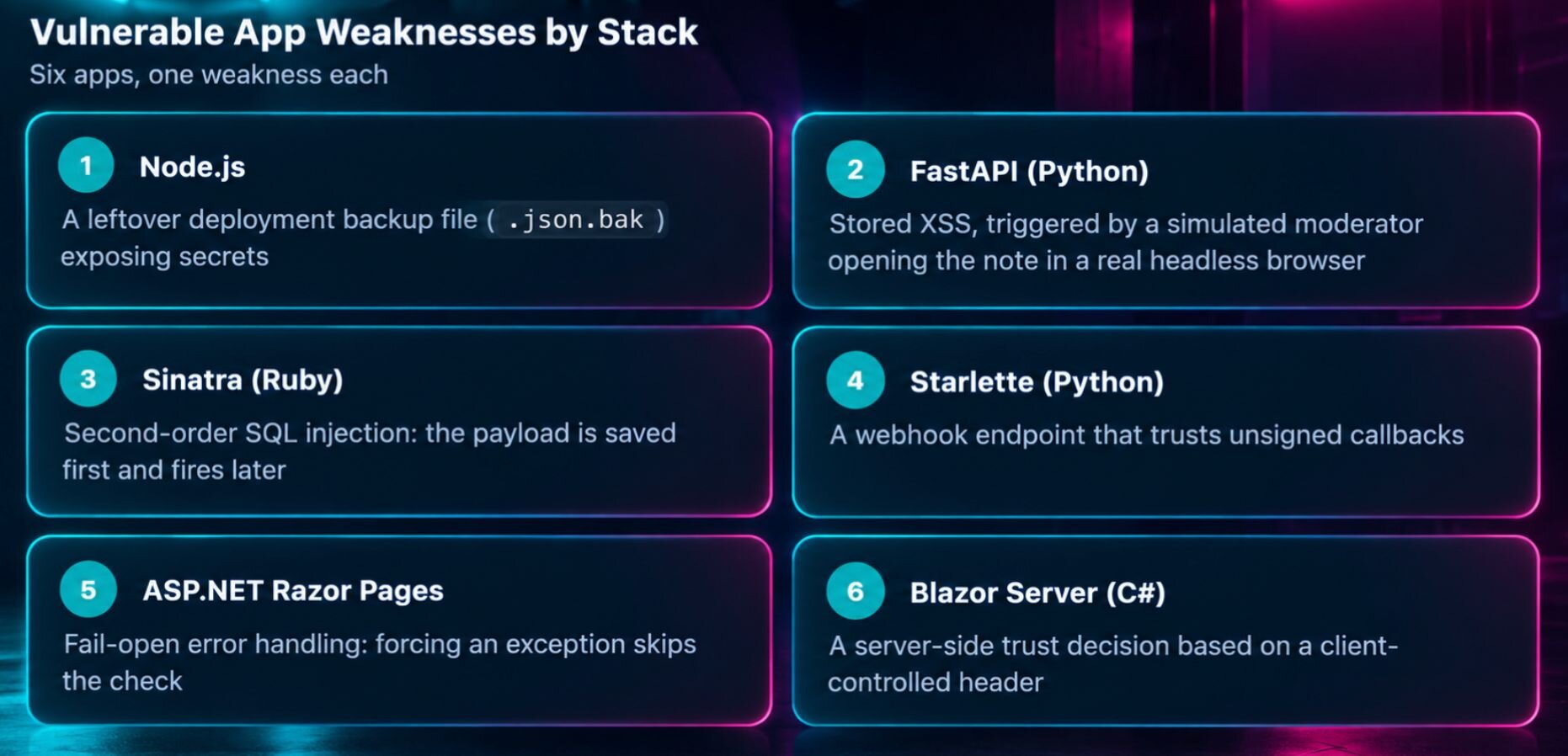
Figure 4: Each of the vulnerable apps with different weaknesses in the Framework Roulette challenge
Each app yielded a flag fragment, which players had to assemble in order. The difficulty here came from having to adapt quickly.
Unique Write-ups This Year: Another interesting part of the AI Arena was seeing competitors document not just their answers, but the systems they built to reach them. Those write-ups became useful extensions of the CTF itself: they gave other players a way to compare approaches, revisit challenges after the event, and learn from the tradeoffs behind each solve. Here are some write-ups that stood out:
Integris even created a cool video on the Sha1-Hulud challenge:
Together, these player-created resources show what made this year's format different. The AI Arena rewarded speed and automation, but the strongest teams also built durable workflows, checked their results, and shared what they learned with the wider CTF community.
A successful CTF year
Thanks to everyone who played Huntress CTF 2026 and helped make this year's competition such a lively place to learn, experiment, and compete. The AI Arena showed that new tools can change how quickly we work, but curiosity, careful validation, and sharing what you learn still make the difference. From creative solutions to detailed player writeups, the community made this CTF more than a leaderboard. We're grateful you joined us, and we're already looking forward to building on what we learned together next year.