


Acknowledgments: Special thanks to Ben Berenstein for his contributions to this write-up.
Operational resilience is a team's ability to keep the business moving when something breaks, whether that's an attacker, an outage, or someone calling in sick. Ben Bernstein, Cybersecurity Advisor Manager at Huntress, helps organizations build that ability before they need it. In this blog, he breaks down what separates a plan that sounds good from one that's proven to stop an incident from becoming more damaging than it needs to be.
The five steps of operational resilience
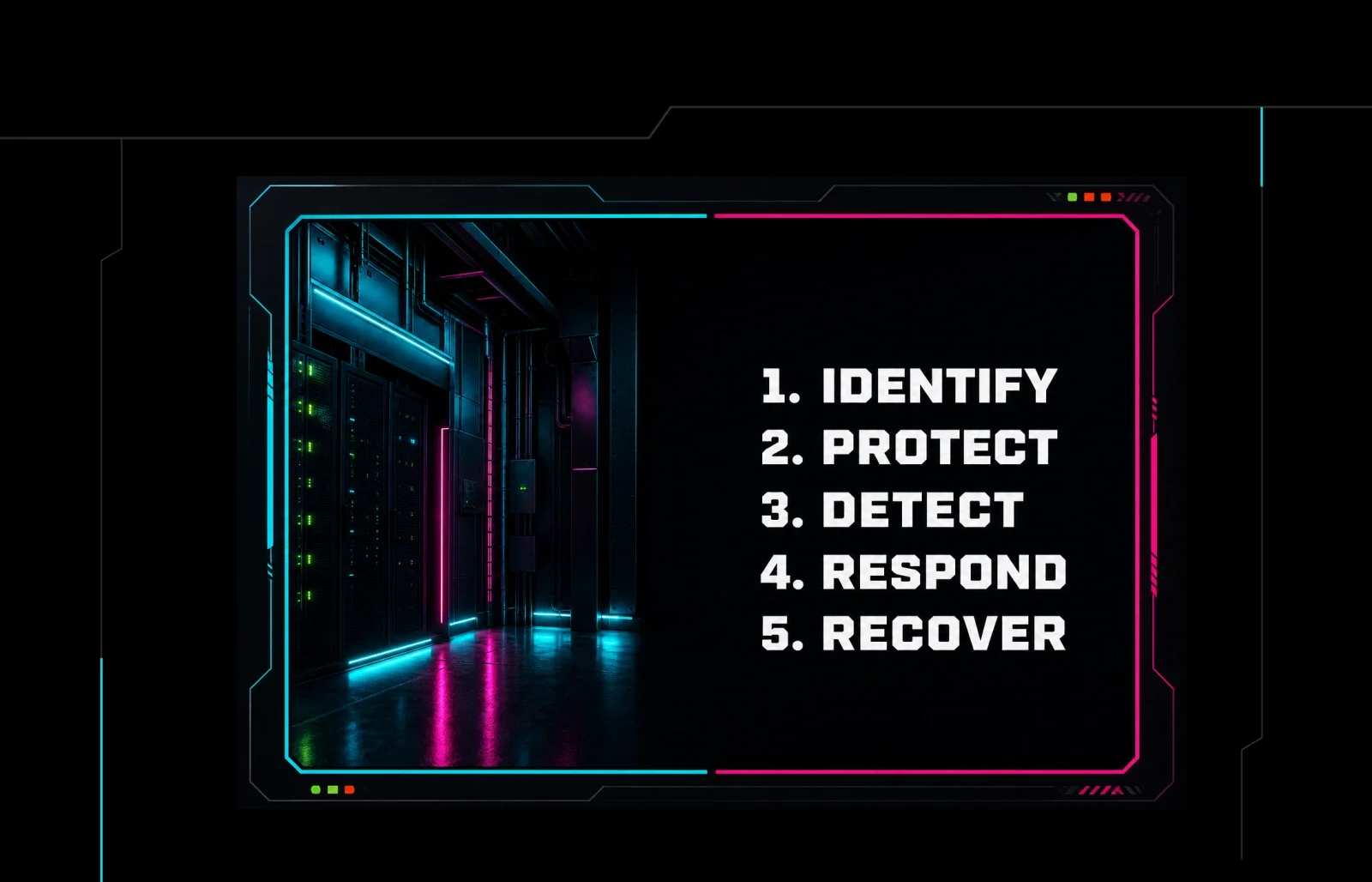
The clearest definition of operational resilience aligns directly with NIST's framework:
Identify. You can't defend an asset you don't know exists, and every step you take later depends on your accurate inventory count.
Protect. Secure the layer of controls, permissions, firewalls, and antivirus that keeps attackers out to begin with.
Detect. Assume attackers will get in, so watch for behavior that doesn't look normal for the business.
Respond. Contain the threat before it spreads to other systems.
Recover. Restore backups, check what else an attacker may have touched, and close the loop before the business confirms the incident is over.
Operational resilience shows up on ordinary days as much as during an attack. If someone calls in sick and no one else knows how to run a process tied to their login, that's the same kind of gap a breach would potentially expose.
The most common resilience gap
The most common resilience gap is like a '90s flashback: deploy a firewall with some antivirus software, then assume the perimeter is secure.
But as the cybercrime barrier to entry continues to drop, the safer bet now is to assume when, not if, an attacker gets into your environment. Teams that build around that assumption invest in ongoing threat hunting and 24/7 monitoring across endpoint, identity, network, and cloud. Teams that fall short have longer dwell times, meaning the gap between when an attacker gets in and when someone notices is longer than it needs to be.
Operational resilience is a business plan
Incident response is fundamentally a business plan: who gets notified inside the company, who talks to customers, and whether legal or the cyber insurance carrier needs to be looped in, and in what order. Companies that map this out ahead of time have an answer ready to go. The alternative is running around in a frenzy, dividing attention among every urgent decision at once, at exactly the moment you can least afford to figure out who's supposed to call whom.
Having the plan is only half of it, though. The real difference shows up in teams that also pressure test it until it becomes muscle memory: they know where the backup environment lives, what it takes to spin it up, who has access, and how to tell customers and employees what to expect during downtime. Finding a gap during a scheduled test costs nothing, but finding it live, mid-incident, can cost the business everything.
Operational resilience has a shelf life
Plans expire quietly if nobody pays attention to them. A plan written several years ago has usually outlived its own accuracy: servers get migrated, insurance carriers change and bring different approved forensic firms with them, department heads turn over, and the cell numbers listed for a 2am call might not even go through. Plans may also predate most organizations' use of AI, and that alone has reshaped what an attack surface looks like. The fix is unglamorous but specific: assign someone to audit the plan on a fixed schedule.
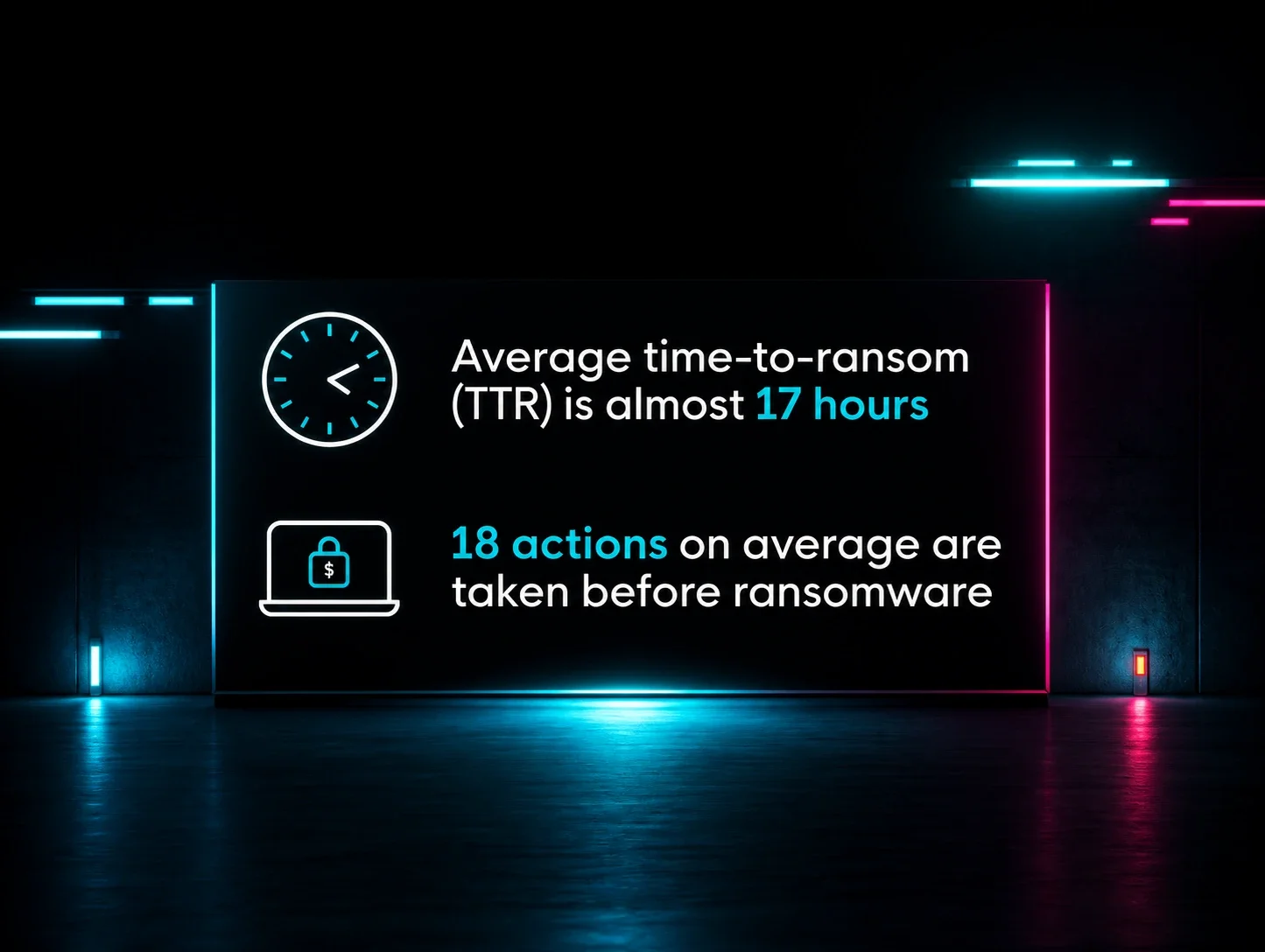
This all points back to mean time to detect (MTTD) and mean time to respond (MTTR). Tracking these metrics over time turns operational resilience into something measurable that you can report to stakeholders, a way to see whether the business is actually getting faster at spotting and shutting down threats, or drifting the wrong way.
Buying a tool doesn't buy resilience
In practice, readiness shows up first as clear communication. The best-prepared teams have a defined flow of information. This is led by a clear incident commander while the security team knows exactly what it owns, and it translates what's happening in the logs into clear updates that other business leaders, and eventually customers, can act on.
Getting there takes more than a plan sitting in a shared drive. It takes testing that actually proves the plan works, whether that's a tabletop exercise walking the non-technical side of the business through a scenario in a conference room, or a purple or red team simulating a real attack against the technical side.
Buying a security product gives you a tool. Resilience comes from the people who know how to read the output and operationalize it.
Where operational resilience starts
Identify, the first of the five pillars, is where building operational readiness actually starts: a full inventory of every asset. Whether it's a physical asset, like an office or a satellite location, or a digital one sitting in the cloud, you have to know it exists before you can decide it's worth protecting.
From there, it's a business-focused exercise to figure out and prioritize the crown jewels. These are the specific functions and processes the business can't run without. For example, a hospital relies on availability to keep the systems up so patient care doesn't stop. A wealth management firm leans on confidentiality and integrity to protect the proprietary algorithms it uses to make trades from being read or altered.
Figure out what the business can't survive losing, then build the technology and process around that. That ranking is what the other four pillars build on, since protecting, detecting, responding, and recovering all work backward from whatever you decided couldn't be lost in the first place.
Get more security resilient this week
Bernstein's advice: don't try to boil the ocean. Pick one small, specific exercise and run it.
Confirm that a backup can actually restore your files, and not just that one exists. Pick one file or system and block off time to test restoring it this week.
Look for the "hit by a bus" problem in the incident response plan: any step that only works if one specific person is available to make the call or knows which vendor to phone.
Run a free Atomic Red Team exercise. It's an open-source framework aligned to MITRE ATT&CK that simulates a real attack playbook, like ransomware or credential theft, so the team can see whether their tools catch it and whether they know what to do next.
Any one of these options can be as small or as large as your business is ready for.
Your operational resilience checklist
Turning a plan into muscle memory starts with running through it.
Here's where to start:
Know what you're protecting
Inventory every asset, physical and digital. You can't defend what you haven't counted.
Name your crown jewels: the specific data, systems, or processes the business can't survive losing.
Rank those crown jewels by what would actually hurt the business most, not by what's easiest to secure.
Build outward from the crown jewels instead of trying to protect everything equally.
Prove the plan works
Restore a backup for real, on a timer. An untested backup is just a promise.
Read through the incident response plan and flag every step that depends on one specific person being reachable, from making the go/no-go call to knowing which vendor to phone.
Name an incident commander and confirm the team knows the chain: who talks to legal, who talks to insurance, who talks to customers, and in what order.
Run a tabletop exercise so the non-technical side of the business finds its gaps in a conference room, not during a live incident.
Schedule a red team or purple team exercise that simulates a real attacker playbook.
Keep the plan current
Assign someone to audit the plan on a fixed schedule.
Update every phone number, escalation contact, and approved vendor.
Confirm your cyber insurance carrier's current forensic firm and legal contacts.
Account for how AI has changed your attack surface since the plan was last written.
Measure it
Track mean time to detect (MTTD) and mean time to respond (MTTR) over time.
Report MTTD and MTTR to stakeholders to show whether the business is actually getting faster at spotting and shutting down threats.
Ready to put this into practice? Start a free Huntress trial today and get enterprise-grade security backed by our 24/7 human-led AI-Centric SOC.