Don’t let overlooked obligations become incidents. Learn how.
Utility navigation bar redirect icon
Portal LoginSupportBlogContact
Search
Close search
Huntress Logo in Teal
  • Platform Overview
    Managed EDR

    Get full endpoint visibility, detection, and response.

    Managed EDR

    Get full endpoint visibility, detection, and response.

    Managed ITDR: Identity Threat Detection and Response

    Protect your Microsoft 365 and Google Workspace identities and email environments.

    Managed ITDR: Identity Threat Detection and Response

    Protect your Microsoft 365 and Google Workspace identities and email environments.

    Managed SIEM

    Managed threat response and robust compliance support at a predictable price.

    Managed SIEM

    Managed threat response and robust compliance support at a predictable price.

    Managed Security Awareness Training Software

    Empower your teams with science-backed security awareness training.

    Managed Security Awareness Training Software

    Empower your teams with science-backed security awareness training.

    Managed ISPM

    Continuous Microsoft 365 and identity hardening, managed and enforced by Huntress experts.

    Managed ISPM

    Continuous Microsoft 365 and identity hardening, managed and enforced by Huntress experts.

    Managed ESPM

    Proactively secure endpoints against attacks.

    Managed ESPM

    Proactively secure endpoints against attacks.

    Integrations
    Integrations
    Support Documentation
    Support Documentation
    See Huntress in Action

    Quickly deploy and manage real-time protection for endpoints, email, and employees - all from a single dashboard.

    Huntress Cybersecurity
    See Huntress in Action

    Quickly deploy and manage real-time protection for endpoints, email, and employees - all from a single dashboard.

    Huntress Cybersecurity
  • Threats We Stop
    Phishing
    Phishing
    Business Email Compromise
    Business Email Compromise
    Ransomware
    Ransomware
    Infostealers
    Infostealers
    View Allright arrowView Allright arrow
    Industries We Serve
    Education
    Education
    Financial Services
    Financial Services
    State and Local Government
    State and Local Government
    Healthcare
    Healthcare
    Law Firms
    Law Firms
    Manufacturing
    Manufacturing
    Utilities
    Utilities
    View Allright arrowView Allright arrow
    Tailored Solutions
    MSPs
    MSPs
    Resellers
    Resellers
    SMBs
    SMBs
    Compliance
    Compliance
    What Gets Overlooked Gets Exploited

    Most days, nothing happens. But one day, something will.

    Huntress Cybersecurity
    Cybercriminals Have Evolved

    Get the intel on today’s cybercriminal groups and learn how to protect yourself.

    Huntress Cybersecurity
  • Pricing
  • Community Series
    The Product Lab

    Shape the next big thing in cybersecurity together.

    The Product Lab

    Shape the next big thing in cybersecurity together.

    Fireside Chat

    Real people. Real perspectives. Better conversations.

    Fireside Chat

    Real people. Real perspectives. Better conversations.

    Tradecraft Tuesday

    No products, no pitches – just tradecraft.

    Tradecraft Tuesday

    No products, no pitches – just tradecraft.

    _declassified

    Exposing hidden truths in the world of cybersecurity.

    _declassified

    Exposing hidden truths in the world of cybersecurity.

    Resources
    Upcoming Events
    Upcoming Events
    Ebooks
    Ebooks
    On-Demand Webinars
    On-Demand Webinars
    Videos
    Videos
    Whitepapers
    Whitepapers
    Datasheets
    Datasheets
    Cybersecurity Education
    Cybersecurity 101
    Cybersecurity 101
    Cybersecurity Guides
    Cybersecurity Guides
    Threat Library
    Threat Library
    Real Tradecraft, Real Results
    Real Tradecraft, Real Results
    2026 Cyber Threat Report
    2026 Cyber Threat Report
    The Huntress Blog
    When Cybersecurity and Cyber Insurance Don’t Quite Connect—And What We’re Doing Differently with Acrisure
    Huntress Cybersecurity
    When Cybersecurity and Cyber Insurance Don’t Quite Connect—And What We’re Doing Differently with Acrisure
    Huntress Cybersecurity
    How EvilTokens Turbocharges Old School Phishing with AI
    Huntress Cybersecurity
    How EvilTokens Turbocharges Old School Phishing with AI
    Huntress Cybersecurity
    “Service Agreement” Email Kickstarts Rogue RMM Tiflux Triple Threat
    Huntress Cybersecurity
    “Service Agreement” Email Kickstarts Rogue RMM Tiflux Triple Threat
    Huntress Cybersecurity
  • Why Huntress

    Go beyond AI in the fight against today’s hackers with Huntress Managed EDR purpose-built for your needs

    Huntress Cybersecurity
    Why Huntress

    Go beyond AI in the fight against today’s hackers with Huntress Managed EDR purpose-built for your needs

    Huntress Cybersecurity
    The Huntress SOC

    24/7 Security Operations Center

    The Huntress SOC

    24/7 Security Operations Center

    Reviews

    Why businesses of all sizes trust Huntress to defend their assets

    Reviews

    Why businesses of all sizes trust Huntress to defend their assets

    Case Studies

    Learn directly from our partners how Huntress has helped them

    Case Studies

    Learn directly from our partners how Huntress has helped them

    Community

    Get in touch with the Huntress Community team

    Community

    Get in touch with the Huntress Community team

    Compare Huntress
    Bitdefender
    Bitdefender
    Blackpoint
    Blackpoint
    Breach Secure Now!
    Breach Secure Now!
    Crowdstrike
    Crowdstrike
    Datto
    Datto
    SentinelOne
    SentinelOne
    Sophos
    Sophos
    Compare Allright arrowCompare Allright arrow
  • HUNTRESS HUB

    Login to access top-notch marketing resources, tools, and training.

    Huntress Cybersecurity
    HUNTRESS HUB

    Login to access top-notch marketing resources, tools, and training.

    Huntress Cybersecurity
    Partners
    MSPs

    Join our partner community to deliver expert-led managed security.

    MSPs

    Join our partner community to deliver expert-led managed security.

    Resellers

    Partner program designed to grow your cybersecurity business.

    Resellers

    Partner program designed to grow your cybersecurity business.

    Tech Alliances

    Driving innovation through global technology Partnerships

    Tech Alliances

    Driving innovation through global technology Partnerships

    Microsoft Partnership

    A Level-Up for Your Business Security

    Microsoft Partnership

    A Level-Up for Your Business Security

  • Press Release
    Huntress Announces Collaboration with Microsoft to Strengthen Cybersecurity for Businesses of All Sizes
    Huntress Cybersecurity
    Press Release
    Huntress Announces Collaboration with Microsoft to Strengthen Cybersecurity for Businesses of All Sizes
    Huntress Cybersecurity
    Our Story

    We're on a mission to shatter the barriers to enterprise-level security.

    Our Story

    We're on a mission to shatter the barriers to enterprise-level security.

    Newsroom

    Explore press releases, news articles, media interviews and more.

    Newsroom

    Explore press releases, news articles, media interviews and more.

    Meet the Team

    Founded by former NSA Cyber Operators. Backed by security researchers.

    Meet the Team

    Founded by former NSA Cyber Operators. Backed by security researchers.

    Careers

    Ready to shake up the cybersecurity world? Join the hunt.

    Careers

    Ready to shake up the cybersecurity world? Join the hunt.

    Awards
    Awards
    Contact Us
    Contact Us
  • Portal Login
  • Support
  • Blog
  • Contact
  • Search
  • Get a Demo
  • Start for Free
Portal LoginSupportBlogContact
Search
Close search
Get a Demo
Start for Free
HomeBlog
Strong Stack. Strong Team. Real Security Resilience.
Published:
May 15, 2026

Strong Stack. Strong Team. Real Security Resilience.

By:
Beth Robinson
Share icon
Glitch effectGlitch effectGlitch effect

Key Takeaways

  • A resilient security stack only goes so far on its own. Real resilience comes from pairing the right tools with a security program that gives teams clear ownership, cleaner handoffs, and confidence under pressure.

  • More tools don’t always create more protection. Huntress found that 64.1% of teams say at least 25% of their alerts are noise, and 24.8% say more than half of their alerts fall into the meaningless-noise category, which makes it harder to spot what matters and act fast.

  • Identity has become one of the most important places to watch. Attackers increasingly rely on valid access, and 26.5% of teams say identity-based attacks are the threat category they feel least prepared to defend against.

  • Lean teams need clarity as much as coverage. Huntress survey data shows many organizations are operating with small or shared teams, which is why ownership, prioritization, and AI that reduces cognitive load matter so much in day-to-day defense.


Modern security teams carry a constant mix of pressure. They are balancing risk, cost, visibility, and response while trying to build a stack they can actually rely on.

There is no shortage of tools promising stronger protection, cleaner visibility, and tighter control across the environment. Choosing the right mix for your organization’s risk profile and budget is where the real challenge begins. A dependable security stack still matters. It helps protect customer data, support compliance efforts, and keep identities, endpoints, and systems from becoming easy targets.

The bigger conversation is resilience.

Resilience lives in the technology and in the team using it. A resilient security stack helps teams find threats early, limit damage, and reduce operational drag. It supports the way real security teams work when the pressure is on.

When a stack creates too much noise, too many handoffs, or too much uncertainty around the next step, it slows the people who need to move fast.

That is why the strongest security programs pair the right stack with a team that can stay clear-headed, make decisions quickly, and respond with confidence when prevention falls short.


What is a security stack, and why does it need to be resilient?

A security stack should help your team spot threats sooner, respond faster, and keep operations moving when attackers slip through.

A security stack is the mix of software, tools, technologies, and processes that work together to defend an organization from cyber threats. It is the foundation that helps protect sensitive data, critical systems, and users through layers of visibility, detection, control, and response.

A reliable stack is built with purpose. It should help detect threats early, reduce downtime during incidents, and limit the kind of inefficiencies that drain time and focus. That matters even more now because attackers often avoid loud break-ins. They use valid credentials, abuse sessions, and blend into everyday behavior. A resilient stack has to support speed, visibility, and response across that reality.


The dangers of overloading your security stack

More tools can create more friction when they add noise, overlap, and complexity to your team’s day.

Expanding your security stack without a clear purpose can weaken your program instead of strengthening it. More tools can mean more dashboards, more duplicate alerts, and more context-switching for teams that already have plenty to manage.

Picture an analyst bouncing between products that are all describing the same suspicious activity in slightly different ways. That kind of clutter slows response, drains attention, and gives attackers more time to move.

The survey data backs that up. Huntress found that 64.1% of teams say at least 25% of their alerts are noise, and 24.8% say more than half of their alerts fall into the “meaningless-noise” category. That kind of overload makes it harder to spot what matters, validate what is real, and move with confidence.

The strongest stacks sit in the sweet spot between strong coverage and day-to-day usability. They give teams the visibility they need without burying them in extra work.


A resilient security stack needs a resilient security team

Technology can surface the signal. Resilience depends on the people, workflows, and ownership that turn visibility into action.

This is the part many organizations miss.

You can have endpoint protection, identity controls, logging, and the usual security building blocks in place. The whole system still starts to wobble when nobody is sure which signals matter most, who owns the next decision, or how the response should unfold when something suspicious appears.

Resilience comes down to how teams operate.

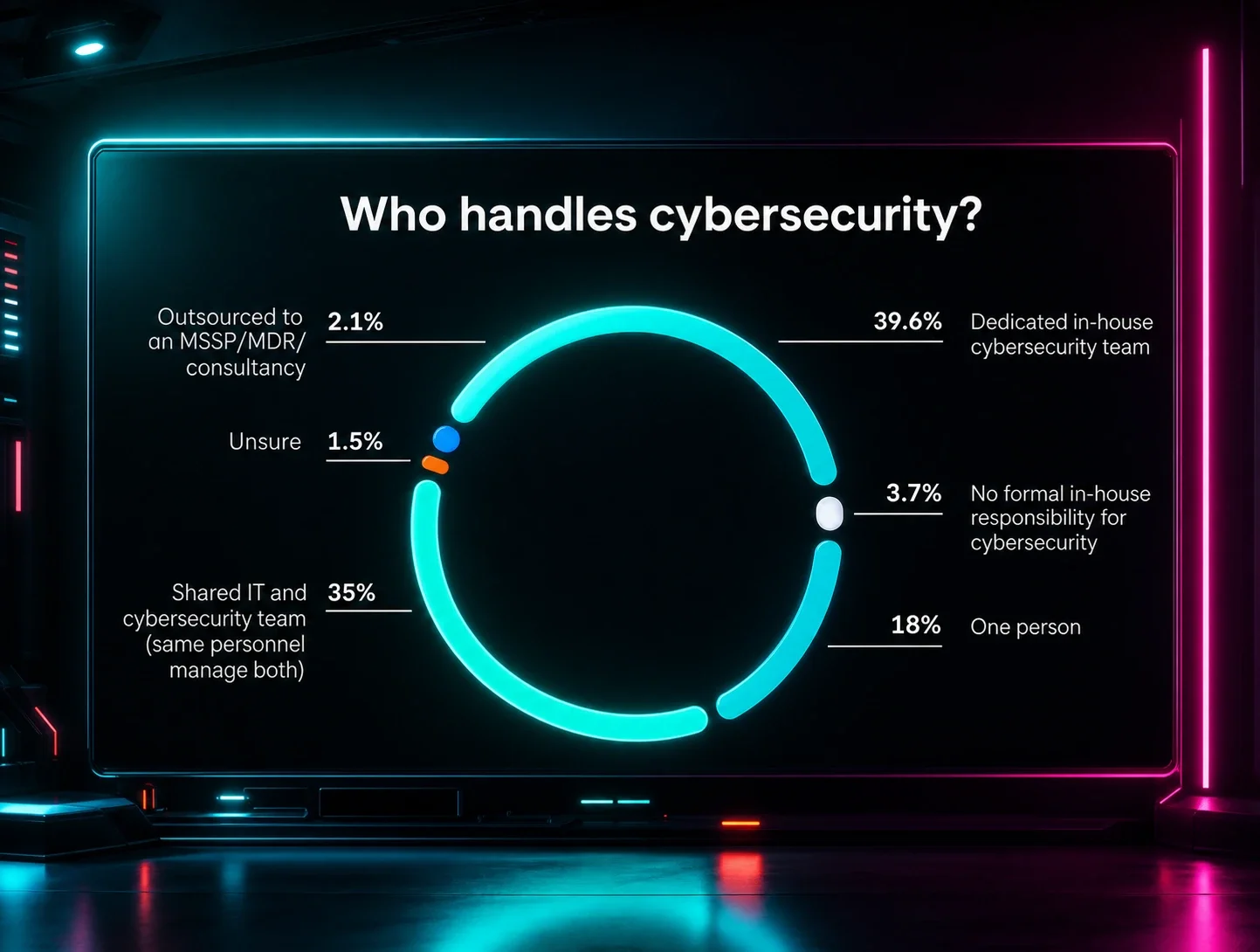
Many organizations are working with lean internal teams, shared IT and security responsibilities, or one person carrying cybersecurity for the business. Huntress survey data shows the most common team sizes fall between six and 10 people at 21.4% and 11 to 15 people at 19%. Only 39.6% report having a dedicated in-house cybersecurity team, 35% say IT and security responsibilities are shared, and 18% say cybersecurity is handled by a single person. In that kind of environment, clarity matters as much as coverage. A resilient team knows where to focus, how to prioritize, and what to do next.
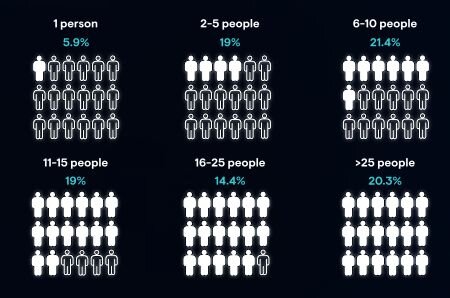
Reported data on average team size from the Huntress How to Build a Resilient Security Team for 2030 guide


A few patterns show up again and again:

  • They optimize for speed. Visibility becomes useful when it helps teams make decisions and act quickly. Strong teams know how to separate real signal from background noise.

  • They treat identity as foundational. Modern attackers often log in through stolen credentials, hijacked sessions, or abused SaaS access. Teams need visibility into behavior, misuse, and suspicious access patterns.

  • They build systems that support humans. Security programs work better when workflows, tools, and controls account for the way people actually operate under pressure.

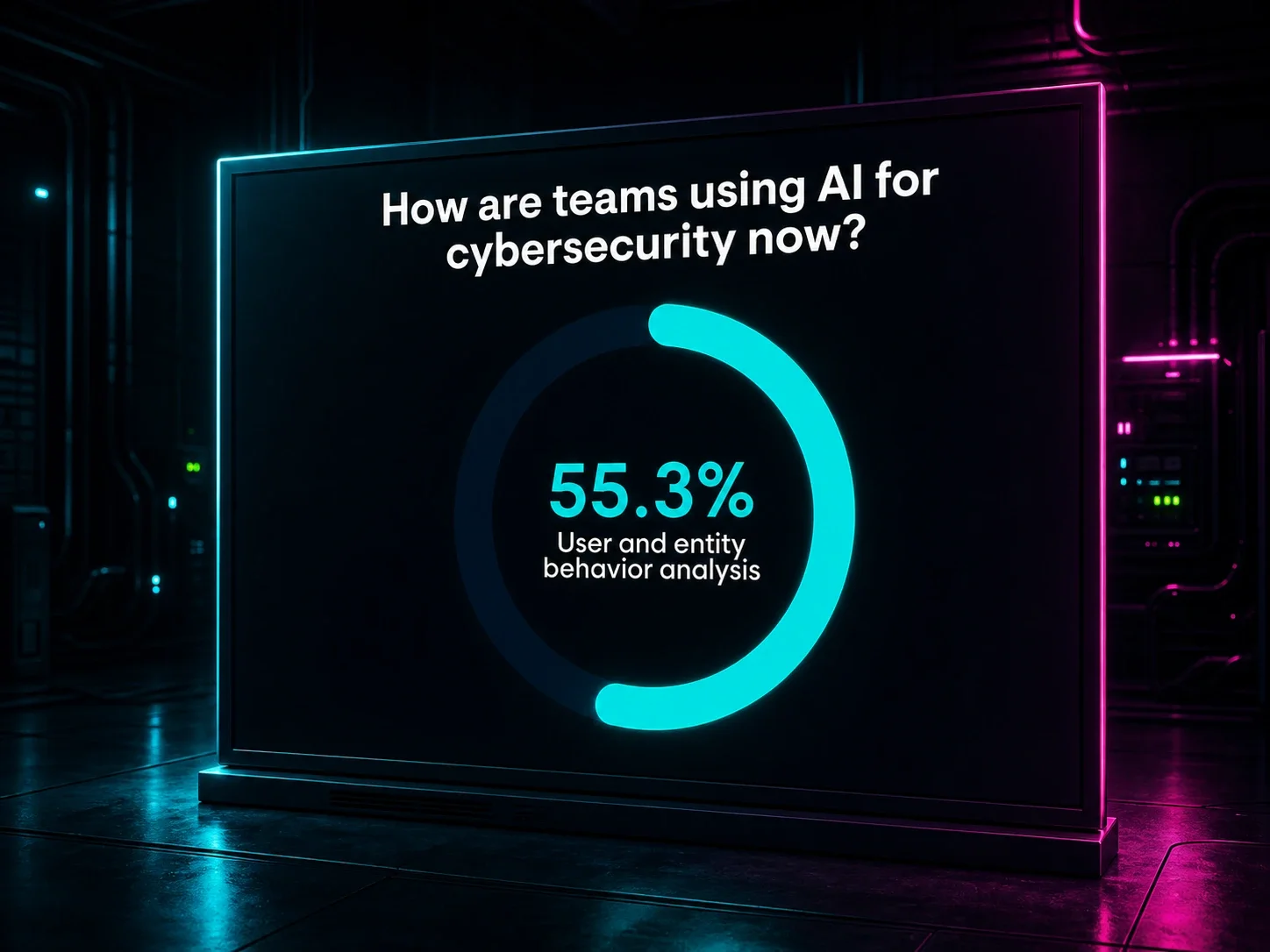
  • They use AI to reduce cognitive load. Nearly half of respondents, 46.9%, say AI is a critical part of their strategy. Its clearest value shows up in threat detection, automated response, and faster analysis that helps teams cut through noise.

  • They prioritize ownership. Clear accountability keeps investigations moving and helps teams respond decisively when something goes wrong.

Roles may scale with the size of the business. Ownership still has to be clear. That is what turns a collection of tools into a security system a team can trust.

Once that foundation is in place, the next question is what the stack should actually do for the team using it. The right tools should help people spot risk earlier, focus on what matters, and respond without piling on more noise or complexity. That starts with a few core layers that strengthen visibility, support faster decisions, and make the security program more resilient day to day.


Think like an attacker

Understanding how attackers see your environment can help you close the gaps they are most likely to exploit.

Attackers look for openings, weak points, and opportunities to move with the least resistance. That could be an unpatched vulnerability, an exposed identity, a weak SaaS permission model, or a poorly secured server. Looking at your environment through that lens helps you build a stack that can detect, contain, and disrupt malicious activity earlier in the attack path.

Where to start:

  • Use offensive security exercises such as penetration testing, red teaming, or purple teaming to see your infrastructure from an attacker’s point of view

  • Pull in real-world tradecraft insights so your defenses reflect how attackers actually operate


Early threat detection and response

The earlier you catch suspicious behavior, the better your chances of limiting the damage.

Early threat detection should be a core part of any resilient security stack. Fast detection creates more room to investigate, contain, and respond before attackers reach sensitive systems, identities, or data.

Detection also needs a clear response path. Teams need to know who owns the investigation, who takes action, and how the handoff works when alerts fire.

Where to start:

  • Use Security Information and Event Management (SIEM) and detection workflows that surface suspicious activity early

  • Make ownership of the investigation and response clear before an incident starts
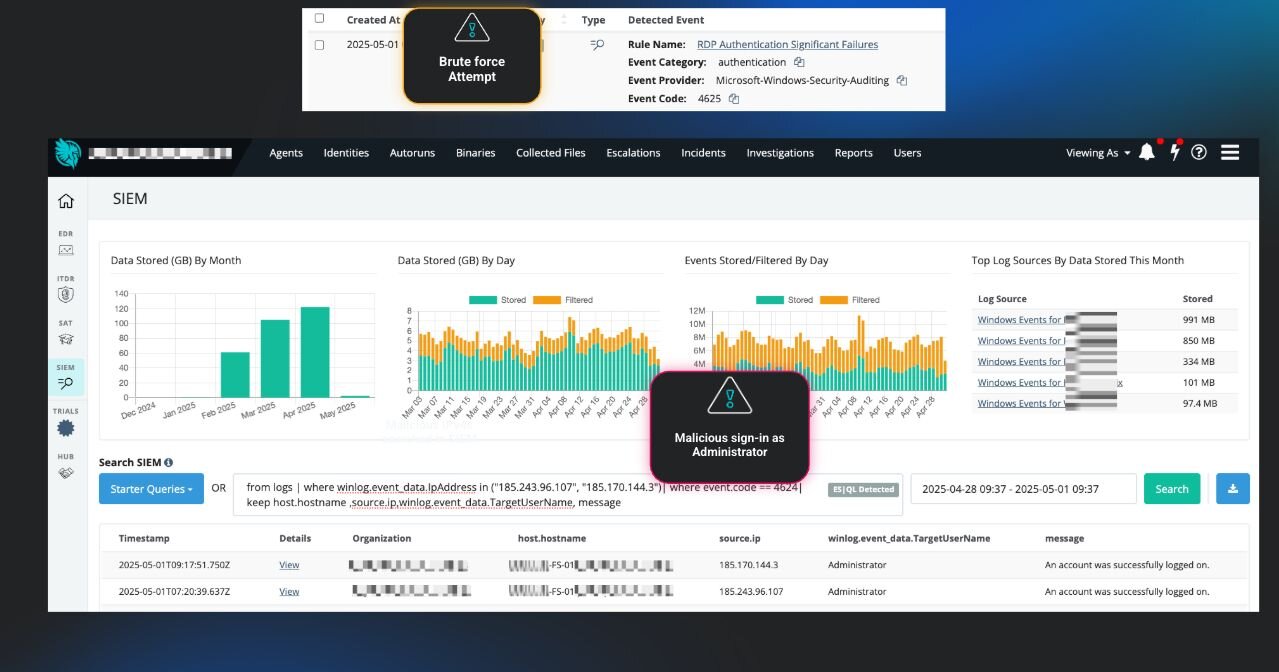
Huntress Managed SIEM detects a brute force attempt


Identity and access management

Identity has become one of the most important places to watch because attackers increasingly rely on valid access to blend in.

Strong identity protection is a core part of any successful security stack. IAM platforms like Okta or Microsoft Entra ID still play an important role, and modern threats have pushed the conversation well beyond multi-factor authentication (MFA) and SSO alone. Attackers increasingly target sessions, tokens, SaaS permissions, and cloud identities because those paths can look legitimate at first glance.

That pressure shows up clearly in the survey results. Identity-based attacks are the threat category teams feel least prepared to defend against at 26.5%. At the same time, 32.1% say they do not have Managed Identity Threat Detection and Response (ITDR) and believe it would increase their confidence in stopping an incident. Teams need visibility into identity misuse, unusual behavior, and suspicious access patterns before valid access turns into business impact.

Where to start:

  • Strengthen IAM foundations across authentication and access controls

  • Add visibility with ITDR for identity abuse, suspicious behavior, and session-based threats
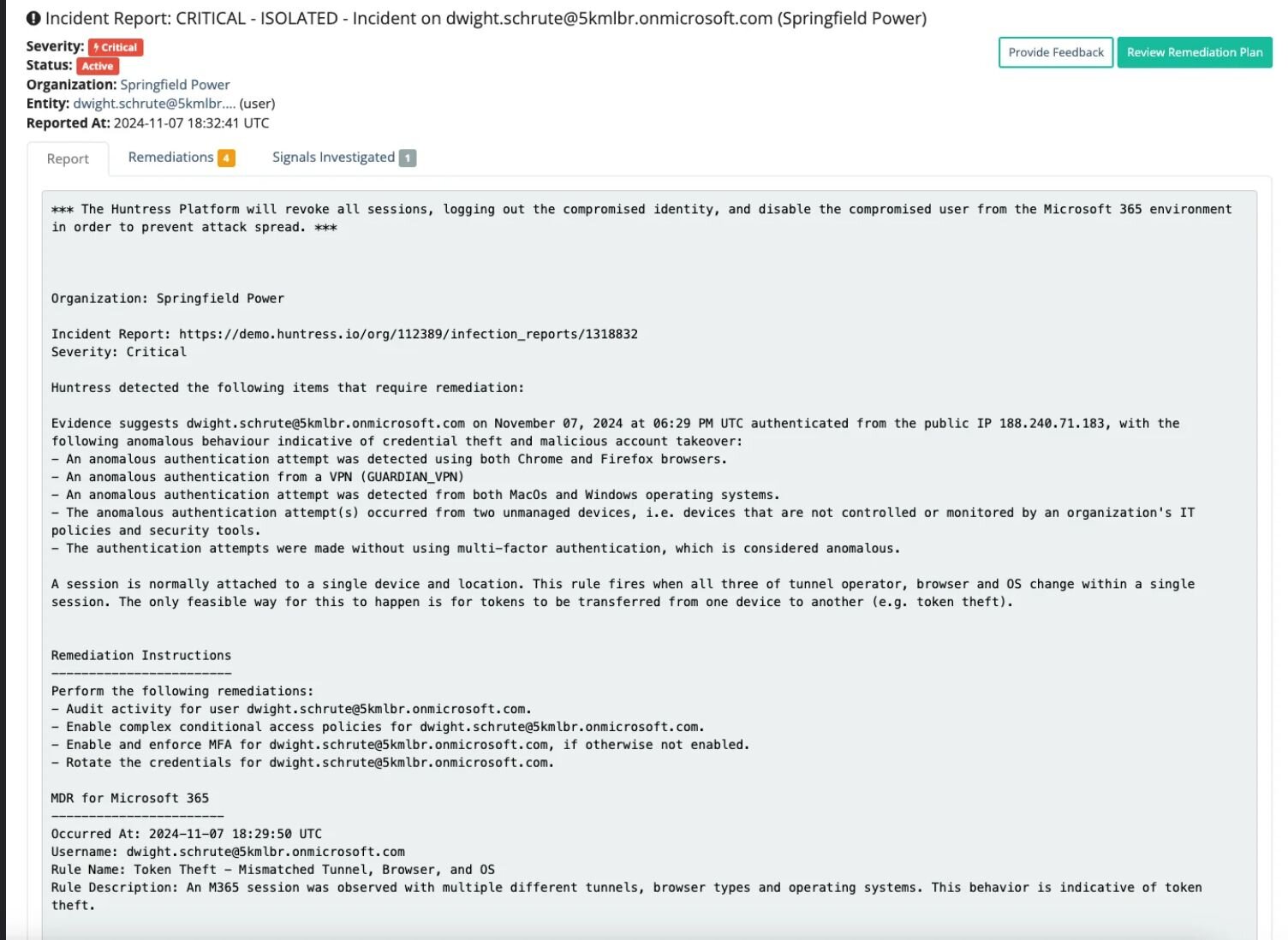
Huntress ITDR incident report flagging a session hijacking attempt


Visibility across assets and endpoints

Visibility across assets and endpoints gives teams a clearer picture of what needs protection and where attackers may try to land.

You can’t protect systems you can’t see. Unmanaged devices, shadow IT, and visibility gaps create openings that attackers know how to exploit. Endpoint coverage matters for the same reason. Endpoints are where attackers often establish footholds, escalate privileges, persist, and reach for sensitive data.

Strong visibility helps teams find problems sooner and respond before activity spreads. It also helps security teams confirm that the controls they expect to be running are actually in place across the environment.

Where to start:

  • Continuously monitor your asset inventory, so your team knows what exists and what needs protection

  • Validate that endpoint coverage matches the environment your business is actually running

  • Use Managed Endpoint Detection and Response (EDR) to investigate suspicious behavior, contain activity quickly, and shorten the path from detection to response


Zero trust, but not by itself

Zero trust helps reduce exposure, and it works best as one layer in a broader defensive system.

Zero trust still plays an important role in limiting access and reducing lateral movement. It helps security teams shrink the paths attackers can use once they gain access. That matters, especially when attackers are operating with legitimate tools, trusted applications, and valid accounts.

Teams still need identity visibility, endpoint detection, and a response model that holds up when suspicious activity slips through. Zero trust works best when it supports a larger system built around visibility, detection, and action.

Where to start:

  • Apply zero trust principles to reduce unnecessary permissions across your organization

  • Support those controls with identity visibility, endpoint detection, and a response plan your team can execute


Resilient security programs win the long game

Long-term resilience comes from pairing the right defenses with a team that can make sense of the signal and act when it matters.

A resilient security stack gives teams the visibility, context, and coverage they need to respond under pressure. A resilient security program makes those capabilities usable in the real world. It gives people clearer ownership, cleaner handoffs, and better ways to move when something looks off.

That is where resilience starts to feel real. The stack supports the team. The team makes the stack useful. Together, they create a security program that can hold up when attackers find an opening.

Strong stack. Strong team. Real security resilience.


ChatGPT logoChatGPTOpens in new tabClaude logoClaudeOpens in new tabPerplexity logoPerplexityOpens in new tabGoogle Gemini logoGoogle AIOpens in new tab
AI sparkle iconSummarize This Page
ChatGPT logoChatGPTOpens in new tabClaude logoClaudeOpens in new tabPerplexity logoPerplexityOpens in new tabGoogle Gemini logoGoogle AIOpens in new tab

What's your social profile giving away?

On May 20 (12pm EST), join Truman Kain and Caitlin Sarian ("Cybersecurity Girl") for the latest edition of _declassified and learn how attackers turn social media into intel.
Grab your spot
Share
Facebook iconTwitter X iconLinkedin iconDownload icon
Glitch effect

You Might Also Like

  • Data Exfiltration and Threat Actor Infrastructure Exposed

    Threat actors are people, too, and like everyone else, make mistakes. These mistakes can reveal insights into the threat actor, or even expose access to their infrastructure.
  • New 0-Day Vulnerabilities Found in Microsoft Exchange

    The Huntress team is currently investigating new 0-day vulnerabilities in Microsoft Exchange servers, piggybacking on ProxyShell and ProxyLogon.
  • How do you protect computers from attackers if you’re not familiar with hacking techniques?

    How do you protect computers from attackers if you’re not familiar with hacking techniques? The historical answer to this question has been antivirus and firewalls. However, the last several years have demonstrated hackers can slip past these preventative technologies and cause devastating results to the victims.
  • 9 Pro Tips for Better Endpoint Security

    Secure endpoints are critical to your cyber defenses. Here’s a list of endpoint security tips every IT and security professional should know.
  • The Age of Rapid-Response Managed Detection and Response

    We teamed up with our partners at Magna5 to talk about providing real-time prevention, detection and response.
  • CMMC Final Rule: What DoD Subs Need to Know

    The DoD's CMMC final rule is here. Learn what it means for subcontractors, the new timeline, and how to prepare for your Level 2 audit to stay competitive.
  • Calm In The Storm: Reviewing Volt Typhoon

    Explore the recent disclosures concerning Volt Typhoon, a threat actor engaged in the widespread exploitation of external-facing services and network appliances.
  • Recutting the Kerberos Diamond Ticket

    Clear up common misconceptions about the Kerberos Diamond Ticket and learn how to refine the technique for better OPSEC, including more realistic PAC details and support for service tickets. You’ll learn how to apply the idea securely to both Ticket Granting Tickets and Service Tickets, creating forgeries that blend in more effectively with legitimate Kerberos traffic. The result is a stealthier alternative to traditional Silver Tickets and a more convincing method that raises the bar for Kerberos forgeries.

Sign Up for Huntress Updates

Get insider access to Huntress tradecraft, killer events, and the freshest blog updates.
Privacy • Terms
By submitting this form, you accept our Terms of Service & Privacy Policy
Huntress Managed Security PlatformManaged EDRManaged EDR for macOSManaged EDR for LinuxManaged ITDRManaged SIEMManaged Security Awareness TrainingManaged ISPMManaged ESPMBook a Demo
PhishingComplianceBusiness Email CompromiseEducationFinanceHealthcareManufacturingState & Local Government
Managed Service ProvidersResellersIT & Security Teams24/7 SOCCase Studies
BlogResource CenterCybersecurity 101Upcoming EventsSupport Documentation
Our CompanyLeadershipNews & PressCareersContact Us
Huntress white logo

Protecting 250k+ customers like you with enterprise-grade protection.

Privacy PolicyCookie PolicyTerms of UseCookie Consent
Linkedin iconTwitter X iconYouTube iconInstagram icon
© 2025 Huntress All Rights Reserved.

Join the Hunt

Get insider access to Huntress tradecraft, killer events, and the freshest blog updates.

By submitting this form, you accept our Terms of Service & Privacy Policy