Let’s talk about the identity gaps every team has to close. Join the convo.
Utility navigation bar redirect icon
Portal LoginSupportBlogContact
Search
Close search
Huntress Logo in Teal
  • Platform Overview
    Managed EDR

    Get full endpoint visibility, detection, and response.

    Managed EDR

    Get full endpoint visibility, detection, and response.

    Managed ITDR: Identity Threat Detection and Response

    Protect your Microsoft 365 and Google Workspace identities and email environments.

    Managed ITDR: Identity Threat Detection and Response

    Protect your Microsoft 365 and Google Workspace identities and email environments.

    Managed SIEM

    Managed threat response and robust compliance support at a predictable price.

    Managed SIEM

    Managed threat response and robust compliance support at a predictable price.

    Managed Security Awareness Training Software

    Empower your teams with science-backed security awareness training.

    Managed Security Awareness Training Software

    Empower your teams with science-backed security awareness training.

    Managed ISPM

    Continuous Microsoft 365 and identity hardening, managed and enforced by Huntress experts.

    Managed ISPM

    Continuous Microsoft 365 and identity hardening, managed and enforced by Huntress experts.

    Managed ESPM

    Proactively secure endpoints against attacks.

    Managed ESPM

    Proactively secure endpoints against attacks.

    Integrations
    Integrations
    Support Documentation
    Support Documentation
    See Huntress in Action

    Quickly deploy and manage real-time protection for endpoints, email, and employees - all from a single dashboard.

    Huntress Cybersecurity
    See Huntress in Action

    Quickly deploy and manage real-time protection for endpoints, email, and employees - all from a single dashboard.

    Huntress Cybersecurity
  • Threats We Stop
    Phishing
    Phishing
    Business Email Compromise
    Business Email Compromise
    Ransomware
    Ransomware
    Infostealers
    Infostealers
    Living off the Land
    Living off the Land
    Initial Access & RaaS
    Initial Access & RaaS
    View Allright arrowView Allright arrow
    Industries We Serve
    Education
    Education
    Financial Services
    Financial Services
    State and Local Government
    State and Local Government
    Healthcare
    Healthcare
    Law Firms
    Law Firms
    Manufacturing
    Manufacturing
    Utilities
    Utilities
    View Allright arrowView Allright arrow
    Tailored Solutions
    MSPs
    MSPs
    Resellers
    Resellers
    SMBs
    SMBs
    Compliance
    Compliance
    Disrupting your business is Big Cybercrime’s business model

    Stop unwanted interruptions before they stop your workflow.


    Huntress Cybersecurity
    Cybercriminals Have Evolved

    Get the intel on today’s cybercriminal groups and learn how to protect yourself.

    Huntress Cybersecurity
  • Pricing
  • Community Series
    The Product Lab

    Shape the next big thing in cybersecurity together.

    The Product Lab

    Shape the next big thing in cybersecurity together.

    Fireside Chat

    Real people. Real perspectives. Better conversations.

    Fireside Chat

    Real people. Real perspectives. Better conversations.

    Tradecraft Tuesday

    No products, no pitches – just tradecraft.

    Tradecraft Tuesday

    No products, no pitches – just tradecraft.

    _declassified

    Exposing hidden truths in the world of cybersecurity.

    _declassified

    Exposing hidden truths in the world of cybersecurity.

    Resources
    Upcoming Events
    Upcoming Events
    Ebooks
    Ebooks
    On-Demand Webinars
    On-Demand Webinars
    Videos
    Videos
    Whitepapers
    Whitepapers
    Datasheets
    Datasheets
    Cybersecurity Education
    Cybersecurity 101
    Cybersecurity 101
    Cybersecurity Guides
    Cybersecurity Guides
    Threat Library
    Threat Library
    Real Tradecraft, Real Results
    Real Tradecraft, Real Results
    2026 Cyber Threat Report
    2026 Cyber Threat Report
    The Huntress Blog
    What I Took Away from Gartner Security & Risk Management Summit 2026
    Huntress Cybersecurity
    What I Took Away from Gartner Security & Risk Management Summit 2026
    Huntress Cybersecurity
    Why Huntress Doesn’t Need FedRAMP. And Why That’s a Good Thing.
    Huntress Cybersecurity
    Why Huntress Doesn’t Need FedRAMP. And Why That’s a Good Thing.
    Huntress Cybersecurity
    From Malspam to Fileless .NET Loader
    Huntress Cybersecurity
    From Malspam to Fileless .NET Loader
    Huntress Cybersecurity
  • Why Huntress

    Go beyond AI in the fight against today’s hackers with Huntress Managed EDR purpose-built for your needs

    Huntress Cybersecurity
    Why Huntress

    Go beyond AI in the fight against today’s hackers with Huntress Managed EDR purpose-built for your needs

    Huntress Cybersecurity
    The Huntress SOC

    24/7 Security Operations Center

    The Huntress SOC

    24/7 Security Operations Center

    Reviews

    Why businesses of all sizes trust Huntress to defend their assets

    Reviews

    Why businesses of all sizes trust Huntress to defend their assets

    Case Studies

    Learn directly from our partners how Huntress has helped them

    Case Studies

    Learn directly from our partners how Huntress has helped them

    Community

    Get in touch with the Huntress Community team

    Community

    Get in touch with the Huntress Community team

    Compare Huntress
    Bitdefender
    Bitdefender
    Blackpoint
    Blackpoint
    Breach Secure Now!
    Breach Secure Now!
    Crowdstrike
    Crowdstrike
    Kaseya
    Kaseya
    SentinelOne
    SentinelOne
    Sophos
    Sophos
    Compare Allright arrowCompare Allright arrow
  • HUNTRESS HUB

    Login to access top-notch marketing resources, tools, and training.

    Huntress Cybersecurity
    HUNTRESS HUB

    Login to access top-notch marketing resources, tools, and training.

    Huntress Cybersecurity
    Partners
    MSPs

    Join our partner community to deliver expert-led managed security.

    MSPs

    Join our partner community to deliver expert-led managed security.

    Resellers

    Partner program designed to grow your cybersecurity business.

    Resellers

    Partner program designed to grow your cybersecurity business.

    Tech Alliances

    Driving innovation through global technology Partnerships

    Tech Alliances

    Driving innovation through global technology Partnerships

    Microsoft Partnership

    A Level-Up for Your Business Security

    Microsoft Partnership

    A Level-Up for Your Business Security

  • Press Release
    Huntress Announces Collaboration with Microsoft to Strengthen Cybersecurity for Businesses of All Sizes
    Huntress Cybersecurity
    Press Release
    Huntress Announces Collaboration with Microsoft to Strengthen Cybersecurity for Businesses of All Sizes
    Huntress Cybersecurity
    Our Story

    We're on a mission to shatter the barriers to enterprise-level security.

    Our Story

    We're on a mission to shatter the barriers to enterprise-level security.

    Newsroom

    Explore press releases, news articles, media interviews and more.

    Newsroom

    Explore press releases, news articles, media interviews and more.

    Meet the Team

    Founded by former NSA Cyber Operators. Backed by security researchers.

    Meet the Team

    Founded by former NSA Cyber Operators. Backed by security researchers.

    Careers

    Ready to shake up the cybersecurity world? Join the hunt.

    Careers

    Ready to shake up the cybersecurity world? Join the hunt.

    Awards
    Awards
    Contact Us
    Contact Us
  • Portal Login
  • Support
  • Blog
  • Contact
  • Search
  • Get a Demo
  • Start for Free
Portal LoginSupportBlogContact
Search
Close search
Get a Demo
Start for Free
HomeBlog
What I Took Away from Gartner Security & Risk Management Summit 2026
Published:
June 9, 2026

What I Took Away from Gartner Security & Risk Management Summit 2026

By:
Bryson Byrd
Share icon
Glitch effectGlitch effectGlitch effect

Acknowledgments: Special thanks to Jennifer Halsey and Gavin Hill for their contributions to this blog. 

I spent time at Gartner Security & Risk Management Summit last week listening for the signal, not the noise.

There was plenty of conversation about AI. Plenty about strategy, plenty about what is next. But what stuck with me most was something simpler: the teams that are going to do well over the next few years are not the ones chasing every new headline. They are the ones getting brutally honest about what actually causes damage, where their weak spots really are, and how fast they can recover when something goes sideways.

Here is the other thing I keep coming back to: security is not a destination. It is a spectrum, a journey that never really ends, especially in the age of AI. What matters is whether your organization is moving in the right direction with the right foundation under it.

That is the lens I am taking away from the event: it's not about perfection, hype, or bigger stacks for the sake of bigger stacks. It is about resilience. Identity. Control effectiveness. Operational reality.

Here are the biggest lessons I took from the sessions our team attended and what I think security leaders should do with them.


1. Resilience is no longer a soft concept. It's the job.

If I had to boil down the keynote message and a lot of the supporting sessions into one sentence, it would be this: the point is not to stop every bad thing from ever happening. The point is to keep incidents from turning into business-level disruption.

That may sound obvious, but a lot of programs are still built and measured as if "nothing got through" is the only acceptable outcome. That is not how the real world works. The real world is messy. Adversaries adapt. Users click things. Configurations drift. Third parties create risk you do not fully control.

The conversation at Gartner was not about building better cybersecurity programs. It was about building cybersecurity resilience. Those are not the same thing, and that distinction matters more than people give it credit for.

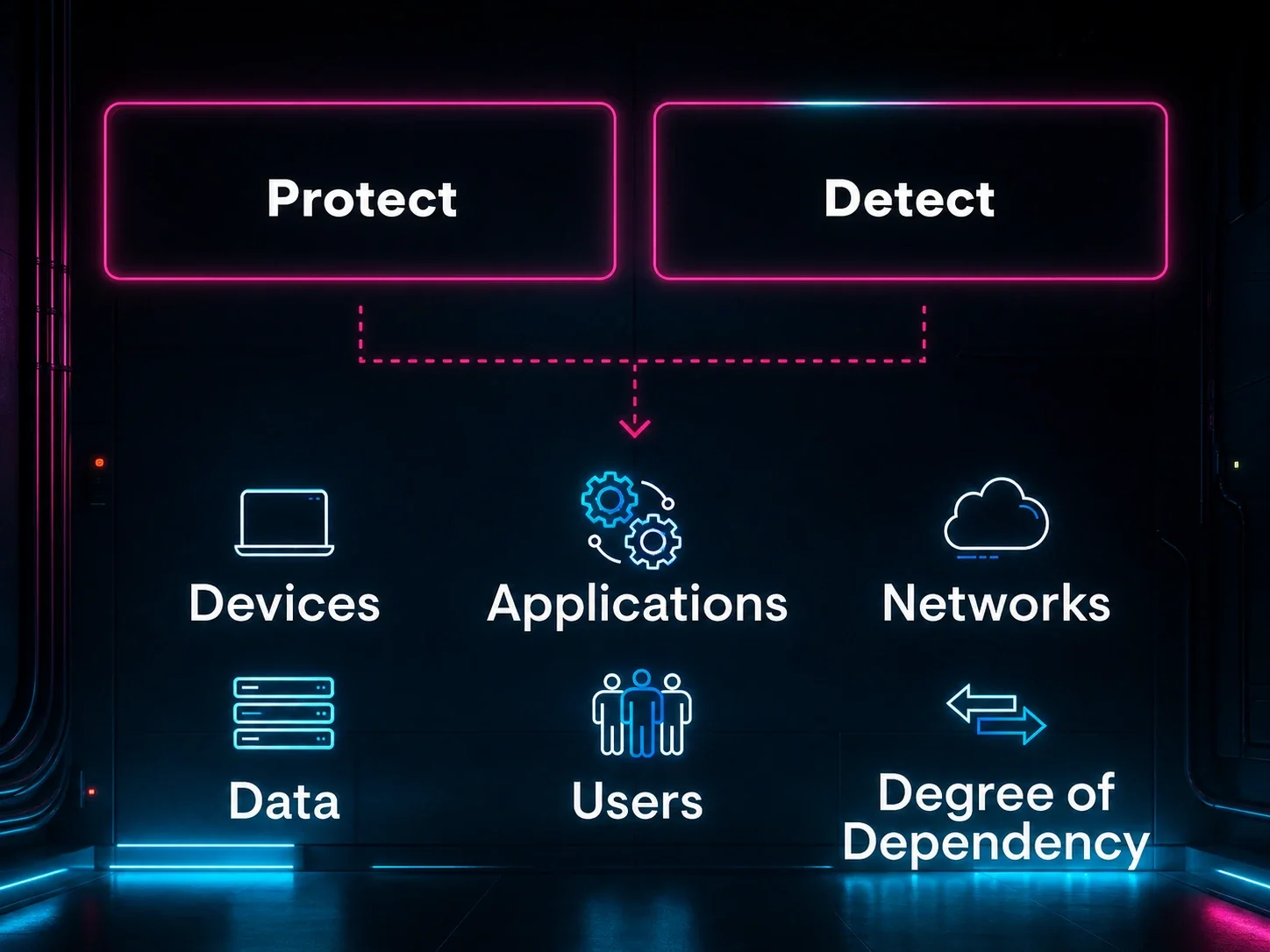
When you think about resilience in practical terms, it breaks down into two pillars that every strategy needs to address:

Identity Resilience: prevention through ISPM (identity security posture management) and response through ITDR (identity threat detection and response).

Endpoint Integrity: prevention through ESPM (endpoint security posture management) and response through EDR (endpoint detection and response).

Everyone's strategy should include both sides of each pillar. Not one or the other. Both. That is not aspirational. That is the baseline.

A few practical implications:

  • Know what business disruption actually means in your environment

  • Be honest about how quickly you can contain a real incident

  • Exercise recovery, not just response

  • Look for places where one mistake can still create an oversized impact

This is an area where Huntress' philosophy maps pretty cleanly to what I heard at Gartner. Security should reduce the chance that an interruption becomes an existential problem. That is a much more useful standard than pretending your goal is magical, total prevention.


2. Identity isn't a side conversation anymore

This came through loud and clear in the sessions, in the analyst conversations, and directly from Peter Firstbrook's keynote. Firstbrook is a VP Analyst at Gartner, and he said it plainly: everyone should have ITDR. Not "consider ITDR." Not "ITDR is a nice-to-have for mature organizations." Everyone.

He is right.

For a long time, CISOs let identity live somewhere else. It sat in IAM teams, in IT operations, in HR-driven provisioning workflows. It was an access management problem, not a security problem. CISOs owned the firewall, the endpoint, the SOC. Identity was someone else's lane.

That era is over.

Identity is the perimeter now. Not eventually. Not directionally. Now. The network edge has dissolved. Endpoints are everywhere. Cloud services authenticate through credentials, not IP addresses. Attackers are not breaking through walls anymore. They are logging in. And when identity is not owned by the security function, that gap is exactly where they go.

Security leaders who are still leaving identity governance, visibility, and response to other parts of the organization are leaving a door open. This is a paradigm shift that requires ownership, not coordination. Security leaders must get their arms around identity, because organizational resilience now depends on it.

The right framework here is identity resilience: ISPM to harden your posture before the attack, ITDR to detect and respond when something gets through. Prevention alone is not enough. Detection and response alone is not enough. You need both sides of the equation, and that is exactly what Firstbrook's keynote was pointing to.

Gartner's focus on identity visibility, intelligence, and resilience is growing because the identity attack surface is growing. Hybrid work, machine identities, cloud services, service accounts, and AI agents all increase the number of ways identity can become both the target and the path in.

If I were translating that into action:

  • Stop treating identity as a narrow toolset discussion

  • Get serious about visibility across human and machine identities

  • Reduce the number of unknown, unmanaged, or overprivileged identities in your environment

  • Pull identity and security teams closer together if they still operate in parallel lanes

CISOs are increasingly talking about identity resilience, not just alphabet soup. That is the right framing. And Firstbrook made clear that it is no longer optional.


3. The right AI takeaway is operational, not ideological

I expected AI to dominate the event, and it did. But the most useful guidance was not "go buy more AI." It was more grounded than that.

Peter Firstbrook said it plainly in his keynote: “there will not be a fully agentic SOC.” 

Good.

Because if you have spent time in real incidents, you already know why. The hard part is not just triage speed. The hard part is ambiguity, judgment, escalation, business context, and knowing when something weird is actually the thing that matters.

The sessions pointed to a few realities worth sitting with:

  • AI is speeding up attacks

  • AI agents introduce real security risk, including prompt injection, data poisoning, and posture drift

  • AI can still be genuinely useful when applied to the right operational work

  • Human judgment is not going away

Where I think teams should land:

  • Use AI to reduce toil

  • Use it to accelerate triage and investigation support

  • Use it to improve speed where speed matters

  • Do not confuse faster output with sound decision-making


4. EDR is useful, but EDR alone is not a strategy

This was one of the most practical session takeaways from the event. Overreliance on standalone EDR is leading to failure because controls get bypassed, configurations drift, and teams mistake tool presence for protection.

That is not an argument against EDR. It is an argument against wishful thinking.

Endpoint integrity, like identity resilience, requires both sides: Endpoint Security Posture Management (ESPM) to continuously manage and reduce your attack surface before an incident, and EDR to detect and respond when something gets through. One without the other is a gap. And gaps are exactly what attackers look for.

The session walked through why multilayered defense in depth still matters: application control, exposure management, configuration management, and tighter coordination between endpoint management and security all strengthen the posture in ways a single detection layer cannot.

The control hygiene point matters too. Gartner called out misconfigured technical controls as a major driver of future breaches, which should be a wake-up call for teams that keep adding tools without investing enough in tuning, validation, and day-two operations.

A few practical steps:

  • Audit whether your controls are effective, not just deployed

  • Review where your team assumes protection instead of validating it

  • Make sure endpoint, security, and IT operations are not handing critical work off across silos in ways that create delay or ambiguity

  • Build layers that reduce blast radius when one layer fails

This is not flashy guidance. It is just the kind that tends to hold up.


5. Exposure management is getting more honest

Another thread I liked from the summit was the move away from shallow vulnerability narratives.

The exposure management material was not just "patch faster" or "scan more." It focused on continuous visibility, validation, attack paths, and a more realistic understanding of what actually creates exposure.

That distinction matters because most teams do not struggle to generate findings. They struggle to decide what matters, what is exploitable, what can wait, and what is quietly creating unnecessary risk right now.

The recommendations pushed toward risk-based prioritization, validation, and measuring the window of exposure instead of treating everything as an undifferentiated backlog.

That is the right move. My advice here is simple:

  • Get beyond CVSS-only thinking where you can

  • Prioritize based on exploitability and attack path relevance

  • Measure how long meaningful exposure stays open

  • Treat remediation as an operational discipline, not a reporting exercise


The bottom line

If I had to sum up Gartner Security & Risk Management Summit in a few practical takeaways, it would be this:

Security is not a destination. It is a spectrum and a journey. The organizations that understand that and build accordingly are the ones that will come out ahead.

That starts with having a real strategy. Not a list of tools. Not a compliance checklist. A strategy that aligns your organization toward a north star: what you are protecting, why it matters, and how you are going to get there.

And it needs practical AI adoption that keeps humans in the loop, layered defenses that reduce blast radius when things go wrong, and metrics that actually reflect operational readiness.

That is what I took away from the event. Not that the problem set is getting smaller. It is not.

But the signal is getting clearer for teams willing to ignore the noise and do the harder, more honest work.

Categories
Cybersecurity Education
ChatGPT logoChatGPTOpens in new tabClaude logoClaudeOpens in new tabPerplexity logoPerplexityOpens in new tabGoogle Gemini logoGoogle AIOpens in new tab
AI sparkle iconSummarize This Page
ChatGPT logoChatGPTOpens in new tabClaude logoClaudeOpens in new tabPerplexity logoPerplexityOpens in new tabGoogle Gemini logoGoogle AIOpens in new tab

See Huntress in action

Our platform combines a suite of powerful managed detection and response tools for endpoints and Microsoft 365 identities, science-backed security awareness training, and the expertise of our 24/7 Security Operations Center (SOC).

Book a Demo
Share
Facebook iconTwitter X iconLinkedin iconDownload icon
Glitch effect

You Might Also Like

  • Evolving the Hunt: Host Isolation for Smarter Defense

    Learn about Host Isolation, a new feature that's just been added to The Huntress Security Platform.
  • Huntress Acquires Inside Agent: A New Era for Identity Protection

    Huntress acquired Inside Agent to bolster identity security with a new ISPM solution. The move enhances proactive defense against cyberattacks.
  • Defense Evasion: Defenders Strike Back!

    In the last blog of our defense evasion series, we'll cover granular advice for monitoring and detecting defense evasion.
  • Gootloader Returns: What Goodies Did They Bring?

    Gootloader returns with new obfuscation techniques, including custom WOFF2 fonts and updated persistence mechanisms, while continuing its partnership with Vanilla Tempest for ransomware deployment. Dive in and discover what Huntress is seeing.
  • Qakbot Malware Takedown and Defending Forward

    With the FBI's takedown of Qakbot malware, we're sharing how the Huntress team developed our own Qakbot vaccine and our commitment to defend forward.
  • dMSA Ouroboros: Self-Sustaining Credential Extraction in Windows Server 2025

    A fully patched Windows Server 2025 domain is vulnerable to dMSA Ouroboros—a self-sustaining credential extraction technique requiring only standard delegated permissions. Learn how it works, why remediation fails, and how to detect it.
  • How Huntress & DEFCERT Are Streamlining CMMC Assessment Prep

    Huntress and DEFCERT partnered to help with CMMC compliance. Use their Shared Responsibility Matrix and operation plans to streamline your Level 2 assessment
  • Traitorware and Living Off the Land: Using Splunk to Exfiltrate Data

    Your security tools are just as likely to be attacked as anything else. This blog dives into traitorware and how it's used to live off the land.

Sign Up for Huntress Updates

Get insider access to Huntress tradecraft, killer events, and the freshest blog updates.
Privacy • Terms
By submitting this form, you accept our Terms of Service & Privacy Policy
Huntress Managed Security PlatformManaged EDRManaged EDR for macOSManaged EDR for LinuxManaged ITDRManaged SIEMManaged Security Awareness TrainingManaged ISPMManaged ESPMBook a Demo
PhishingComplianceBusiness Email CompromiseEducationFinanceHealthcareManufacturingState & Local Government
Managed Service ProvidersResellersIT & Security Teams24/7 SOCCase Studies
BlogResource CenterCybersecurity 101Upcoming EventsSupport Documentation
Our CompanyLeadershipNews & PressCareersContact Us
Huntress white logo

Protecting 250k+ customers like you with enterprise-grade protection.

Privacy PolicyCookie PolicyTerms of UseCookie Consent
Linkedin iconTwitter X iconYouTube iconInstagram icon
© 2025 Huntress All Rights Reserved.

Join the Hunt

Get insider access to Huntress tradecraft, killer events, and the freshest blog updates.

By submitting this form, you accept our Terms of Service & Privacy Policy