


When security buyers hear "AI-centric SOC," half view it as expected, and the other half get nervous. The nervous half has reasonable questions, like:
Who's actually in control?
What happens when AI gets it wrong?
Is my security really being handled by a machine that makes its own decisions?
What role do human SOC analysts still play?
These are the right questions to ask, and they deserve straight answers. So here's ours.
What is Athena?
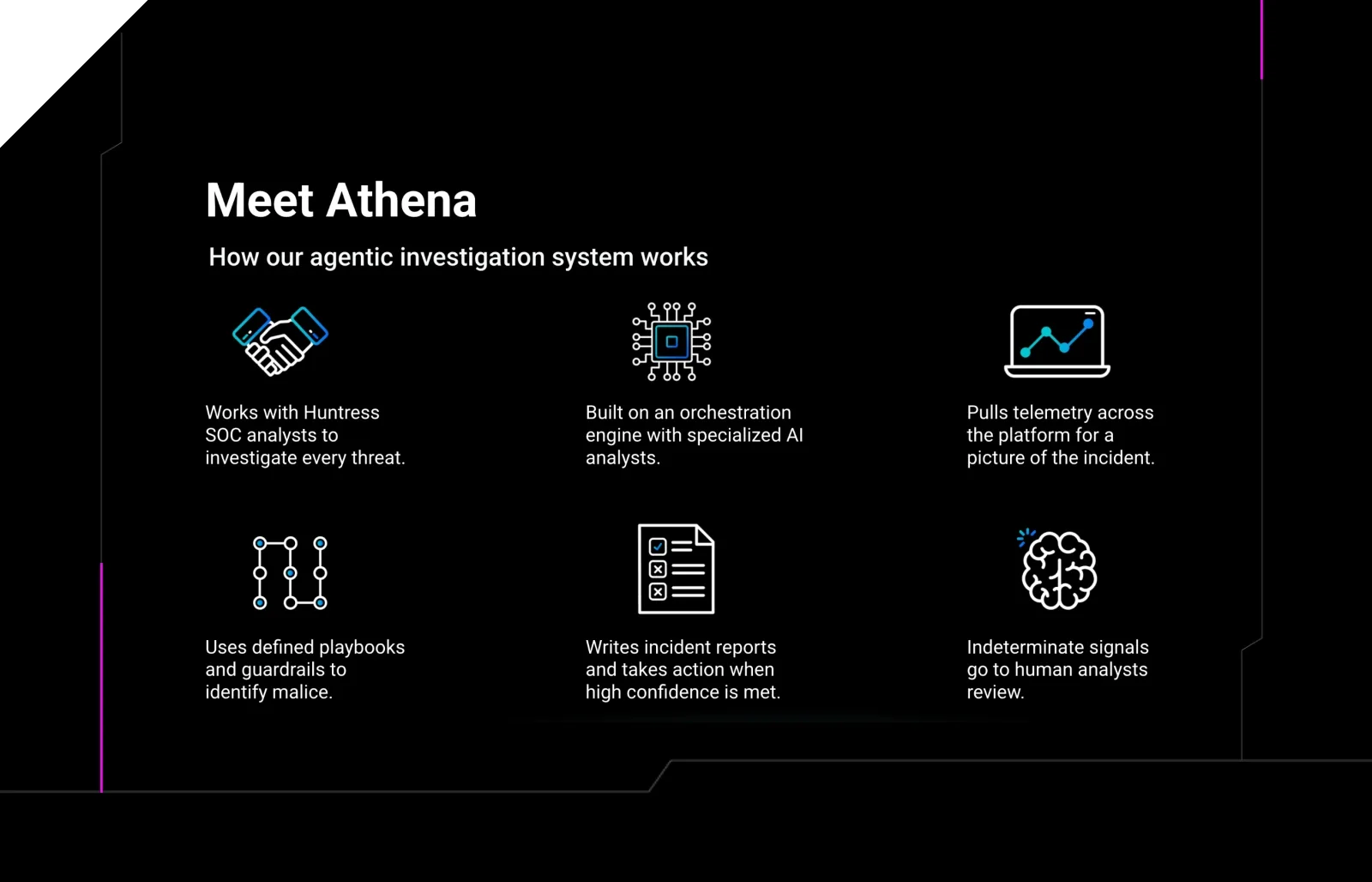
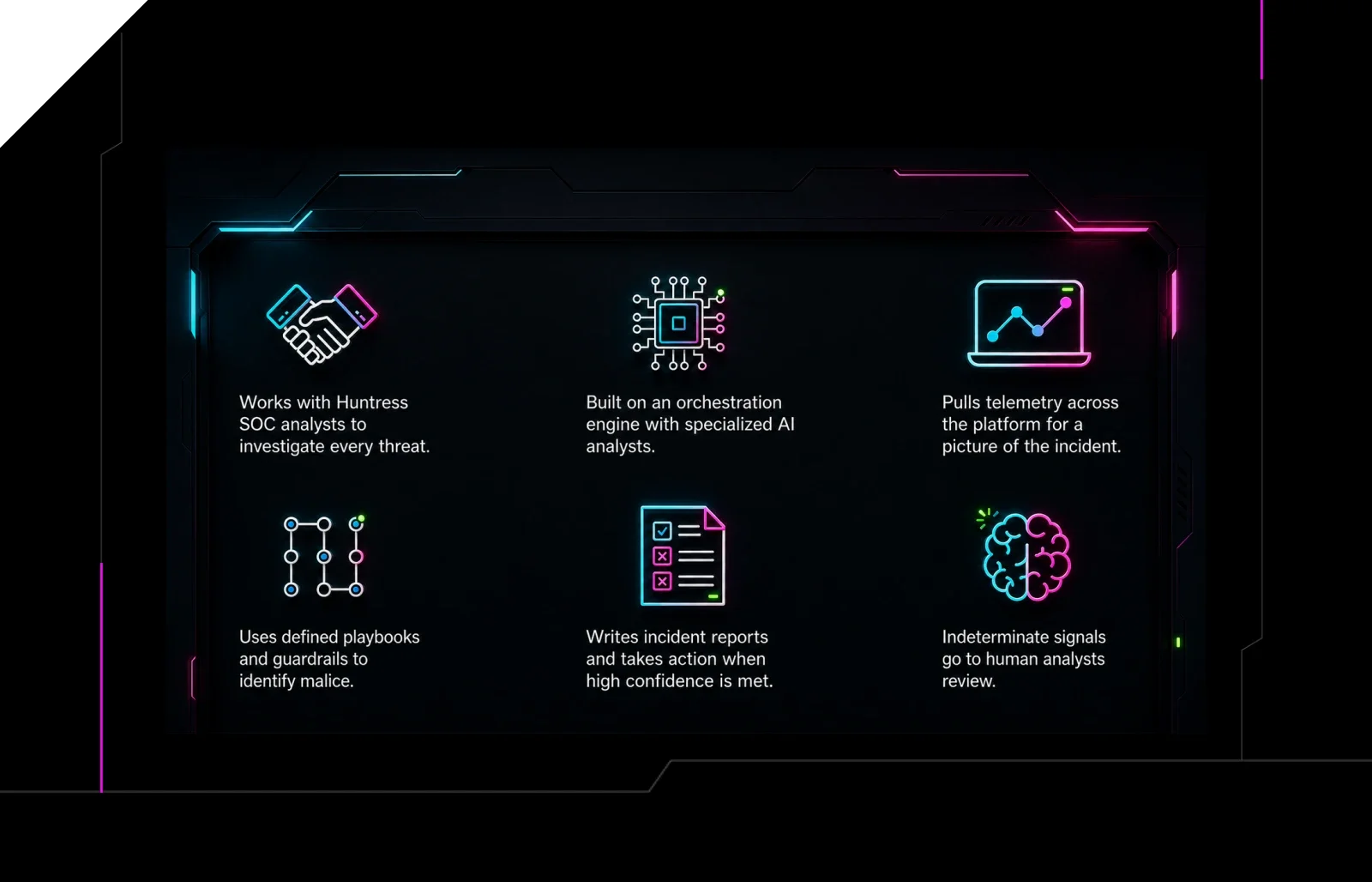
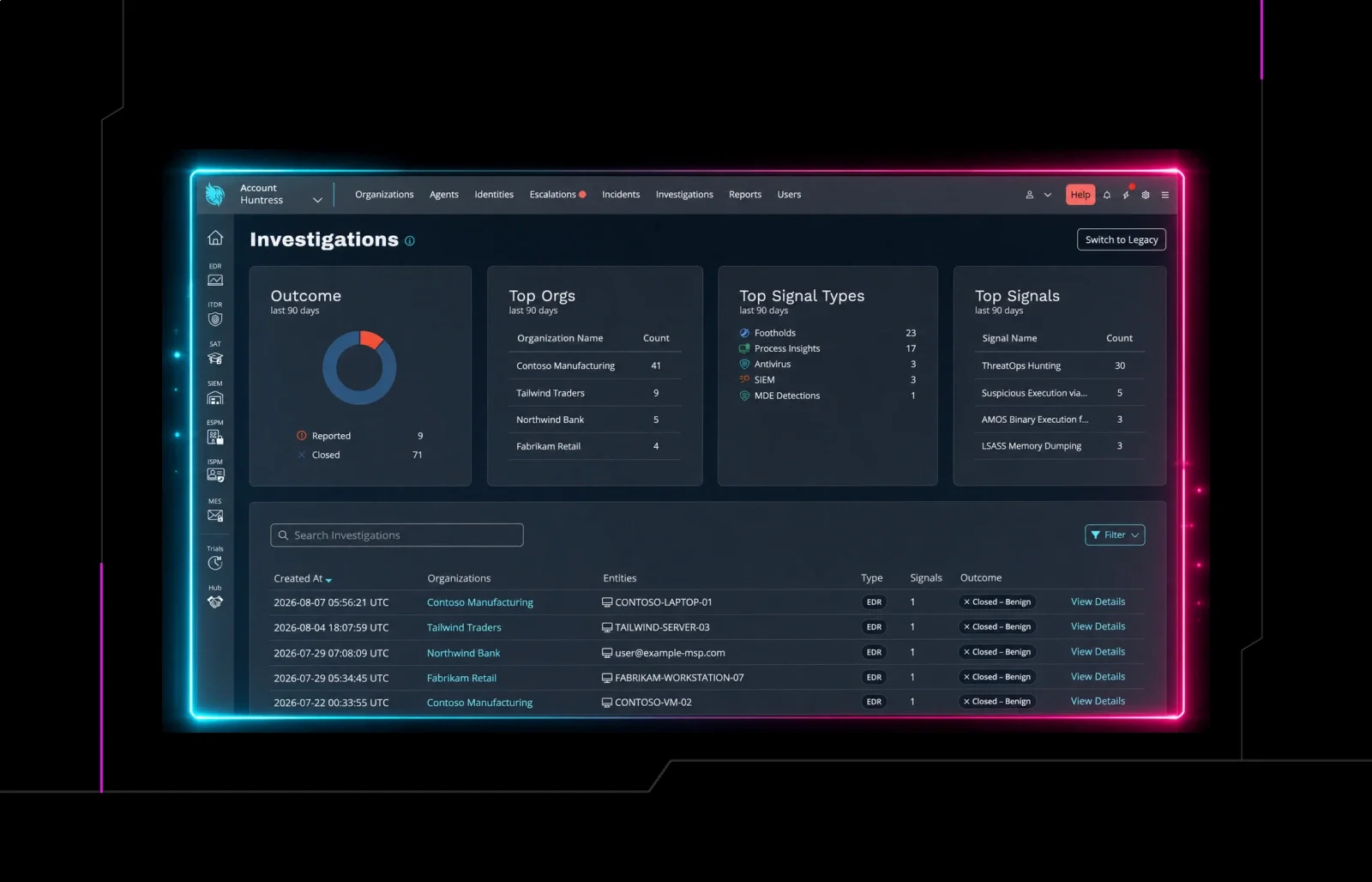
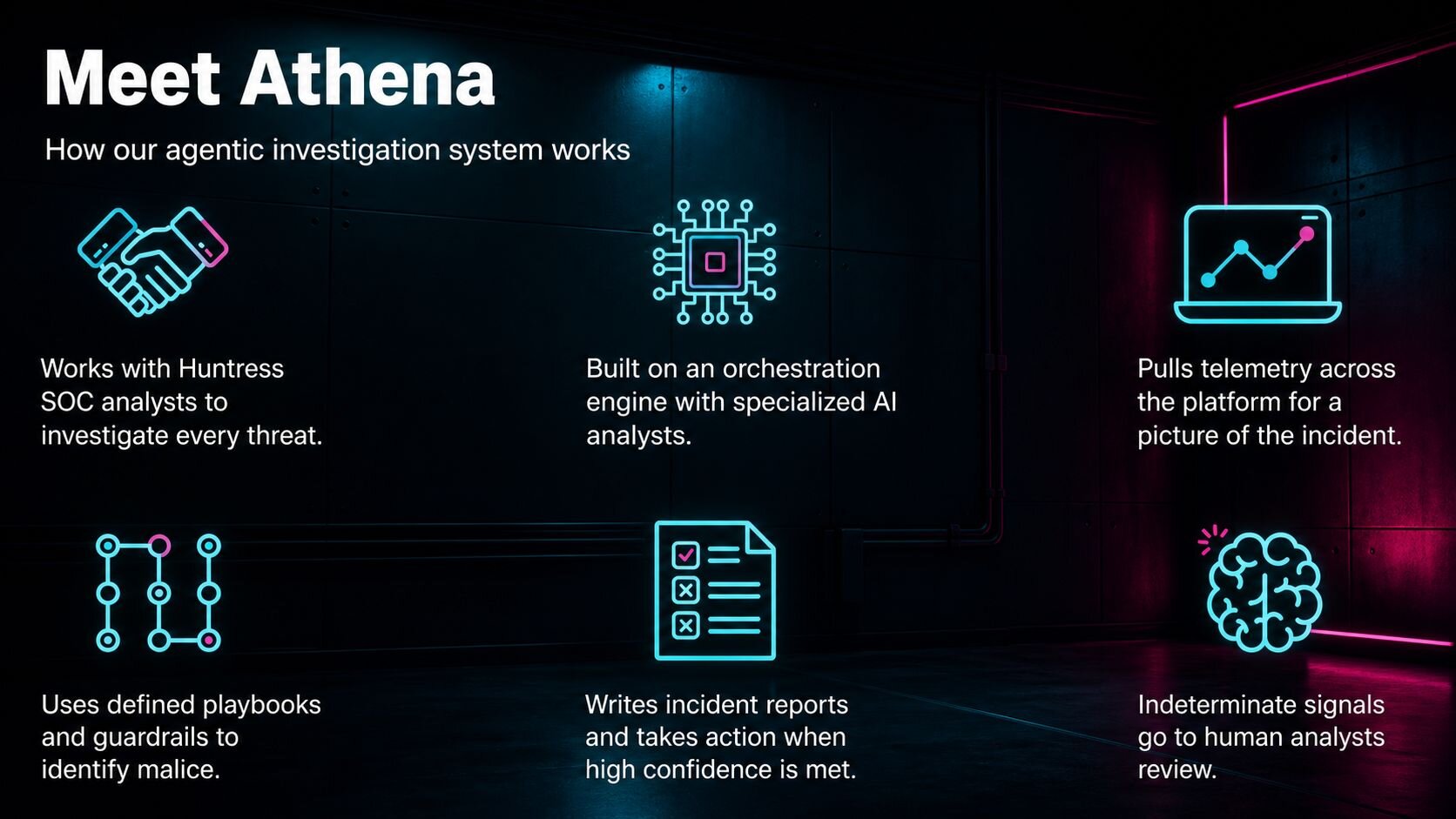
Athena is Huntress' agentic investigation system. It works inside our Security Operations Center (SOC) alongside human analysts. It picks up investigations, runs through structured playbooks, gathers evidence, and reaches conclusions about what's found.
Athena is built on an orchestration layer that coordinates multiple specialized AI agents, each with a defined role.
The agentic workflow is what makes the system reliable and ultimately provides the "white glove" customer experience Huntress is known for.
In many cases, determining whether or not a signal is indicative of malice is the easy part. Deciding how to report and remediate the incident appropriately is more complex.
What Athena Can Do
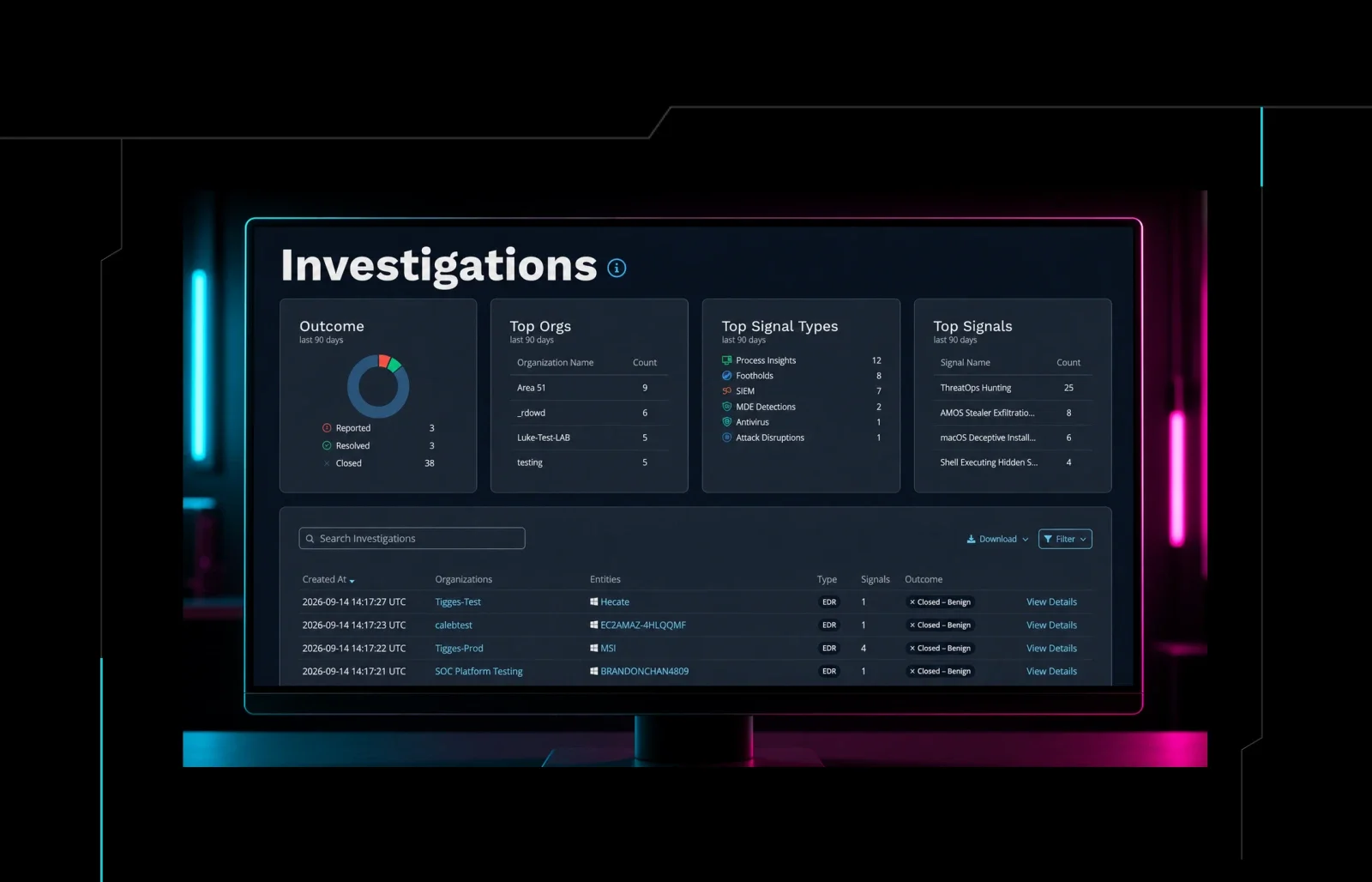
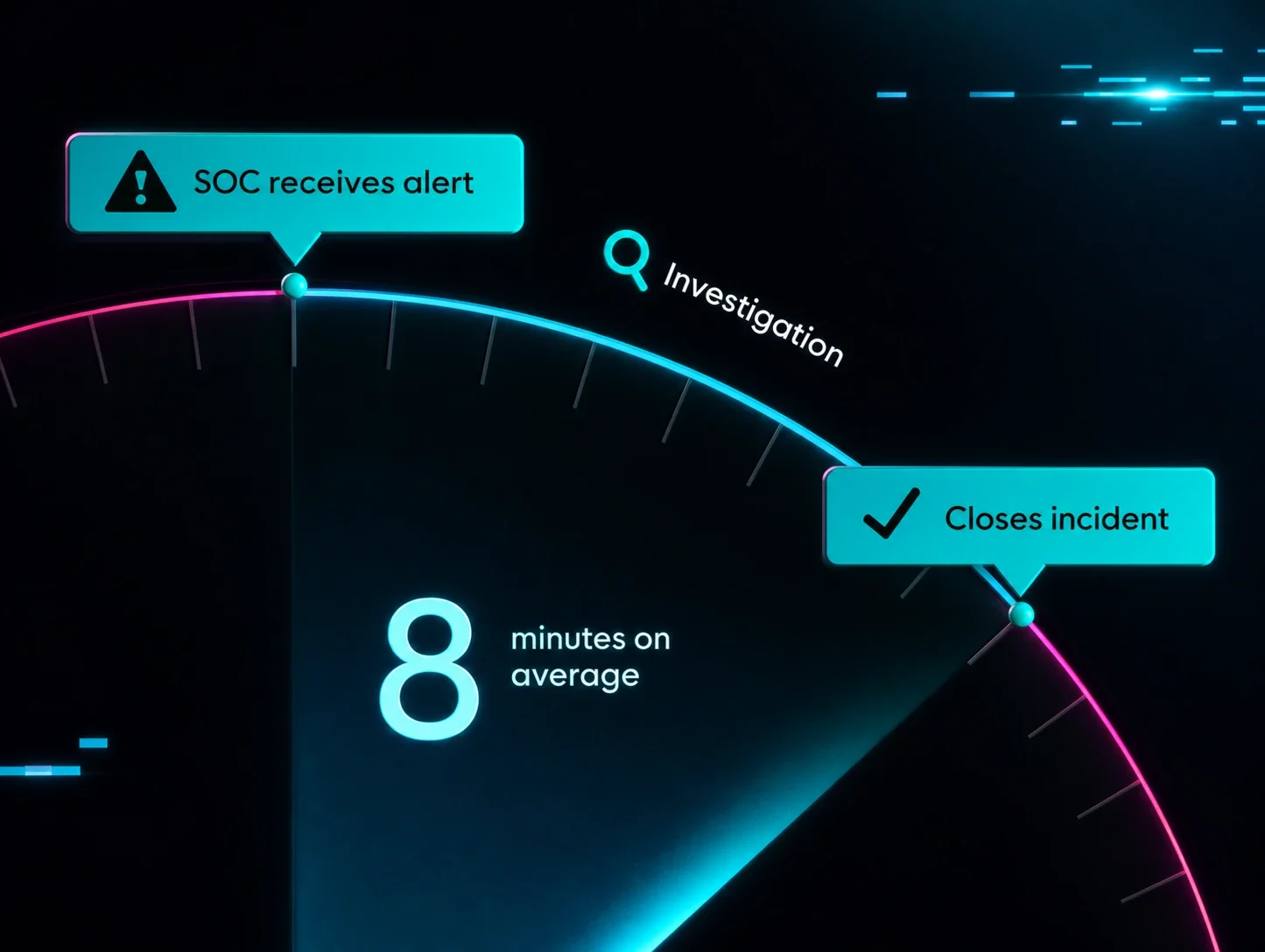
Run a full investigation. For every incoming high-priority signal, Athena creates a structured investigation, groups related signals, and pulls telemetry from across the platform to run an agentic investigation. It starts the moment a signal fires, with no queue or wait.
Reach a malicious determination and report it. When the agentic investigation yields a high-confidence malicious conclusion, Athena acts on its own: it generates a full incident report, attaches remediation guidance, and sends it to the customer, with no human handoff required. This is where Athena provides the most direct operational value. It handles the clear-cut, high-confidence findings that follow well-worn playbooks, and it handles them at a speed and consistency a purely human SOC team can't match at scale.
Write incident reports. Athena drafts the narrative in two different situations. When Athena's own investigation calls an incident malicious, it writes the report and sends it, exactly as described above, with no analyst involved. When a human analyst runs the investigation and determines malice, they hand Athena the signals, notes, and evidence they've gathered, and Athena drafts the narrative from that. Then, the analyst reviews, edits if needed, and sends. Either path produces the same structured and consistent report with timestamps, defanged IoCs, and a clear explanation of what happened and what to do.
What Athena Isn't Allowed To Do
Huntress has made a deliberate design decision to put in checks and balances so humans stay in the lead of AI.
Athena can't close anything as benign without being sure. Huntress made this a deliberate policy rule. When Athena's analysis comes back inconclusive, when agents disagree, when there's not enough data to reach a high-confidence conclusion, or when a finding doesn't fit the expected pattern, that investigation goes to a human analyst. Every time. Missing an active intrusion because an AI analyst dismissed it can cost everything. The worst possible outcome in security operations is a real threat that gets quietly closed without anyone looking at it. That's why we've made human eyes a requirement for inconclusive investigations.
Athena doesn't self-modify its own playbooks or guardrails. Huntress SOC analysts and our platform experts own those rules. They set what investigative steps run for what signal types, decide what confidence thresholds trigger automatic action, and adjust playbooks when new threat patterns emerge.
Athena doesn't make the final call on human-reviewed cases. When an investigation goes to an analyst for review, the analyst decides. Athena's analysis is fully visible, revealing every agent's output, every confidence vote, every piece of evidence gathered, but it informs the decision rather than making it. The human leads.
The Architecture of Accountability
If you want the full picture of how Athena's investigation pipeline works mechanically, from signal bundling and evidence collection to response, we cover it in detail in "AI Signal Triage: How Huntress Cuts Noise Before It Hits the Analyst."
Why We Built It This Way
Hunting down threats is one part of our business. Building trust with customers and partners is another.
Customers are trusting Huntress with their security. That means they're trusting us to catch what matters and to be honest when we're not sure. An AI system that obscures the decision-making process wouldn't earn that trust.
Our human SOC analysts own the guardrails. They adjust them as threats evolve, and review the cases where Athena isn't confident. And when Athena takes action autonomously, it's because the system earned that action through investigative rigor and deterministic thresholds we set, not because a model made a guess.
At Huntress, we believe the best security outcomes are delivered at the intersection of AI and human expertise
Start your free trial of Huntress today, and put Athena to the test.