



The average security operation center (SOC) today is drowning, not because analysts aren't skilled, but because the signal-to-insight ratio has become brutal. More endpoints, more identities, more telemetry, more alerts. If every signal had to be manually triaged by a human analyst, no SOC would keep pace.
Huntress has always been known for low noise. We built smart technology that targets attacker tradecraft, and we back it with our own SOC team to filter out what doesn't matter before it ever reaches you. That's a real differentiator, and one we take seriously.
But even Huntress isn't immune to an industry-wide challenge. AI-accelerated threats mean more incidents, and as our customer base grows and our platform expands across more products, so does the volume of work our SOC needs to handle. Keeping up would ordinarily mean hiring exponentially more analysts and passing those costs on to you. That was never an option, and neither was solving a scale problem by trading away outcomes.
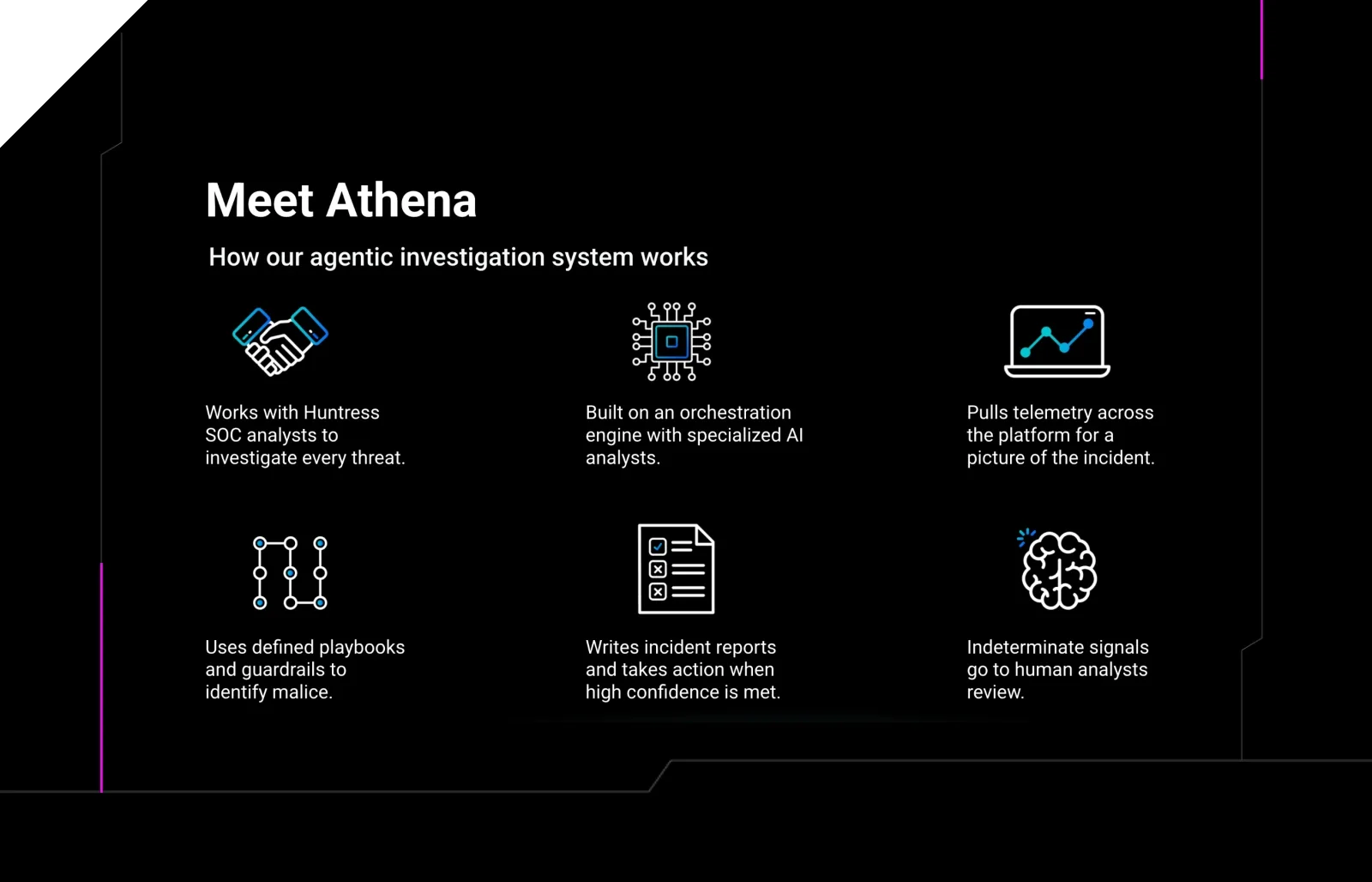
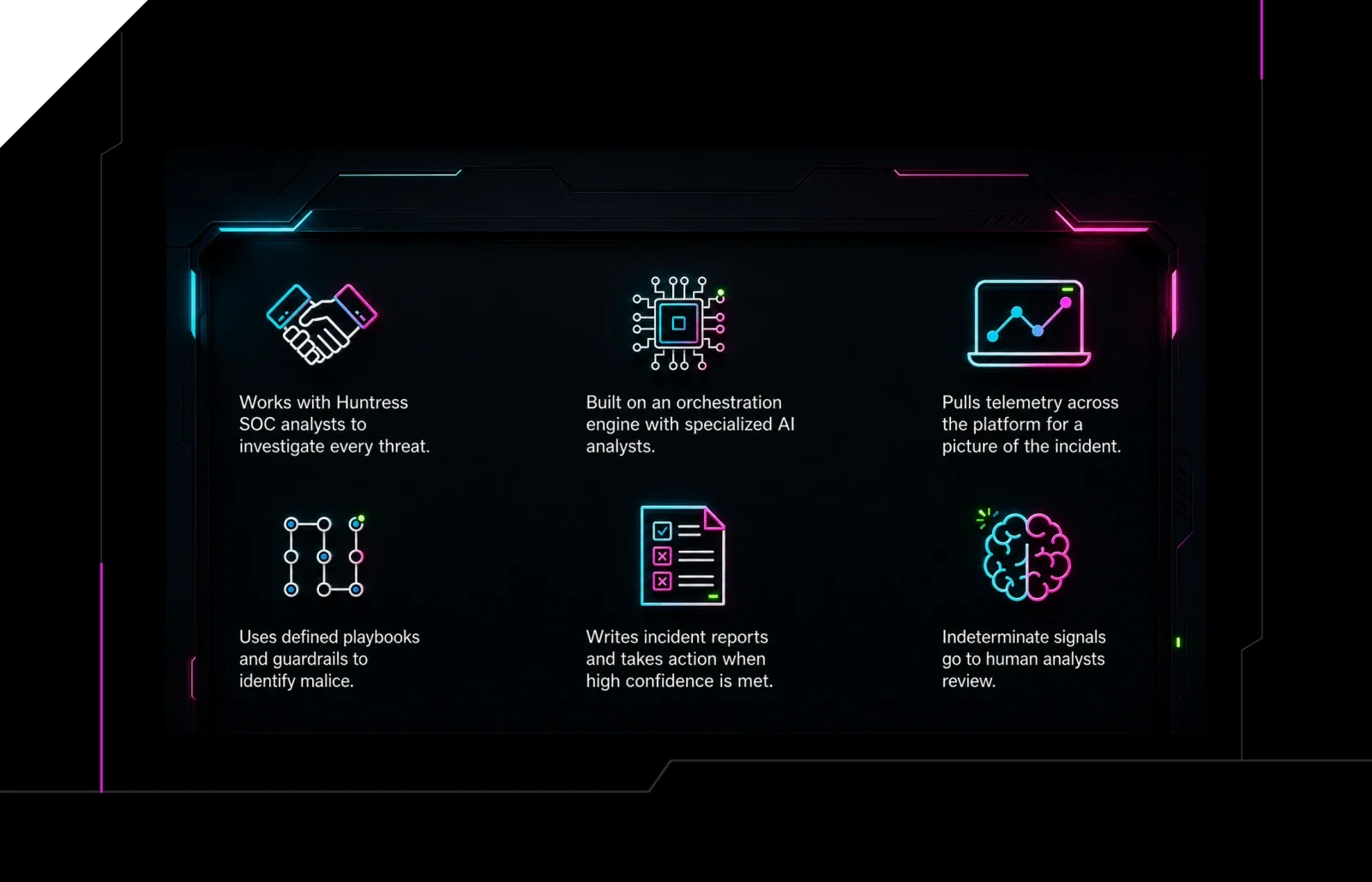
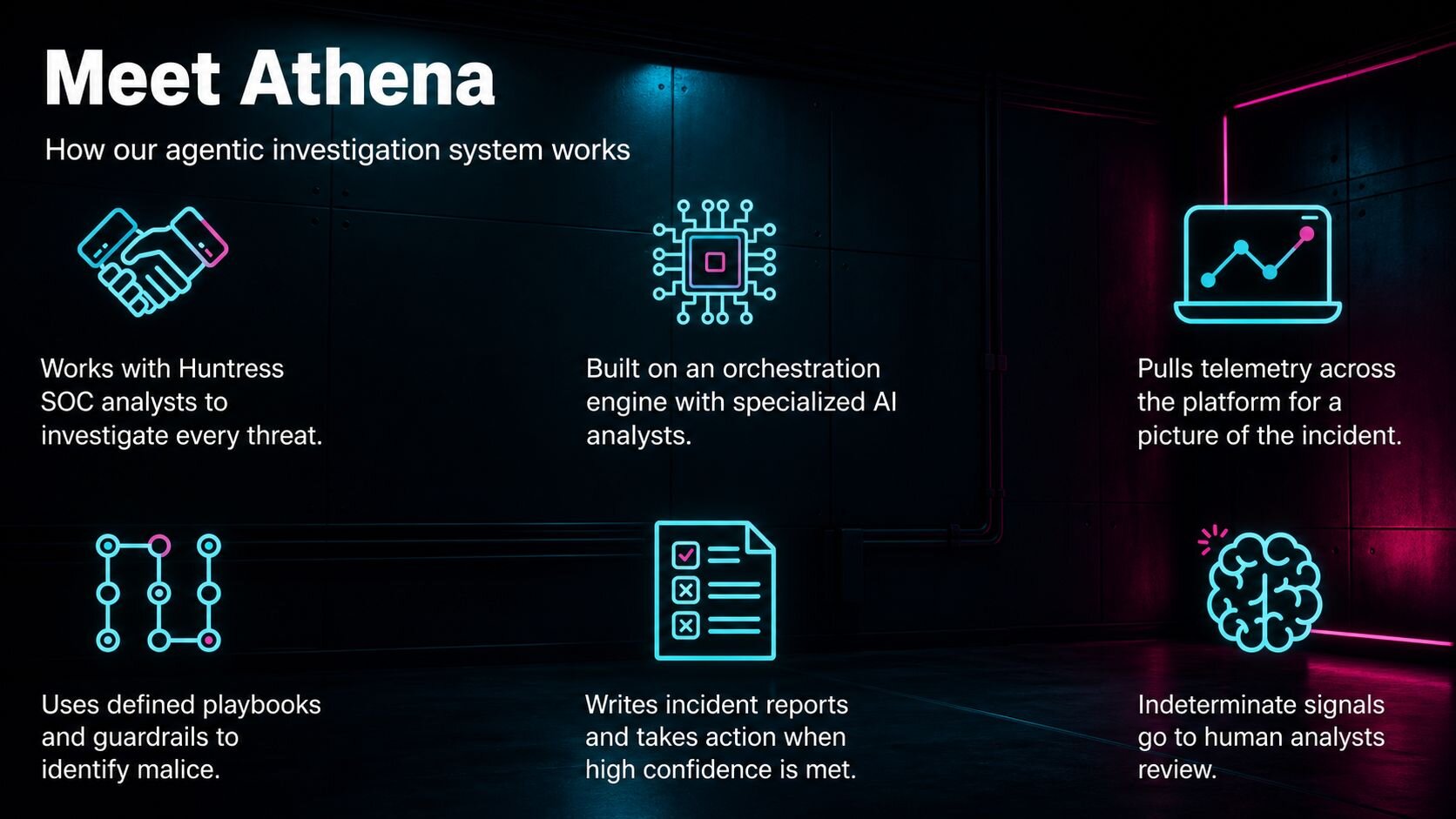
So Huntress built Athena, an agentic investigation system made up of over 40 specialized agents. Not to replace analysts (we continue to hire!), but to automate much of the time-consuming legwork.
What happens before an analyst touches anything
Most people think of AI in the SOC as a chatbot that helps analysts work faster. That's a small piece of it. The more important work happens earlier in the pipeline: figuring out what's worth investigating at all, and in what order.
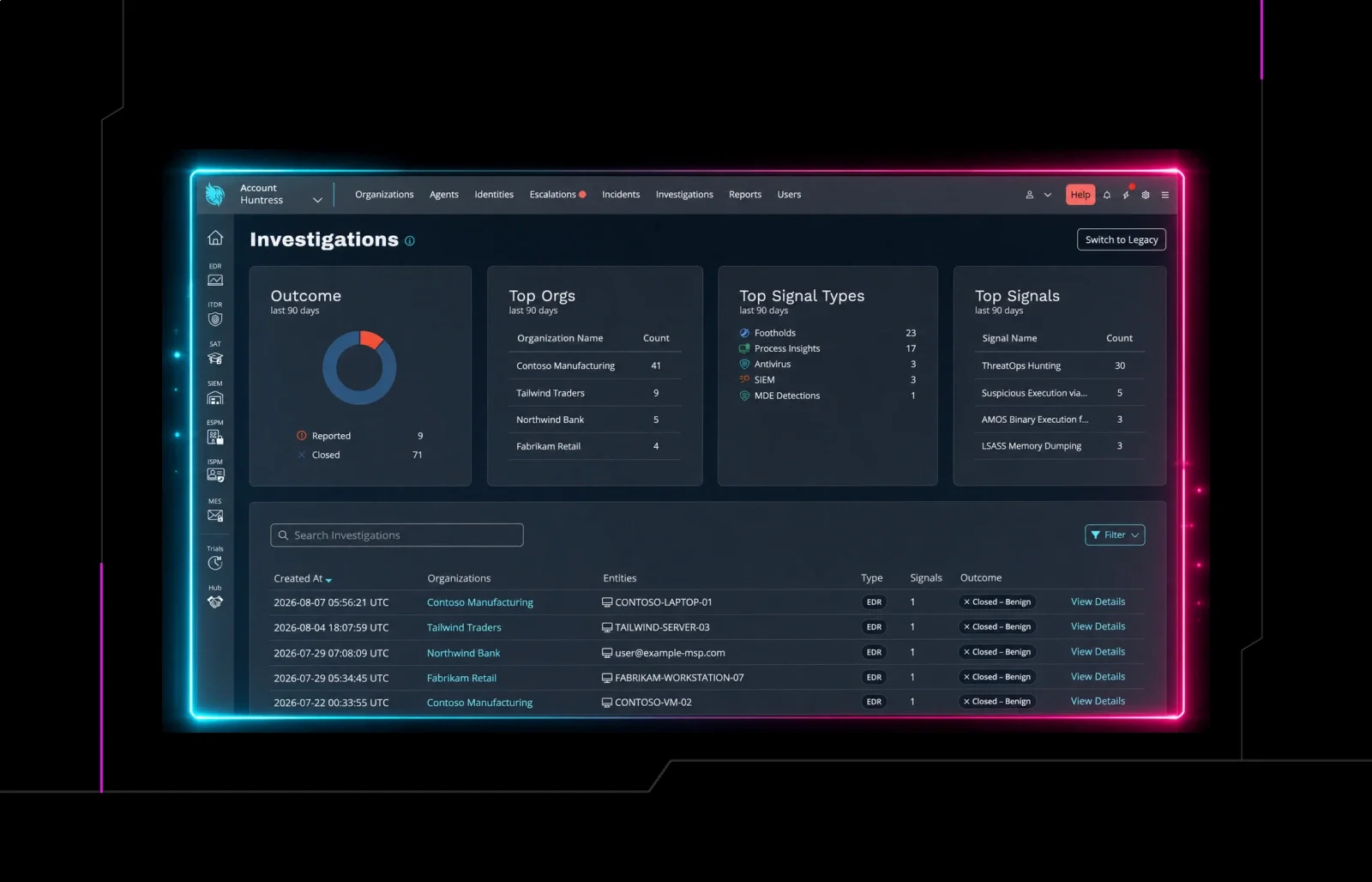
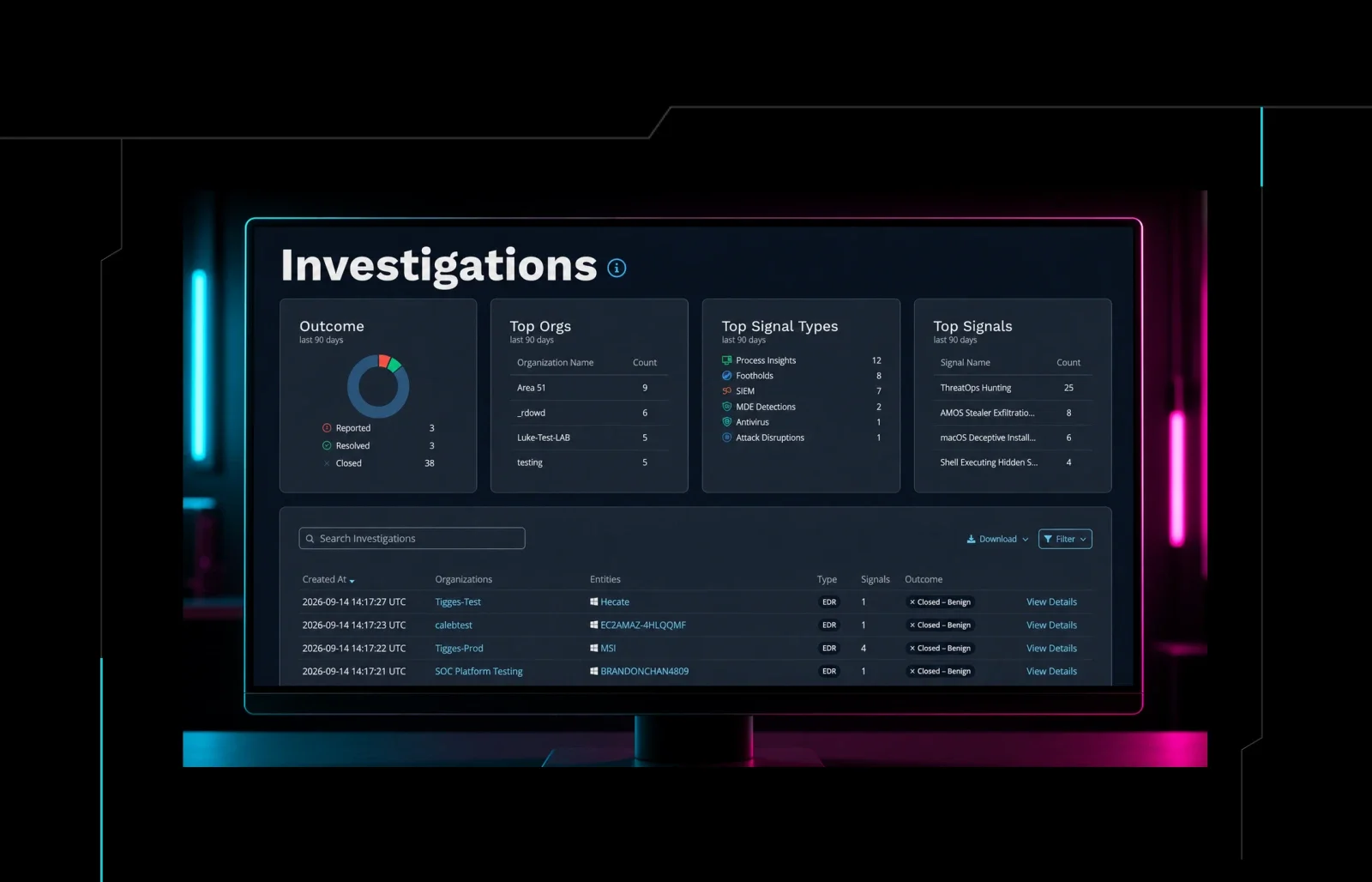
When potentially suspicious activity occurs in an environment, high-priority signals are immediately organized into an investigation. An investigation in this case is a structured object that groups related activities, captures context, and becomes the workspace for everything that follows.
Most real incidents involve multiple signals across a timeline, so a single investigation rarely starts with just one signal. At the moment an investigation is created, a specialized AI agent scans all other open signals on that same entity (endpoint, identity, or otherwise), looking for shared characteristics: same process, same source IP, same attack pattern. Matching signals are automatically bundled in.
The result: when an analyst opens a case, they're not starting from a single alert and hunting for related activity. The related activity is already there. The timeline is already assembled. They're starting further into the investigation, not at zero. And in some cases, a human analyst doesn't need to review at all(more on that in a bit).
Let's take a look from beginning to end.
Triage: Not all investigations are equal
Immediately following investigation creation, Athena examines the signal contexts to identify hands-on-keyboard (HOK) incidents. Anything that resembles a live threat actor (e.g., ransomware, lateral movement) is immediately pushed to the top of our human SOC queue for rapid containment and response. Those are exactly the types of complex threats that require human expertise and instincts, and Athena helps by surfacing and releasing them within seconds of signals arriving.
Huntress' SOC analysts see HOK investigations every day, but most cases don't involve a live threat actor because we detect and respond so quickly. In most investigations, Athena adds a brief note summarizing the signal(s) and entity context before proceeding with its agentic investigation.
Evidence collection: Building the picture automatically
After triaging, Athena's sub-agents get to work on evidence collection, pulling telemetry from across the Huntress platform to build a picture of what actually happened.
For endpoint signals, that includes process activity: what ran before the signal fired, what ran after, whether persistence was established, and what else on that host looks suspicious.
For identity-based signals, it includes organizational baseline analysis, comparing a suspicious login against how the rest of the organization behaves, so context can confirm what the rule already flagged.
These are just a couple of examples of the dozens of evidence types Athena can gather. This evidence-gathering used to happen manually for every single case. Now Athena handles it automatically.
Analysis: Finding evidence of malice
One of the most significant ways Athena changes SOC economics isn't in what it escalates. It's in what it confidently handles without routing to a human at all.
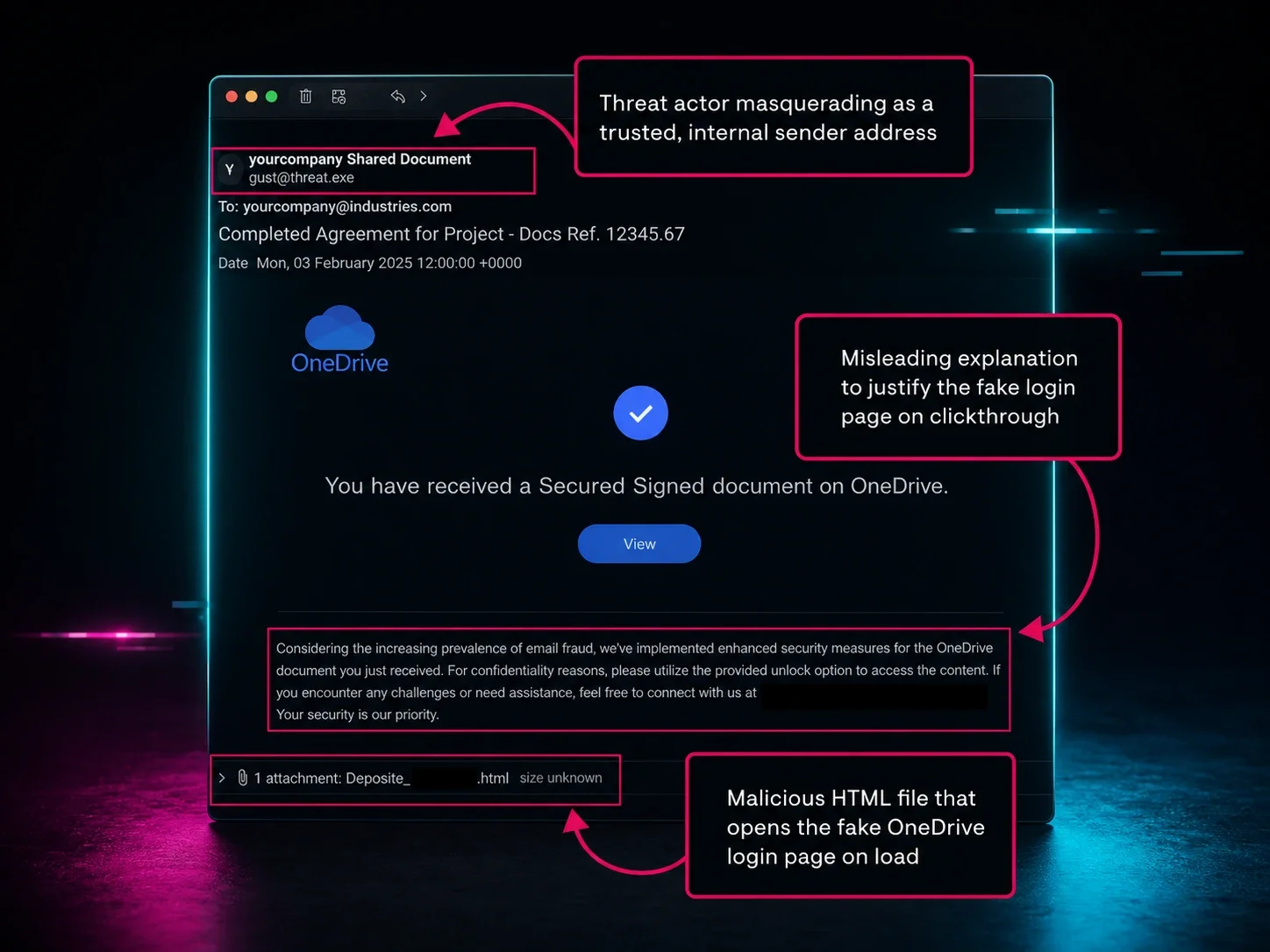
For Identity Threat Detection and Response (ITDR), where we launched Athena first, our BEC playbooks were well-defined prior to Athena. In Unwanted Access investigations, for example, the signal(s) indicate suspicious authentication activity, like session theft, token theft, and adversary-in-the-middle activity. Athena focuses its analysis on confirming the authentication activity appears anomalous and can quickly verify malicious intent by examining follow-on activity.
When Athena positively identifies malicious activity, it generates an incident report and delivers it to the customer. No human analyst required.
In practice, analysts spend less time on straightforward, pattern-matching work that follows well-worn playbooks and more time on the cases that actually need human judgment: the complex, ambiguous, high-stakes investigations where experience and expertise matter most.
Assign to analyst: What actually reaches a human analyst
Athena sends an investigation to a human analyst in two situations: when it has high confidence that something is malicious, and when it has low confidence or inconclusive findings.
When cases reach analysts, they arrive with documented evidence and are prioritized. The human SOC analyst queue shows unassigned investigations, in-progress work, and Athena's analysis side-by-side, so the person making the final call has all the context they need, not just a raw alert.
The result is faster pickup times, better-informed decisions, and reports that tell the actual story of what happened.
Why this matters to you
The practical effect of AI-driven triage, investigation, and remediation isn't just efficiency inside the Huntress SOC. It directly impacts customer experience through:
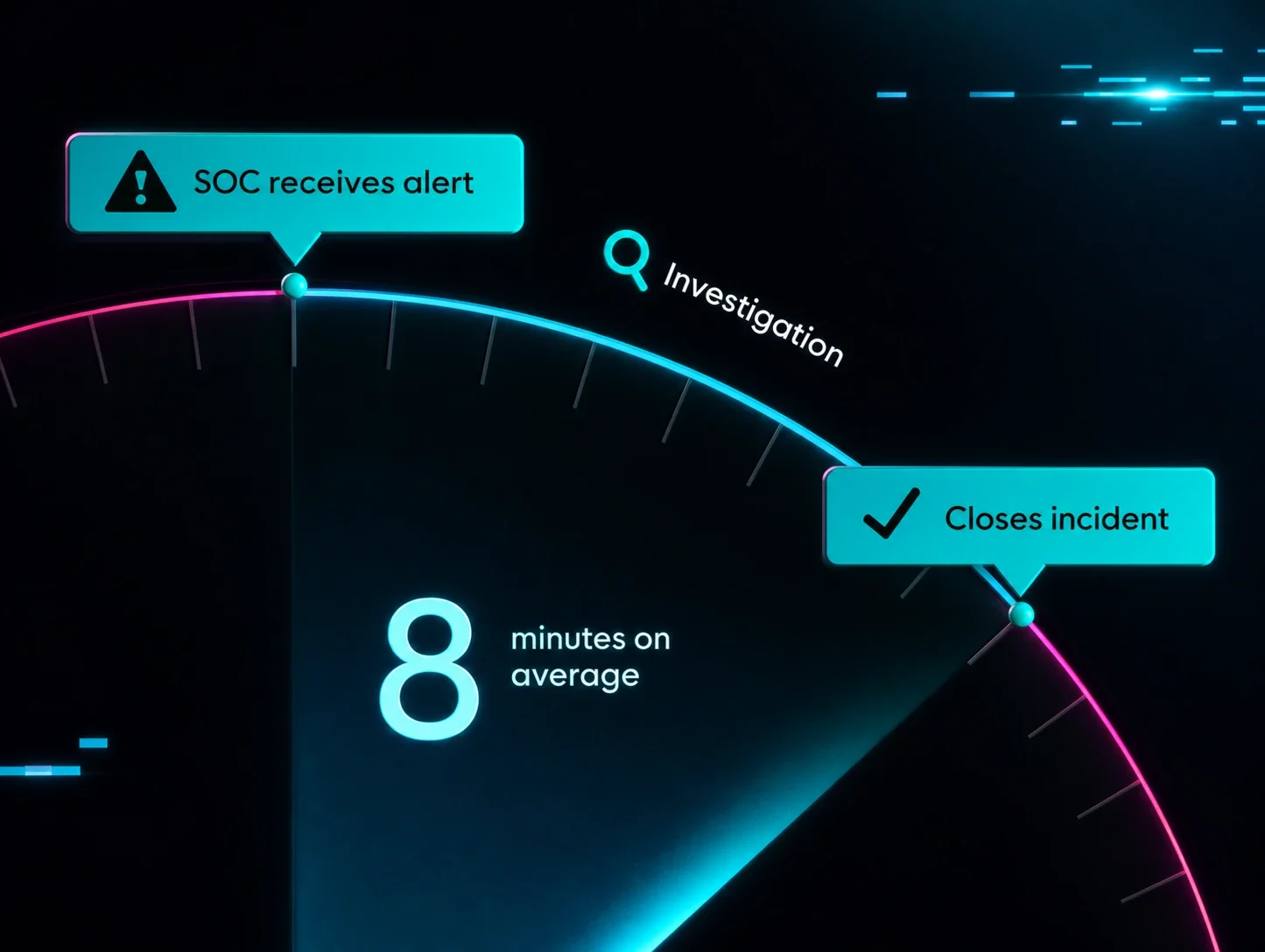
Faster time to begin an investigation. Athena starts working the moment a signal fires, not when an analyst gets to it, so response times for confirmed threats are faster than in a human-only queue.
More consistent report quality. Every investigation follows the same structured playbooks. Reports follow a consistent format with clear explanations of what happened, what was done, and what to do next.
Lower false positive rates. By requiring multiple agents to reach high-confidence conclusions before acting, Athena is more conservative and more accurate than relying on a single layer, human or non-human.
Capacity that scales. When detection volume spikes because of a new threat campaign, a product expansion, or new customer onboarding, Athena absorbs that load in real time so the Huntress SOC stays reliable.
The bottom line
Huntress built Athena to handle the structured, high-volume, playbook-driven work that would otherwise exhaust a human SOC team, so when something genuinely hard shows up, a skilled analyst is ready for it.
Signal triage isn't glamorous. But getting it right is what separates a SOC that scales from one that drowns. Now you know which Huntress is.
Start your free trial of Huntress today, and put Athena to the test.