


Infographic
Where AI Earns Its Place on a Resilient Security Team
As security teams turn to AI tools, explore where AI can save your team time and what pitfalls are worth avoiding.
Your team isn't behind because it doesn't care. It isn't behind because it doesn't work hard. In a lot of cases, it's behind because the program was built for a threat landscape that doesn't exist anymore.
Huntress surveyed 1,050 internal IT and security professionals across North America and the UK to find out where teams actually stand — not where vendor decks say they should be.
If you manage iKey or security, you've got skeletons in your digital closet. And you know exactly which ones. Shared mailboxes with no MFA, the password spreadsheet, legacy RMEM tools nobody remembers installing. These are the blind spots attackers live for. So how do we fix it? The answer isn't buying more tools. It's building a resilient team. Resilient teams don't plan for if they get attacked. They plan for when. And they do five things differently. Optimize for speed, not volume. More alerts doesn't mean more security. Prioritize decision velocity. Know what matters and act fast when it does. Treat identity as foundational. MFA and SSO are the floor. Everything must tie back to a verified protected identity. Design systems that support humans. People will make mistakes. Your controls need to catch them early. Reduce cognitive load before adding automation. AI should remove friction, not add complexity. Use it to cut noise, group related activity, and surface context. Prioritize ownership over perfection. Full prevention is a fantasy. Limit the blast radius and recover fast. To pull this off, rethink your org chart around functional ownership, not headcount. You need three core pillars: detection and response, identity and security, and security enablement. Even in a lean team wearing multiple hats, everyone should know exactly who owns what when an incident kicks off. So what can you do today? Here's your checklist. Tighten your MFA. Secure your RDP and VPNs. Enforce browser and password hygiene. Set up clear phishing reporting workflows. Review your identities and shared mailboxes. Document your IR plan and cyber insurance details. The teams that survive aren't the ones with the most tools. They're the ones who had a plan before everything hit the fan.
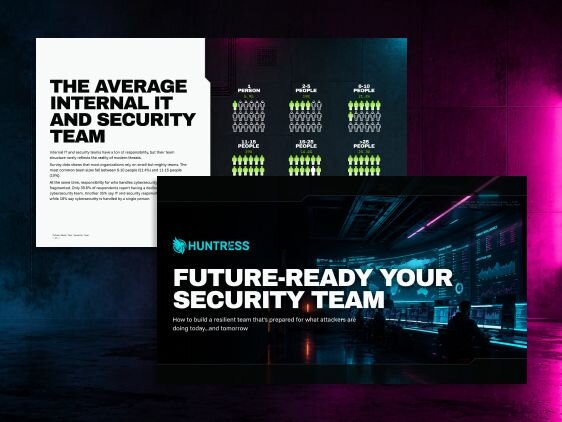
The teams keeping businesses safe are stretched thinner than ever—fewer people, more alerts, and attackers moving faster every year. Building a team that holds up through 2030 isn't about hiring your way out. It's about working smarter and leaning on the right strategies.
This report digs into what resilient security teams actually do differently, drawn from a survey of the security and IT people doing the work.
How teams are sized and staffed today—and where the gaps hurt most
How fast teams are adopting AI, and what they're using it for
The habits and structures that separate resilient teams from burned-out ones
They automate the noise so people can focus on real decisions
They lean on outside expertise instead of trying to cover every shift alone
They invest in their people, because tools don't catch everything
They build for the long haul, not just the next incident
You don't have to staff a 24/7 SOC to act like you have one. Huntress pairs continuous detection with a real Security Operations Center, and Security Awareness Training turns your wider workforce into part of the defense.
Download the report to see what resilient teams are doing now to be ready for 2030.
Related Resources
As security teams turn to AI tools, explore where AI can save your team time and what pitfalls are worth avoiding.
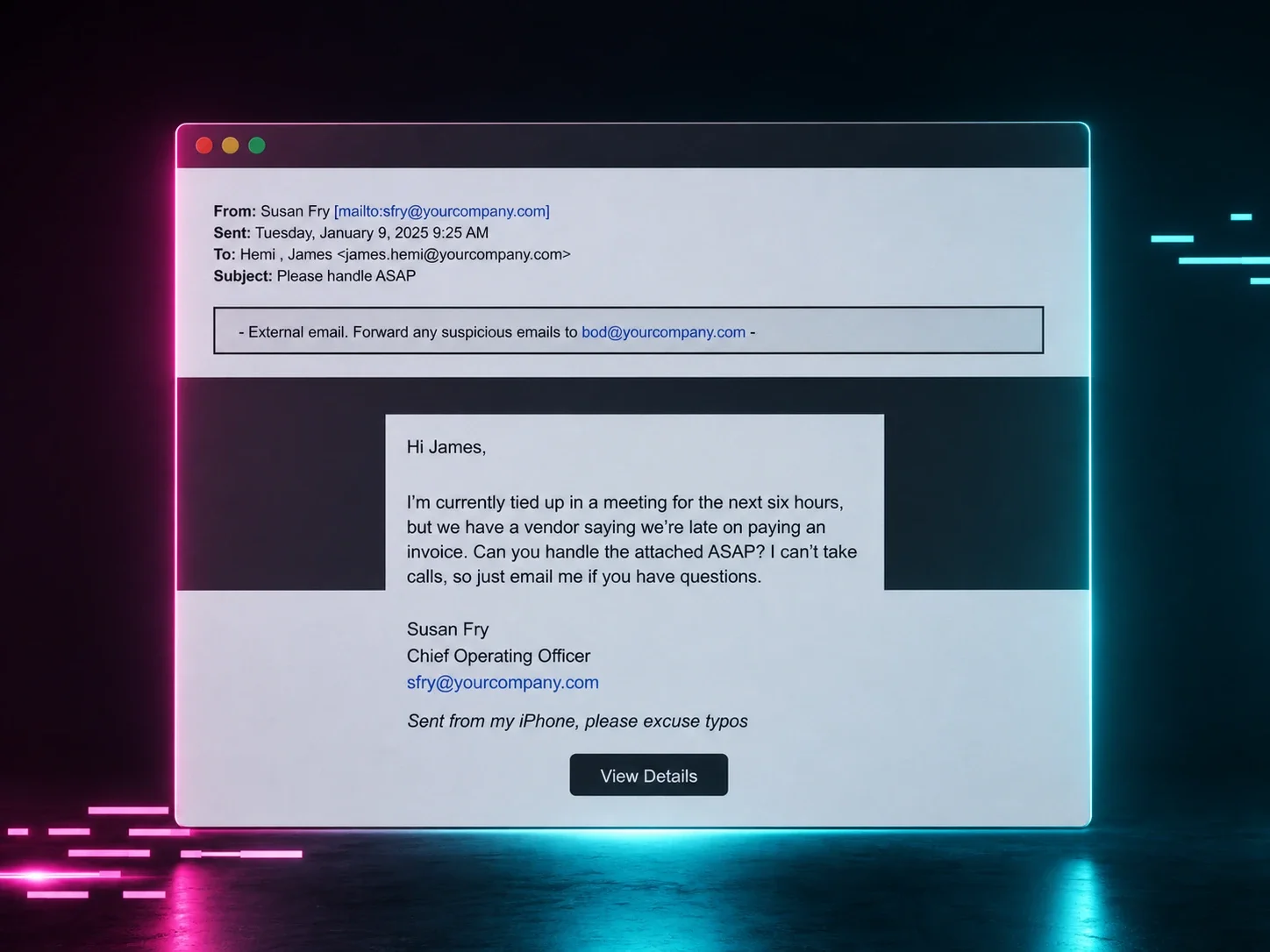
Mesh will cover techniques for detecting, blocking, and deleting impersonation emails, and we’ll go over the ways to detect compromised Microsoft 365 accounts before they do any damage.
Shared mailboxes with no MFA, the password spreadsheet, legacy tools nobody remembers installing. This short video walks through the five things resilient security teams do differently, and the org chart that makes it work.
This session explores how attackers are evolving their tactics, where organizations remain most vulnerable, and what practical steps businesses can take to strengthen email security as part of a broader cybersecurity strategy.
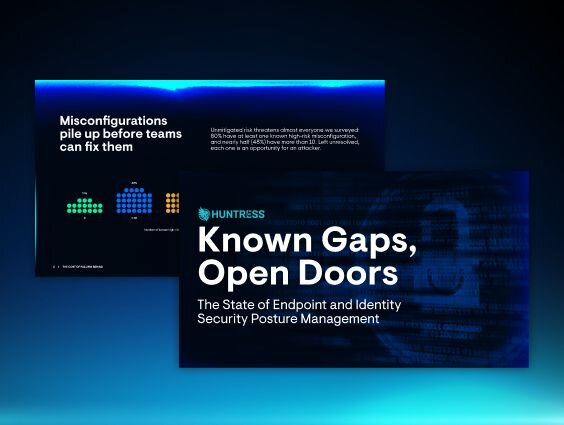
This report, based on research from 521 security and IT professionals, examines why endpoint and identity security keeps breaking down, and why the answer isn't to add more self-managed point solutions.
Huntress Managed SAT’s new Threat Simulator gives your learners hands-on experience with a variety of tradecraft, not just phishing. Learners carry out simulated threats from the hacker’s POV to get a better understanding of the tactics and thinking behind attacks. Because when they learn how to think like hackers, they can be better defenders.
This Healthcare Cybersecurity Success Kit is packed with the information, tools, and guidance you need to keep your organization running smoothly and, most importantly, your patients safe.
With today’s threats getting smarter, sneakier, and more people-focused, HRM is defining a new baseline for security. To get you up to speed, we designed this infographic.
Stay ahead of cyber threats with the Huntress 2026 Cyber Threat Report. Uncover last year’s cyberattacks, get key industry insights, and develop strategies to outsmart the most malicious hackers.
[Summary text goes here]
