



Acknowledgments: Special thanks to Jon Semon, Andrew Brant, and Lindsey O'Donnell-Welch for their contributions to this investigation and writeup.
Background
There's still three months until the release of Grand Theft Auto VI (GTA6), but the internet has already reached a fever pitch thanks to a slate of gameplay footage leaks, as well as an official extended look.
Not to let such a hot topic pass them by, threat actors are capitalizing on the GTA6 popularity to distribute malware, compromising overly eager fans hoping to get their hands on early release versions of the game. However, there is no official GTA6 demo as of yet, nor is there currently any sign of an actual leaked, playable copy of the game being distributed online.
Bad actors have instead been busy distributing malware masquerading as optical disk image files (ISOs) of the game. While there have been several writeups on these threats, we found a sample in a sandbox with different functionality.
A variety of distribution methods
Malicious actors appear to be covering a variety of avenues where an overeager fan may attempt to find a copy of the game. We have seen several examples of SEO poisoning designed to rank highly in searches for GTA6, as well as ISOs published on gaming forums and various torrenting sites. There have also been social media posts advertising these ISOs.
Some of the ISOs being distributed can be very large in size—some crossing 100GB. However, this appears to be done simply to emulate the size an ISO might be for a AAA video game, and the file itself is filled with junk data to reach a plausible size. The malicious files contained within are a factor smaller.
What one ISO can do
The sample that we obtained contained several components. The malicious actors behind it appear to be making an opportunistic attempt at compromising systems, throwing everything they can at the users who attempt an installation. The ISO includes a fake installer, several RATs, an infostealer, ransomware being used as a wiper, and a web browser.
When a target mounts and opens the ISO for the supposed game, they're presented with the main installer file, gta6installer.exe, which curiously has a GTA5 logo for its icon.
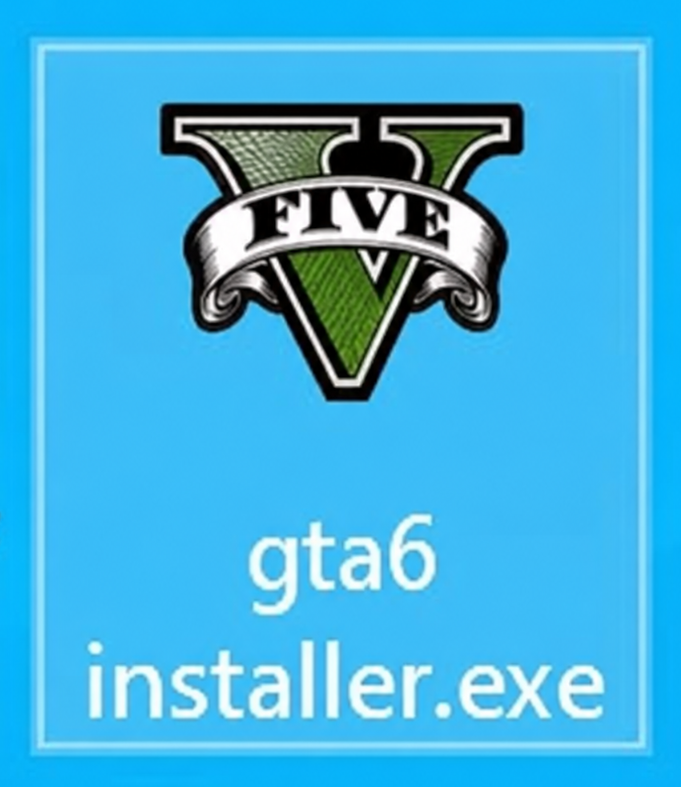
Figure 1: Icon for the main installer file
Executing this file starts an installer that displays a message in Russian:
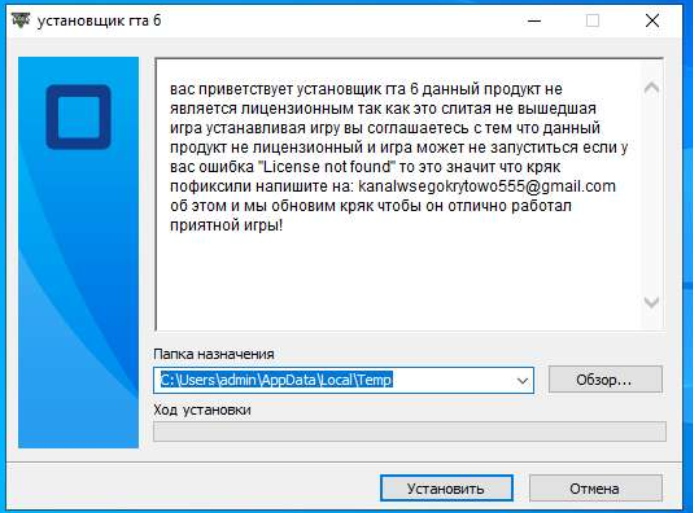
Figure 2: Message contained within the fake GTA6 installer
Using online tools, this message roughly translates to the following in English:
Welcome to the GTA 6 installer. This product is not licensed because it is a leaked, unreleased game. By installing the game, you agree that this product is unlicensed and that the game may not start. If you receive the error "License not found," it means that the crack has been fixed. Write to [email protected] about it, and we will update the crack so that it works perfectly. Enjoy the game!
The setup here is that the threat actor is warning the user that this installer may not work and to watch for a "License not found" error. They provide an email to contact them to update the supposed crack that would make this game work (when this installation is complete, a message with exactly this text is deliberately displayed).
We attempted to contact the email address provided, but as of publication we have not received a response to our inquiry.
The malware contained within the ISO appears to be fairly old, repurposed for this opportunistic attack, with files dating back to 2023 in many cases. Proceeding with the installation, several files are added to the %TEMP% folder on the system, many of which appear to be GTA6-branded to avoid suspicion.
%TEMP%\checkinternetconnection.bat%TEMP%\find.vbs%TEMP%\licensechecker.exe%TEMP%\rockstar.exe%TEMP%\steam.exe%TEMP%\rockstargames.exe%TEMP%\gta6.exe%TEMP%\YandexPackLoader.exe%TEMP%\license.exe%TEMP%\rockstargamescrashfixer.exe%TEMP%\rockstarservices.exe%TEMP%\adminapp.exe
The checkinternetconnection.bat file then launches Microsoft Edge and connects to https://clck[.]ru/34uJnp, where it confirms that it has an internet connection before proceeding to unpack and install the various malware components.
NJRAT
There are several copies of NJRAT installed on the system:
licensechecker.exelaunches%TEMP%\any.ran.exerockstar.exelaunches%TEMP%\svchost.exesteam.exelaunches%TEMP%\abc.exe
This is a pretty well-known RAT that includes a variety of features, such as:
Opening a shell
Logging keystrokes
Accessing connected cameras
Stealing credentials from browsers
Uploading and downloading files
Modifying files, registry entries, and processes
Viewing the desktop and taking screenshots
Stealing cryptocurrency details
Each of these NJRAT instances create Windows Firewall rules for themselves and then they connect to several IP addresses associated with AWS-hosted infrastructure:
35.157.111[.]1313.68.56[.]2323.67.15[.]169
They also connect to secure tunneling services provided by ngrok at 7.tcp.eu.ngrok[.]io:12684.
Three more copies of NJRAT (license.exe, rockstargamescrashfixer.exe, and rockstarservices.exe) were installed to %TEMP%, but didn't spawn any children, make any network connections, or exhibit any further, observed activity. Clearly this was a case of a threat actor throwing an armful of RATs at the wall and seeing what would stick.
DCRAT
The rockstargames.exe file drops a .bat file in %TEMP%\P3usMXh1h4.bat, which sets the ntp server to local, installs a randomly named copy of DCRAT in the C:\Users\Default\Local Settings\ folder, in our case as UserOOBEBroker.exe, and then deletes itself.
The RAT then connects to a0700877.xsph[.]ru (141.8.197[.]42). This domain has been on blocklists for several years, categorized as known malicious infrastructure. This instance of DCRAT allows for general control of the compromised system, including the following capabilities:
Capturing screenshots
Mouse control
Audio device discovery
Window tracking
Clipboard access
Read/write access to the registry
The rockstargames.exe file then modifies the Windows hosts file in order to sinkhole various telemetry and residential antivirus reporting services.
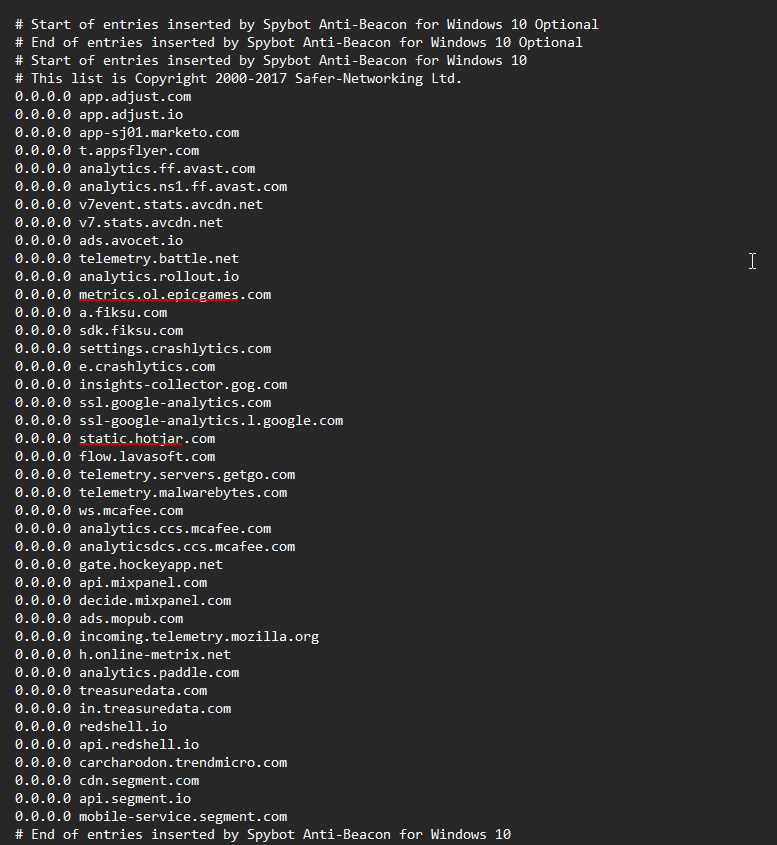
Figure 3: Entries added to the hosts file
Mercurial Grabber
The Mercurial Grabber infostealer is dropped alongside the other files from the ISO install as adminapp.exe. This is an infostealer that is readily available on GitHub, and while it is advertised as being for "educational purposes only," it's clearly not being used in such a manner here. The infostealer allows for the collection of the following information:
Roblox Studio cookies
Minecraft session data
Discord tokens
Google Chrome passwords and cookies
System information, IP address, and geolocation
Windows product keys
Screenshots
The infostealer then uses Discord webhooks to send the information it steals to the following URL:
https://discord[.]com/api/webhooks/995445114254139543/NmpxQmuBCD6sm3UkVvupGtx-Y0M_A86oJHp00O-l8F4jakfVhqFXzMBoy1uBDdj2rBLc
Chaos ransomware
While this is technically a well-known ransomware family, it appears that the actors are not looking to collect a ransom from infected users. Instead, they encrypt and/or destroy files on the system, effectively utilizing the ransomware as a wiper.
This instance of the ransomware will only run if the user is an administrator. First, the gta6.exe file creates %USERPROFILE%\AppData\Roaming\svchost.exe. The ransomware then disables recovery options, deleting all backup shadow copies of the drives and modifying the boot configuration to disable recovery and ignore any boot failures. It then changes the desktop wallpaper to an image of SpongeBob with a message in Russian:
YOU HAVE BEEN HACKED BY THE ASHA HACKER TEAM!
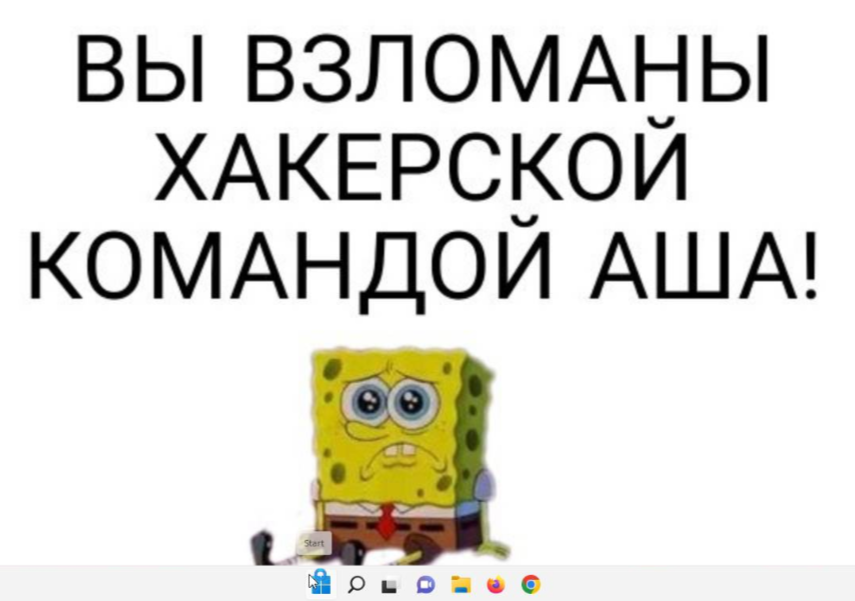
Figure 4: Changes to the desktop wallpaper
The ransomware encrypts files 200MB and smaller, by first creating a random password of 20 characters, then using it to run AES encryption, and finally adding a random four-character extension to the files. Any files larger than 200MB are overwritten with random data, effectively destroying them. It encrypts any non-system drives first, before running through the following user and shared-data locations on the system drive, as well as OneDrive drives, if present:
%USERPROFILE%\Desktop%USERPROFILE%\Links%USERPROFILE%\Contacts%USERPROFILE%\Documents%USERPROFILE%\Downloads%USERPROFILE%\Pictures%USERPROFILE%\Music%USERPROFILE%\Saved Games%USERPROFILE%\Favorites%USERPROFILE%\Searches%USERPROFILE%\Videos%APPDATA%%ONEDRIVE%
Finally, it creates a ransom note text file in each folder named read_it.txt.
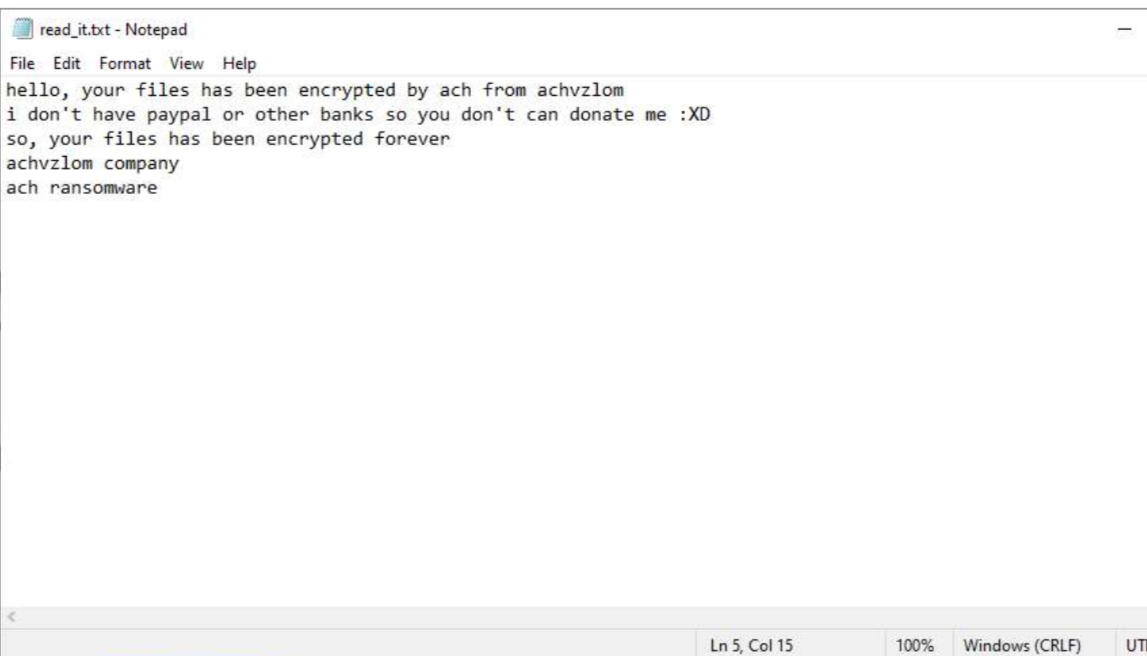
Figure 5: Ransomware note
hello, your files has been encrypted by achvz1om
i don't have paypal or other banks so you don't can donate me :XD
so, your files has been encrypted forever
achvz1om company
ach ransomware
Unfortunately for anyone seeing this message, it does not appear that the threat actors are looking to collect a ransom, effectively turning this malware into a wiper, as opposed to a standard ransomware attack.
A browser, just for kicks
Finally, the ISO installs a copy of the Yandex Browser, as YandexPackLoader.exe. The reasons for installing this browser remain unclear; however, this is a popular browser in eastern Europe and Russia. Given the installer's use of Russian and the presence of this browser, it's possible that this ISO was initially designed to target users in this region.
A plausible failure
As the installation completes, the threat launches WScript.exe and loads find.vbs, which displays a message that says "license not found" on the screen.
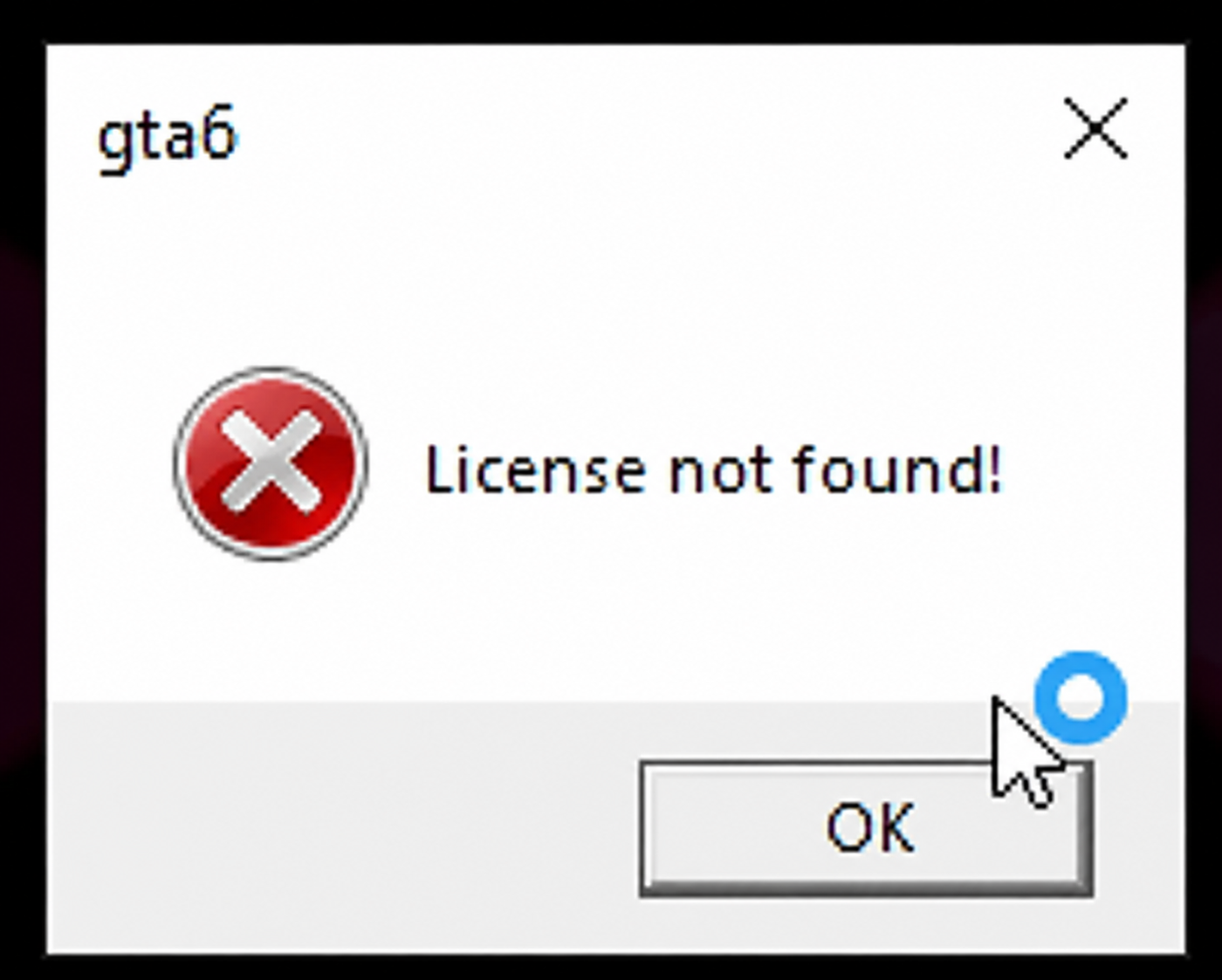
Figure 6: Error message meant to trick the user into thinking the game didn't install
This message is exactly what the installation warned about, leaving the user with a plausible explanation for why no game ran and diverting their attention from the malware being installed in the background.
Mitigation Guidance
Generally speaking, it's not a good idea to attempt to download cracked, pirated software, especially if the game in question has not yet been released. This is fertile ground for scams and threat actors attempting to take advantage of the impatient and overeager.
The good news here is that nothing in this ISO is all that new or relatively novel. The malware contained within is several years old, and for each case, a currently updated version of Windows Defender can detect the malware and stop it from compromising the system. However, if you do install this malware, the best practice is to disconnect the machine from the network, reset all of your passwords, enable 2FA wherever possible, and do a complete reimage of the compromised system.
Indicators of Compromise (IOCs)
Item | Description |
|---|---|
MD5:
| Initial installation executable |
MD5:
| BAT file used to confirm a working internet connection |
MD5s:
| Copies of NJRAT and associated launchers |
| IP and ngrok addresses that NJRAT connects to |
MD5:
| Copy of DCRAT and associated installation files |
| Entries added to the |
| Domain and IP address that DCRAT connects to |
MD5:
| Mercurial Grabber infostealer binary |
| Discord webhook that Mercurial Grabber connects to |
MD5:
| Chaos ransomware binaries |
| Ransomware note left in folders with Chaos ransomware-encrypted files |
MD5:
| Yandex web browser |
MD5:
| Script that displays a "license not found" message |