
Your business’ toughest competition might be criminal. See why.
Utility navigation bar redirect icon
Portal LoginSupportContact
Search
Close search
Huntress Logo in Teal
  • Platform Overview
    Managed EDR

    Get full endpoint visibility, detection, and response.

    Managed EDR

    Get full endpoint visibility, detection, and response.

    Managed ITDR

    Protect your Microsoft 365 identities and email environments.

    Managed ITDR

    Protect your Microsoft 365 identities and email environments.

    Managed SIEM

    Managed threat response and robust compliance support at a predictable price.

    Managed SIEM

    Managed threat response and robust compliance support at a predictable price.

    Managed Security Awareness Training

    Empower your teams with science-backed security awareness training.

    Managed Security Awareness Training

    Empower your teams with science-backed security awareness training.

    Huntress Managed ISPM

    Continuous Microsoft 365 and identity hardening, managed and enforced by Huntress experts.

    Huntress Managed ISPM

    Continuous Microsoft 365 and identity hardening, managed and enforced by Huntress experts.

    Huntress Managed ESPM

    Proactively secure endpoints against attacks.

    Huntress Managed ESPM

    Proactively secure endpoints against attacks.

    Integrations
    Integrations
    Support Documentation
    Support Documentation
    See Huntress in Action

    Quickly deploy and manage real-time protection for endpoints, email, and employees - all from a single dashboard.

    Huntress Cybersecurity
    See Huntress in Action

    Quickly deploy and manage real-time protection for endpoints, email, and employees - all from a single dashboard.

    Huntress Cybersecurity
  • Threats We Stop
    Phishing
    Phishing
    Business Email Compromise
    Business Email Compromise
    Ransomware
    Ransomware
    View Allright arrowView Allright arrow
    Industries We Serve
    Education
    Education
    Financial Services
    Financial Services
    State and Local Government
    State and Local Government
    Healthcare
    Healthcare
    Law Firms
    Law Firms
    Manufacturing
    Manufacturing
    Utilities
    Utilities
    View Allright arrowView Allright arrow
    Tailored Solutions
    MSPs
    MSPs
    Resellers
    Resellers
    SMBs
    SMBs
    Compliance
    Compliance
    Cybercriminals Have Evolved

    Get the intel on today’s cybercriminal groups and learn how to protect yourself.

    Huntress Cybersecurity
    Cybercriminals Have Evolved

    Get the intel on today’s cybercriminal groups and learn how to protect yourself.

    Huntress Cybersecurity
  • Pricing
  • Community Series
    The Product Lab

    Shape the next big thing in cybersecurity together.

    The Product Lab

    Shape the next big thing in cybersecurity together.

    Fireside Chat

    Real people. Real perspectives. Better conversations.

    Fireside Chat

    Real people. Real perspectives. Better conversations.

    Tradecraft Tuesday

    No products, no pitches – just tradecraft.

    Tradecraft Tuesday

    No products, no pitches – just tradecraft.

    _declassified

    Exposing hidden truths in the world of cybersecurity.

    _declassified

    Exposing hidden truths in the world of cybersecurity.

    Resources
    Upcoming Events
    Upcoming Events
    ebooks
    ebooks
    On-Demand Webinars
    On-Demand Webinars
    Videos
    Videos
    Whitepapers
    Whitepapers
    Datasheets
    Datasheets
    Cybersecurity Education
    Cybersecurity 101
    Cybersecurity 101
    Cybersecurity Guides
    Cybersecurity Guides
    Threat Library
    Threat Library
    Real Tradecraft, Real Results
    Real Tradecraft, Real Results
    2026 Cyber Threat Report
    2026 Cyber Threat Report
    The Huntress Blog
    Huntress Lands on the Microsoft Marketplace
    Huntress Cybersecurity
    Huntress Lands on the Microsoft Marketplace
    Huntress Cybersecurity
    How Huntress & DEFCERT Are Streamlining CMMC Assessment Prep
    Huntress Cybersecurity
    How Huntress & DEFCERT Are Streamlining CMMC Assessment Prep
    Huntress Cybersecurity
    Live Hacking Into Microsoft 365 with Kyle Hanslovan
    Huntress Cybersecurity
    Live Hacking Into Microsoft 365 with Kyle Hanslovan
    Huntress Cybersecurity
  • Why Huntress

    Go beyond AI in the fight against today’s hackers with Huntress Managed EDR purpose-built for your needs

    Huntress Cybersecurity
    Why Huntress

    Go beyond AI in the fight against today’s hackers with Huntress Managed EDR purpose-built for your needs

    Huntress Cybersecurity
    The Huntress SOC

    24/7 Security Operations Center

    The Huntress SOC

    24/7 Security Operations Center

    Reviews

    Why businesses of all sizes trust Huntress to defend their assets

    Reviews

    Why businesses of all sizes trust Huntress to defend their assets

    Case Studies

    Learn directly from our partners how Huntress has helped them

    Case Studies

    Learn directly from our partners how Huntress has helped them

    Community

    Get in touch with the Huntress Community team

    Community

    Get in touch with the Huntress Community team

    Compare Huntress
    Bitdefender
    Bitdefender
    Blackpoint
    Blackpoint
    Breach Secure Now!
    Breach Secure Now!
    Crowdstrike
    Crowdstrike
    Datto
    Datto
    SentinelOne
    SentinelOne
    Sophos
    Sophos
    Compare Allright arrowCompare Allright arrow
  • HUNTRESS HUB

    Login to access top-notch marketing resources, tools, and training.

    Huntress Cybersecurity
    HUNTRESS HUB

    Login to access top-notch marketing resources, tools, and training.

    Huntress Cybersecurity
    Partners
    MSPs

    Join our partner community to deliver expert-led managed security.

    MSPs

    Join our partner community to deliver expert-led managed security.

    Resellers

    Partner program designed to grow your cybersecurity business.

    Resellers

    Partner program designed to grow your cybersecurity business.

    Tech Alliances

    Driving innovation through global technology Partnerships

    Tech Alliances

    Driving innovation through global technology Partnerships

    Microsoft Partnership

    A Level-Up for Your Business Security

    Microsoft Partnership

    A Level-Up for Your Business Security

  • Press Release
    Huntress Announces Collaboration with Microsoft to Strengthen Cybersecurity for Businesses of All Sizes
    Huntress Cybersecurity
    Press Release
    Huntress Announces Collaboration with Microsoft to Strengthen Cybersecurity for Businesses of All Sizes
    Huntress Cybersecurity
    Our Story

    We're on a mission to shatter the barriers to enterprise-level security.

    Our Story

    We're on a mission to shatter the barriers to enterprise-level security.

    Newsroom

    Explore press releases, news articles, media interviews and more.

    Newsroom

    Explore press releases, news articles, media interviews and more.

    Meet the Team

    Founded by former NSA Cyber Operators. Backed by security researchers.

    Meet the Team

    Founded by former NSA Cyber Operators. Backed by security researchers.

    Careers

    Ready to shake up the cybersecurity world? Join the hunt.

    Careers

    Ready to shake up the cybersecurity world? Join the hunt.

    Awards
    Awards
    Contact Us
    Contact Us
  • Portal Login
  • Support
  • Contact
  • Search
  • Get a Demo
  • Start for Free
Portal LoginSupportContact
Search
Close search
Get a Demo
Start for Free
HomeBlog
Unlocking SIEM: The Role of Smart Filtering
Published:
September 25, 2024

Unlocking SIEM: The Role of Smart Filtering

By:
Zuri Cortez
Tony Black
Share icon
Glitch effectGlitch effectGlitch effect

Setting Sail with SIEM

If you’ve ever been on a cruise, you might recall looking at the ship's list of daily activities and becoming overwhelmed. You probably found everything from Star Wars trivia to competitive ballroom dancing to late-night movies. With all that was available, you were likely left wishing for an easier way to filter your options into a more manageable list of the most relevant events. 

Security information and event management (SIEM) may not be a cruise (though sometimes we wish it was), but it does manage a large list of log data it ingests. Much like our activities scenario, it must prioritize extensive lists and notify only of the events that matter most. If it sounds daunting, that’s because it is. Fortunately, there’s a way to make SIEM smarter at this task.

Log-to-Alert Funnel: Mo’ Logs, Mo’ Problems

If you run a quick search online for “log-to-alert ratio,” you’ll quickly find funnels showing the flow of logs from raw data to parsed logs to security events to incidents and, finally, to alerts. While these can be impressive, we’re all left with one question—why do we start with so much data in the first place? 

The log-to-alert funnel is needlessly complex. Typically, terabytes of raw data flood in, and it all gets filtered down into a handful of alerts. Instead of sorting through all that noise, wouldn’t it make more sense to start with a cleaner, more condensed version of raw data already tuned to actionable insights?

Bulked Up Log Data: All Bloat, No Gains

Let's explore some ways we end up bulking up our ingested log data without even knowing it.

Compliance

Let's start with one of the common ones—compliance. A quick search on the Payment Card Industry Data Security Standards (PCI DSS) compliance reveals the following, which was taken from the PCI Security Standards.
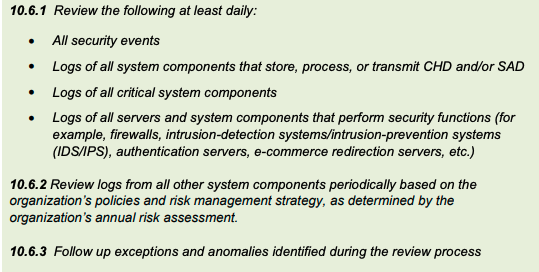
Section 10.6.1 of the PCI Security Standards

While this may seem straightforward enough, diving a bit deeper we realize not all is as it seems. According to section 2.1.1 of the PCI Security Standards:

The PCI DSS Glossary defines a security event as “an occurrence considered by an organization to have potential security implications to a system or its environment. In the context of PCI DSS, security events identify suspicious or anomalous activity.” Examples of security events include attempted logons by nonexistent user accounts, excessive password authentication failures, or the startup or shutdown of sensitive system processes. Unfortunately, determining the specific types of events and activities that should constitute security events is largely dependent on each individual environment, the systems resident in that environment, and the business processes served by that environment. Therefore, each organization must define for itself those system events and activities that represent “security events.”

We immediately realize the underlying problem: specific examples of "security events" are hard to define. One of the common questions asked during most SIEM product demos is, “Can you tell or show me what I should log for compliance?” All too often, the answer is “everything.” However, looking at section 10.6.1, the consensus is always collect from specific components and anything else you deem as a security event. 

While collecting everything can seem like an ideal solution, compliance mandates don’t require this. Plus, the law of diminishing returns determines how much of the data will be useful during a possible security event. Except for a very small subset of compliance regulations, storage of all data across the board isn't required.

Debug Logs

Debug logs can ultimately bug you. This is another overly collected type of log data. While some of the data can be valid, there’s often log bloat that may be hidden at first glance. Let’s take a VPN connection for example. When troubleshooting potential network issues with a VPN, multiple steps occur as your computer connects to the VPN server, routes out to your requested destination, and back toward you. Duo Security lays it out pretty clearly, as you can see below.
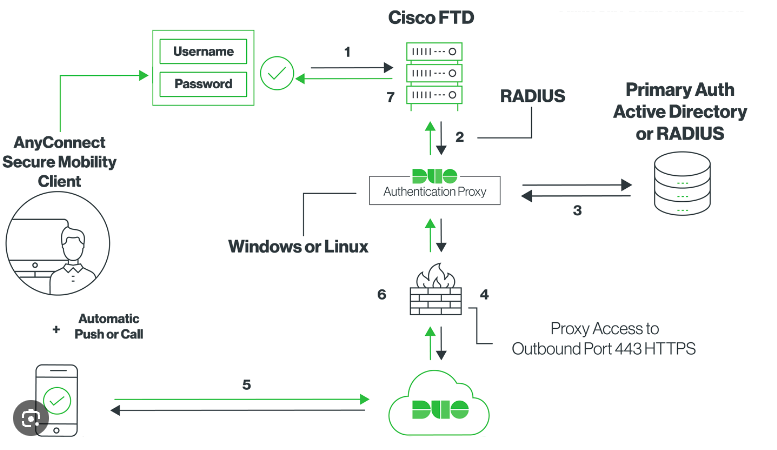
Example of VPN routing using Cisco DUO

Diving into this picture, there are two areas that would clearly be classified as security events:

  • Security password authentication
  • MFA (Multi-Factor Authentication)

Outside of those two events, while the rest of the debug data might be interesting, the security value quickly diminishes. That’s not to say that your friendly neighborhood networking team wouldn’t find these of value. But from a security practitioner’s perspective, the core of the investigation revolves around the two above log points. Much like our compliance example, while we can store the entire depth of the debug data in SIEM, from a security perspective, filtering out the unnecessary log data would help us identify problems more quickly.

IT Ops Logs

When your endpoint or server flags its disk is full, lets you know what services are available, or informs you of the overall performance of your device, that’s IT Ops logs doing their thing. They’re useful for day-to-day operations—whether you’re upgrading your SSD for a sweet new heftier one or just monitoring the general performance of various services. But their relevance to security is a different story. Imagine wading through your SIEM alerts to protect your company, only to get bombarded with repeated pings from these logs.
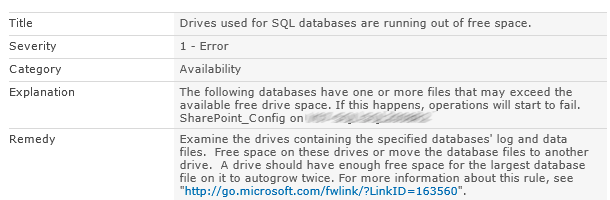
Full SQL disk error notification

Is it important to add space to your database? Sure, give that SQL database some more space as the event alert calls for. While this could be a potential security problem if caused by a space filler malware, it does not fulfill the need for detection, investigation, or compliance requirements. Knowing that, how pertinent are the full disk ops logs to store in SIEM? Probably not a high priority, especially if you’re already using service availability monitoring tools that are dedicated to giving you this information firsthand. The argument could be made to want to centralize all the data into one SIEM platform. The question then becomes, is the purpose of your SIEM simply a log repository? However, if your SIEM is needed as a security-focused platform targeting threats, then feeding it data that other tools can handle may not be the best choice. 

With all the excess data floating around, what are the industry's common practices to address this? You may be surprised.

Out of Sight, Out of Mind

If you had to put away some of your belongings, you might take it to a storage company that would allow you to store your items at a set price. But let's suppose that the storage company then insists you store everything you own—furniture, refrigerator, cars—in their facilities instead of allowing you to keep it at home. Worse yet, anything you buy moving forward must also be stored with them. Seems a little excessive and maybe a bit silly, but this happens daily with SIEM vendors. The market approach to SIEM is to collect every log possible and ship that to them. Why? Because if they charge for data ingested, then the more you send the more they can charge. It’s no surprise that vendors encourage and refrain from dissecting what really should be collected and what shouldn’t be. It doesn’t make business sense to do so, and it’s one of the reasons small and mid-sized businesses (SMBs) have been priced out of the SIEM market for years.

Fine Tuning

Tuning is a common practice across SIEM vendors today. It’s all about altering detections—by deciding what stays and what goes—to reduce false positives and improve accuracy. This normally occurs right after deployment and can take anywhere from two weeks to several months. In the end, data is boiled down, analyzed, and stored or made available for search queries. But here’s the thing—this approach overlooks the idea of filtering data before it’s collected, and there’s one basic reason: cost. Big data companies need big data costs to thrive. It’s no surprise that tuning is done after the consumer has incurred the expenses. 

Is there a better way to avoid passing costs to you while still adhering to compliance requirements and security best practices? Of course.

Capture the Data That Matters

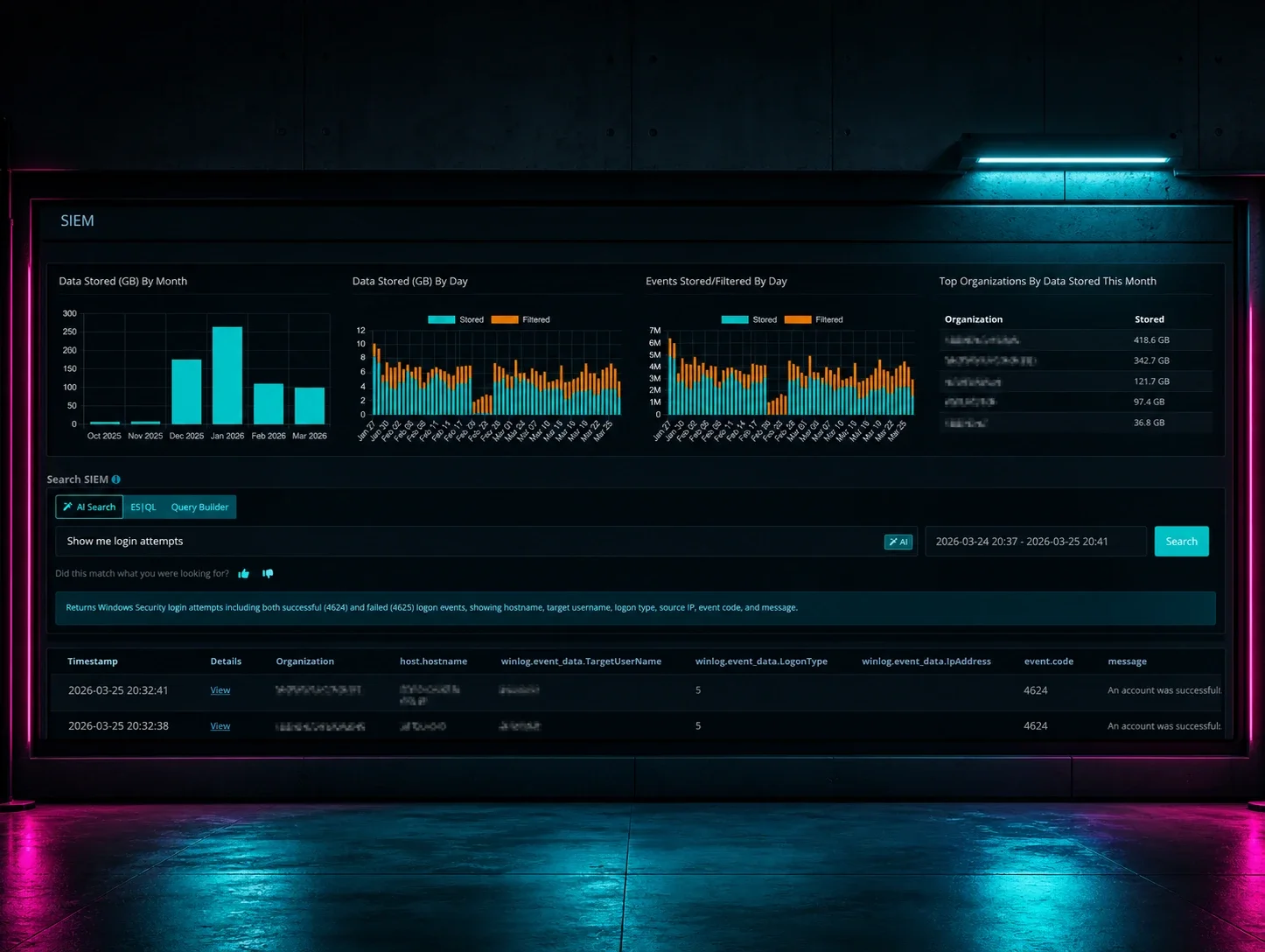
With all the ways to increase log data into SIEM, we set out to build a platform tailored to address excessive log data and its associated pricing. The result is Huntress Managed SIEM.

Granular Filtering

Remember the log-to-alert ratio funnel we talked about earlier? Our Smart Filtering slims down starting at the top of the funnel, cutting down the noise before moving to hot storage. The first layer of filtering reduces the log data coming in, but this doesn’t mean we just omit anything and call it a day. We’ve done our homework, analyzing the data we’ve collected and reviewing event types generating the most noise. In our Early Adopter version of Huntress Managed SIEM, we filtered out over 20 Windows event types. 

For example, let's look at Windows Event ID 4627: Group Membership Information.
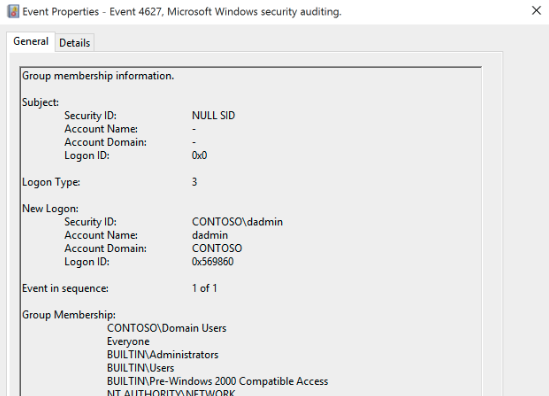
Example of Windows Event ID: 4627

While this event allows users to see what groups a user is assigned to, logging and storing them using SIEM only adds an excess amount of data. This might matter to the network engineering team, but the overall value to security is minimal. If there’s an escalation of privileges, it would be tracked through the actual event itself instead of using a log event like the above. And since the endpoint detection and response (EDR) agent tracks primary privilege escalations of events, storing a noisy log like ID:4627 in the SIEM platform just increases the bloat on log storage and, of course, cranks up the cost.

The second layer of filtering occurs before passing on to storage using our filtering rulesets. This second pass at filtering eliminates any noise not discovered during the top-of-the-funnel phase. Using our Smart Filtering rulesets, we can eliminate non-security events, providing the SIEM with clean subsets of data to later perform threat detection.

Pre-Collection Tuning with Huntress Smart Filtering

Tuning still comes into play using Managed SIEM, but our tuning process happens as close to the data source as possible. By ensuring that we cut out excessive noise at the source, we can adjust log data for an influx of logs that would be informational at best. Tuning pre-collection keeps things smooth, so we’re not dealing with excess false positives after the fact. 
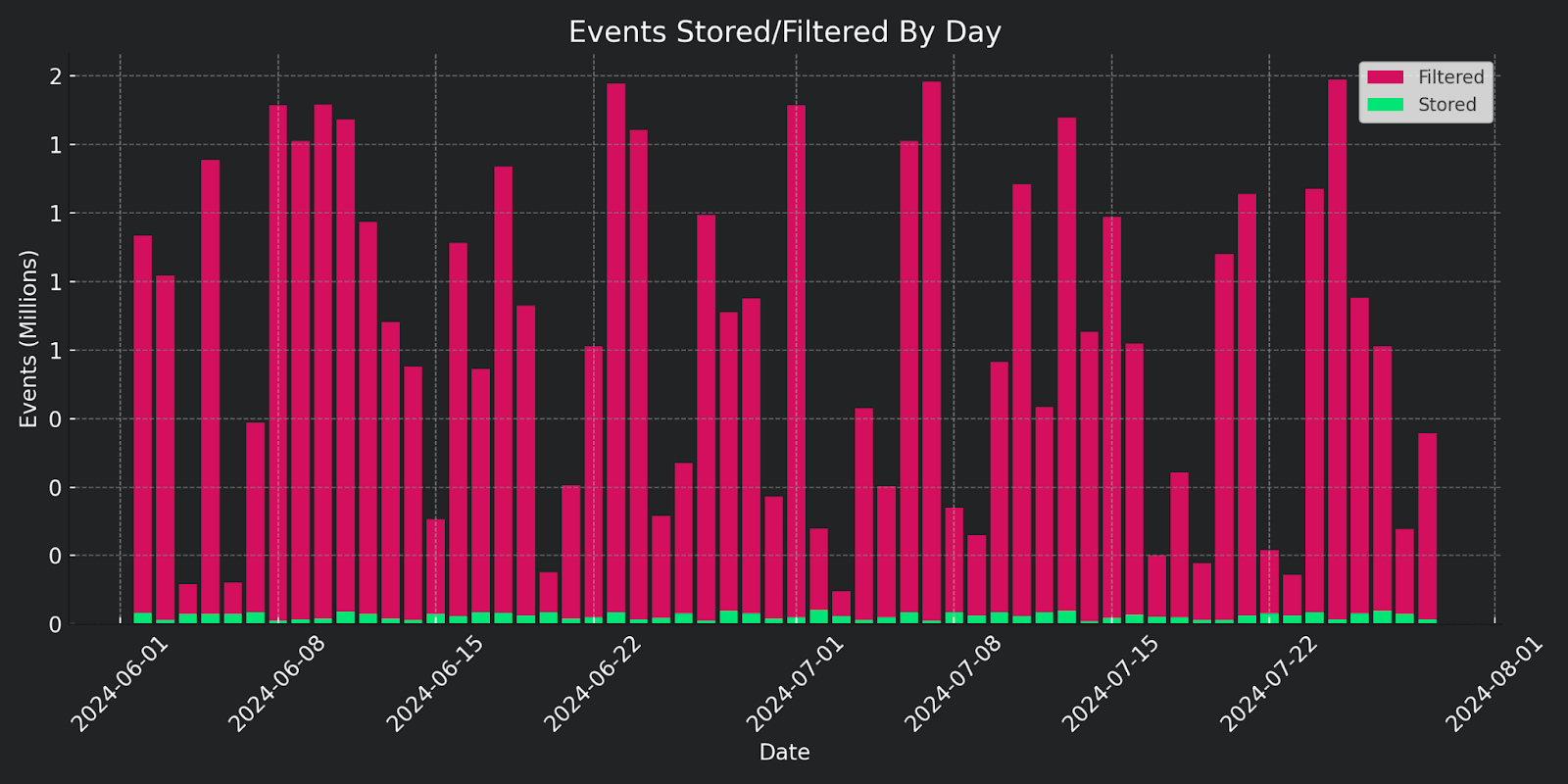
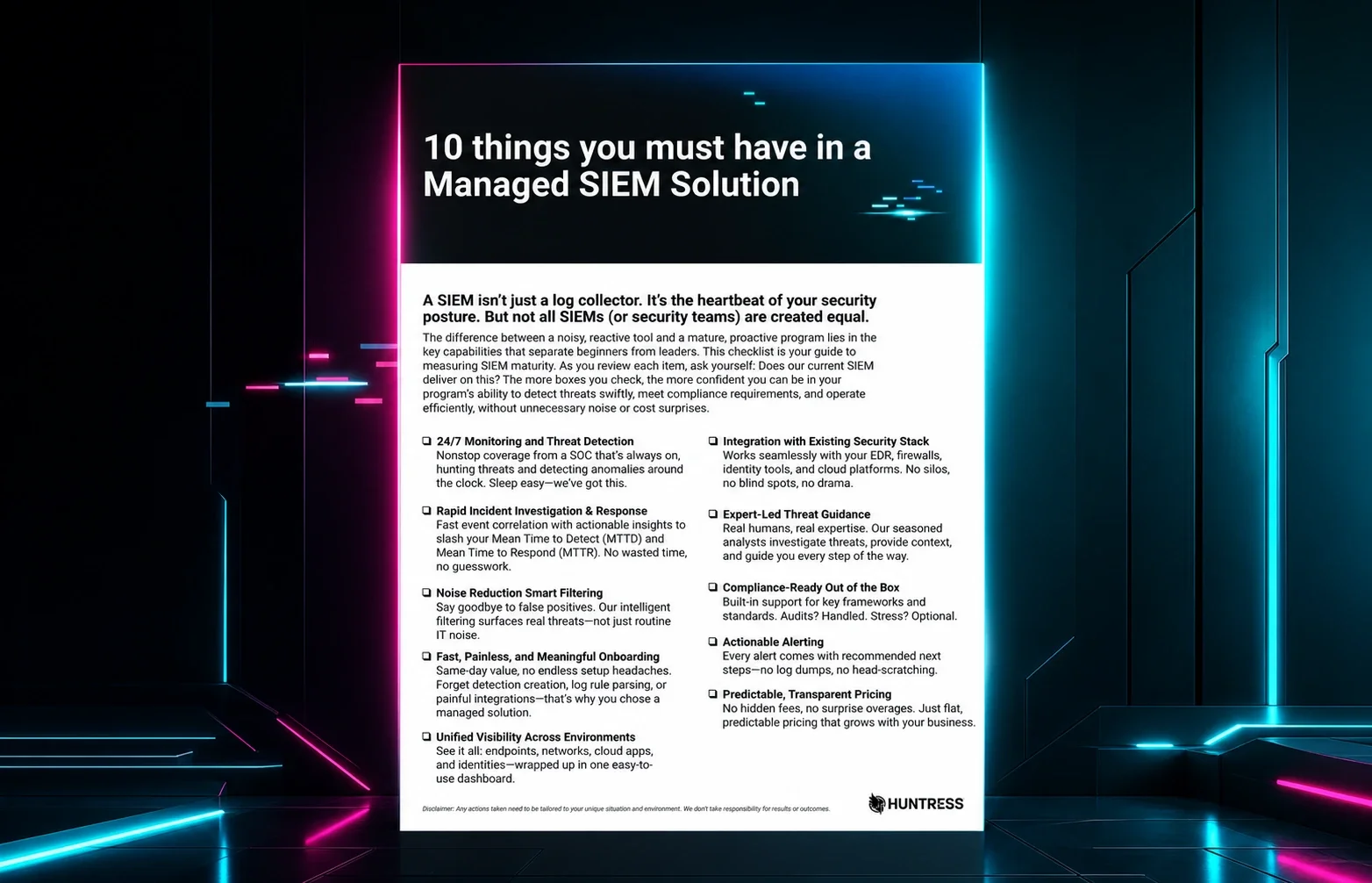
Huntress Smart Filtering eliminates the data that has little-to-no security value. The result? Less cost and less complexity.

Filter the Noise. Keep the Security.

For too long, SIEM has been unreachable for most, being too costly, too noisy, or too complex to manage. Huntress Managed SIEM changes all that by reducing the price of entry, leveraging Smart Filtering, and providing a fully managed platform. External stakeholders—whether compliance auditors or cyber insurance providers—now require SMBs to provide SIEM functionality to meet these requirements. Huntress wants to help you meet these requirements head-on. 
Start your free demo of Managed SIEM today.

Categories
Cybersecurity Education
Summarize this postClose Speech Bubble
ChatGPTClaudePerplexityGoogle AI

See Huntress in action

Our platform combines a suite of powerful managed detection and response tools for endpoints and Microsoft 365 identities, science-backed security awareness training, and the expertise of our 24/7 Security Operations Center (SOC).

Book a Demo
Share
Facebook iconTwitter X iconLinkedin iconDownload icon
Glitch effect

You Might Also Like

  • Chaos to Clarity: How Our Community Helped Transform SIEM

    Our community’s support drove the development of Huntress Managed SIEM, a groundbreaking solution that simplifies management, cuts through noise, and ensures consistent pricing.
  • From Mandates to Assurance: How Managed SIEM Helps Decode Compliance Across the Globe

    Understand how Managed SIEM supports your compliance journey worldwide.
  • From Code to Coverage (Part 1): The OID Transformation That Hinders LDAP Detection

    Learn why your LDAP detection rules never fire and how to fix them. Hint: it's the OID-to-bitwise transformation.
  • Minutes Matter: Huntress Managed SIEM Makes Them Count (Here’s How)

    Huntress Managed SIEM makes threat detection and response faster and more accessible. Learn about new features, real-world success stories, and how it enhances cybersecurity and compliance.
  • How to Deal with Alert Fatigue Like a Security Pro

    Deal with alert fatigue like a pro. Learn practical tips from Huntress' SOC on managing overwhelming alerts, preventing burnout, and focusing on real threats.
  • What the OpenAI Court Order Means for Cybersecurity and Privacy

    Learn what the OpenAI lawsuit and court order mean for data privacy, cybersecurity, and the future of AI innovation.
  • How Huntress Transformed Its Detection Engine

    The blog post discusses the evolution of Huntress' data analysis in response to scaling challenges and how we transitioned to a custom detection engine.
  • Time Travelers Busted: How to Detect Impossible Travel

    Impossible Travel is one of the earliest indicators of user compromise, and it works against any user-centric event that can be tied back to a location. Huntress goes in-depth on this problem, explaining how it works, revealing challenges surrounding it, and offering real-world examples occurring within Microsoft 365.

Sign Up for Huntress Updates

Get insider access to Huntress tradecraft, killer events, and the freshest blog updates.
Privacy • Terms
By submitting this form, you accept our Terms of Service & Privacy Policy
Thank you! Your submission has been received!
Oops! Something went wrong while submitting the form.
Huntress Managed Security PlatformManaged EDRManaged EDR for macOSManaged EDR for LinuxManaged ITDRManaged SIEMManaged Security Awareness TrainingManaged ISPMManaged ESPMBook a Demo
PhishingComplianceBusiness Email CompromiseEducationFinanceHealthcareManufacturingState & Local Government
Managed Service ProvidersResellersIT & Security Teams24/7 SOCCase Studies
BlogResource CenterCybersecurity 101Upcoming EventsSupport Documentation
Our CompanyLeadershipNews & PressCareersContact Us
Huntress white logo

Protecting 215k+ customers like you with enterprise-grade protection.

Privacy PolicyCookie PolicyTerms of UseCookie Consent
Linkedin iconTwitter X iconYouTube iconInstagram icon
© 2025 Huntress All Rights Reserved.

Join the Hunt

Get insider access to Huntress tradecraft, killer events, and the freshest blog updates.

By submitting this form, you accept our Terms of Service & Privacy Policy