

How to Prepare for and Mitigate Insider Attacks

Your network perimeter is bulletproof. Your firewalls are fortress-grade. Is multi-factor authentication running smoothly? Of course. External threat monitoring going strong? Couldn’t operate without it.

But what happens when the threat comes from inside the perimeter? We’re talking about someone with authorized access or knowledge of an organization who can cause harm to it. 

Insider threats are one of the most overlooked—and dangerous—security risks organizations face. Whether it's a disgruntled employee, a careless contractor, or someone who's been compromised, the damage can be fast and severe. According to the 2025 Ponemon Cost of Insider Risks Report, insider risks cost organizations an average of $17.4 million annually.

That's why having an insider threat incident response plan (IR plan) isn't just smart—it's essential. This guide breaks down what an insider threat framework looks like, structured plans that help you respond to insider threat incidents, and how to build a playbook that actually works.


How to Prepare for and Mitigate Insider Attacks

Your network perimeter is bulletproof. Your firewalls are fortress-grade. Is multi-factor authentication running smoothly? Of course. External threat monitoring going strong? Couldn’t operate without it.

But what happens when the threat comes from inside the perimeter? We’re talking about someone with authorized access or knowledge of an organization who can cause harm to it. 

Insider threats are one of the most overlooked—and dangerous—security risks organizations face. Whether it's a disgruntled employee, a careless contractor, or someone who's been compromised, the damage can be fast and severe. According to the 2025 Ponemon Cost of Insider Risks Report, insider risks cost organizations an average of $17.4 million annually.

That's why having an insider threat incident response plan (IR plan) isn't just smart—it's essential. This guide breaks down what an insider threat framework looks like, structured plans that help you respond to insider threat incidents, and how to build a playbook that actually works.


Building your insider threat framework

A strong insider threat framework relies on people, processes, and technology to prevent, detect, and respond to insider threats before they cause major damage.


What are the key elements of an insider threat framework?

Risk assessment: Identify which roles, systems, and data are most vulnerable to insider threats.

User behavior analytics (UBA): Use tools that monitor for shady user activity without constant manual oversight.

Access controls: Enforce the principle of least privilege. Employees only get the access they need to do their jobs.

Training and awareness: Educate employees about insider threats and the importance of reporting suspicious behavior, with solutions like Managed Security Awareness Training

Incident response team: Build a cross-functional team that includes IT, HR, legal, and management representatives.

Continuous improvement: Don’t ignore your framework after it’s built! Review and update your framework regularly based on new threats, lessons learned, and changes in your organization.



What is the process of insider threat IR?

Insider threat IR is your game plan for spotting, containing, and resolving security incidents caused by people within your organization—trusted individuals with legitimate access to your systems. And that might be more people than you think. According to the Cybersecurity and Infrastructure Security Agency (CISA), an insider is any person who has or had authorized access to or knowledge of your organization’s resources, including personnel, facilities, information, equipment, networks, and systems. That’s a lot of potential risk brewing within your own organization. 


What are the seven stages of an IR plan?

The key to reliable insider threat IR is speed, precision, and structure. You have to act fast, while carefully tracking critical details, and respecting insiders’ rights. Each IR plan is unique to an organization’s needs, but many use a structured approach following the steps below:

1. Preparation

Build your insider threat framework. Map out the policies, tools, team members, and communications channels for your IR plan. 

2. Identification

Spot and confirm security incidents. Is someone downloading large amounts of sensitive data? Accessing files outside their role? Logging in at odd hours? These could be signs of an insider threat.

3. Containment

You need to limit the insider threat spread and stop further damage with things like access removal, system isolation, or temporary account suspension. This gives you time to investigate and get to the root cause. 

4. Eradication

Remove the root cause of the incident. This could involve removing access for a malicious actor, patching a vulnerability, or updating security policies to prevent a similar incident in the future.

5. Recovery

Restore impacted systems and data to normal operations. This stage also involves monitoring to make sure the threat doesn't resurface.

6. Post-incident review and lessons learned

Host a thorough review of what happened, how it was handled, and what could have gone better. 

7. Continuous improvement and testing

Update the IR plan based on the lessons learned. Build in regular IR plan testing to make sure it’ll get the job done in a future emergency incident situation.


What is a NIST-compliant IR plan?

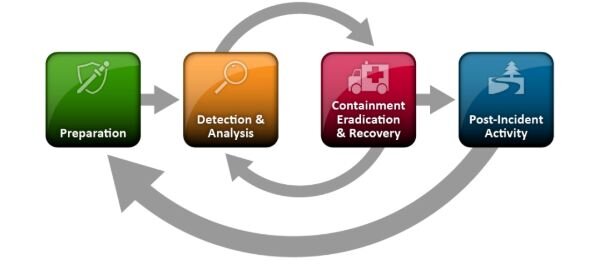
A NIST-compliant IR plan is a specific four-phase lifecycle detailed in the NIST Special Publication 800-61, focusing on preparation, coordination, and continuous improvement. It’s become the gold standard for many organizations and a requirement for those who work with the government or in the federal supply chain.


The four steps of NIST-compliant IR plans

The four steps of NIST-compliant IR plans


A NIST-compliant insider threat IR plan should include:

  • Clear policies and procedures for detecting and responding to insider threats

  • Defined roles and responsibilities across IT, HR, legal, and management teams

  • Monitoring and detection tools that flag suspicious behavior without invading privacy

  • Incident classification criteria to prioritize response based on severity

  • Documentation standards for tracking incidents and maintaining compliance

  • Training programs to ensure all team members understand their role in the process

NIST also stresses the importance of balancing security with employee privacy and legal considerations. 


What is an IR playbook for insider threats?

An IR playbook is your organization’s step-by-step guide for handling specific types of insider threats. Think of it as a cybersecurity choose-your-own-adventure book.

Here's what an insider threat response playbook includes:

What are the IR playbook components?

Threat scenarios: Add common insider threat types, like data theft, sabotage, or credential misuse.

Response workflows: Create flowcharts or checklists for each scenario, detailing who does what and when.

Escalation procedures: Specify when and how senior leadership and law enforcement need to be alerted to incidents.

Communication templates: Set up templates for emails, notifications, and reports to save time during a crisis.

Legal and compliance guidance: Include information on regulatory requirements, evidence preservation, and employee rights.

Sample playbook scenario: suspected data exfiltration

  1. Alert triggered: A monitoring system flags an employee downloading 10GB of customer data to a personal device

  2. Initial assessment: The security team reviews logs and confirms the activity is outside of normal job duties

  3. Containment: The employee’s network access is temporarily suspended during the investigation

  4. Investigation: Interview the employee, review access logs, and figure out the intent behind the incident

  5. Decision point: Was it malicious, negligent, or accidental?

    • Malicious: You need support from HR, legal, and possibly law enforcement. Permanently terminate the employee’s access.

    • Negligent: Provide additional training to the employee and monitor closely

    • Accidental: Restore access and update policies to prevent future confusion

  6. Recovery: Make sure no data was leaked externally. Restore access if appropriate.

  7. Documentation: Record all findings, actions taken, and lessons learned


What is an insider threat investigation process?

An effective insider threat investigation process requires a balance of thoroughness and discretion. Here's how to approach it:

Gather evidence: Collect logs, emails, file access records, and any other relevant data. Follow legal and compliance requirements for evidence handling.

Talk with witnesses: Interview colleagues, managers, and the individual in question. Be professional and avoid making accusations until you have all the facts.

Analyze behavior: Look for patterns. Was this a one-time mistake or part of a larger trend?

Coordinate with HR and legal: Insider threat investigations often have employment and legal implications, requiring a subtle approach. Work closely with these teams to ensure you're handling things appropriately.

Document everything: Keep detailed records of your investigation. This protects your organization and locks in compliance with regulations.


Crisis mode isn’t a vibe, but prep mode is

Insider threats can happen anywhere, anytime. They’re unpredictable and potentially devastating for businesses of any size and industry. So, build your framework, create and test your IR plan with tabletop exercises, and design a playbook tailored to your organization's unique risks.

Plan for insider threats like they are inevitable and turn preparedness from an afterthought into a priority. 


Protect What Matters

Secure endpoints, email, and employees with the power of our 24/7 SOC. Try Huntress for free and deploy in minutes to start fighting threats.
Try Huntress for Free