




Don’t let overlooked obligations become incidents. Learn how.
Utility navigation bar redirect icon
Portal LoginSupportContact
Search
Close search
Huntress Logo in Teal
  • Platform Overview
    Managed EDR

    Get full endpoint visibility, detection, and response.

    Managed EDR

    Get full endpoint visibility, detection, and response.

    Managed ITDR

    Protect your Microsoft 365 identities and email environments.

    Managed ITDR

    Protect your Microsoft 365 identities and email environments.

    Managed SIEM

    Managed threat response and robust compliance support at a predictable price.

    Managed SIEM

    Managed threat response and robust compliance support at a predictable price.

    Managed Security Awareness Training

    Empower your teams with science-backed security awareness training.

    Managed Security Awareness Training

    Empower your teams with science-backed security awareness training.

    Huntress Managed ISPM

    Continuous Microsoft 365 and identity hardening, managed and enforced by Huntress experts.

    Huntress Managed ISPM

    Continuous Microsoft 365 and identity hardening, managed and enforced by Huntress experts.

    Huntress Managed ESPM

    Proactively secure endpoints against attacks.

    Huntress Managed ESPM

    Proactively secure endpoints against attacks.

    Integrations
    Integrations
    Support Documentation
    Support Documentation
    See Huntress in Action

    Quickly deploy and manage real-time protection for endpoints, email, and employees - all from a single dashboard.

    Huntress Cybersecurity
    See Huntress in Action

    Quickly deploy and manage real-time protection for endpoints, email, and employees - all from a single dashboard.

    Huntress Cybersecurity
  • Threats We Stop
    Phishing
    Phishing
    Business Email Compromise
    Business Email Compromise
    Ransomware
    Ransomware
    View Allright arrowView Allright arrow
    Industries We Serve
    Education
    Education
    Financial Services
    Financial Services
    State and Local Government
    State and Local Government
    Healthcare
    Healthcare
    Law Firms
    Law Firms
    Manufacturing
    Manufacturing
    Utilities
    Utilities
    View Allright arrowView Allright arrow
    Tailored Solutions
    MSPs
    MSPs
    Resellers
    Resellers
    SMBs
    SMBs
    Compliance
    Compliance
    What Gets Overlooked Gets Exploited

    Most days, nothing happens. But one day, something will.

    Huntress Cybersecurity
    Cybercriminals Have Evolved

    Get the intel on today’s cybercriminal groups and learn how to protect yourself.

    Huntress Cybersecurity
  • Pricing
  • Community Series
    The Product Lab

    Shape the next big thing in cybersecurity together.

    The Product Lab

    Shape the next big thing in cybersecurity together.

    Fireside Chat

    Real people. Real perspectives. Better conversations.

    Fireside Chat

    Real people. Real perspectives. Better conversations.

    Tradecraft Tuesday

    No products, no pitches – just tradecraft.

    Tradecraft Tuesday

    No products, no pitches – just tradecraft.

    _declassified

    Exposing hidden truths in the world of cybersecurity.

    _declassified

    Exposing hidden truths in the world of cybersecurity.

    Resources
    Upcoming Events
    Upcoming Events
    ebooks
    ebooks
    On-Demand Webinars
    On-Demand Webinars
    Videos
    Videos
    Whitepapers
    Whitepapers
    Datasheets
    Datasheets
    Cybersecurity Education
    Cybersecurity 101
    Cybersecurity 101
    Cybersecurity Guides
    Cybersecurity Guides
    Threat Library
    Threat Library
    Real Tradecraft, Real Results
    Real Tradecraft, Real Results
    2026 Cyber Threat Report
    2026 Cyber Threat Report
    The Huntress Blog
    Huntress Lands on the Microsoft Marketplace
    Huntress Cybersecurity
    Huntress Lands on the Microsoft Marketplace
    Huntress Cybersecurity
    How Huntress & DEFCERT Are Streamlining CMMC Assessment Prep
    Huntress Cybersecurity
    How Huntress & DEFCERT Are Streamlining CMMC Assessment Prep
    Huntress Cybersecurity
    Live Hacking Into Microsoft 365 with Kyle Hanslovan
    Huntress Cybersecurity
    Live Hacking Into Microsoft 365 with Kyle Hanslovan
    Huntress Cybersecurity
  • Why Huntress

    Go beyond AI in the fight against today’s hackers with Huntress Managed EDR purpose-built for your needs

    Huntress Cybersecurity
    Why Huntress

    Go beyond AI in the fight against today’s hackers with Huntress Managed EDR purpose-built for your needs

    Huntress Cybersecurity
    The Huntress SOC

    24/7 Security Operations Center

    The Huntress SOC

    24/7 Security Operations Center

    Reviews

    Why businesses of all sizes trust Huntress to defend their assets

    Reviews

    Why businesses of all sizes trust Huntress to defend their assets

    Case Studies

    Learn directly from our partners how Huntress has helped them

    Case Studies

    Learn directly from our partners how Huntress has helped them

    Community

    Get in touch with the Huntress Community team

    Community

    Get in touch with the Huntress Community team

    Compare Huntress
    Bitdefender
    Bitdefender
    Blackpoint
    Blackpoint
    Breach Secure Now!
    Breach Secure Now!
    Crowdstrike
    Crowdstrike
    Datto
    Datto
    SentinelOne
    SentinelOne
    Sophos
    Sophos
    Compare Allright arrowCompare Allright arrow
  • HUNTRESS HUB

    Login to access top-notch marketing resources, tools, and training.

    Huntress Cybersecurity
    HUNTRESS HUB

    Login to access top-notch marketing resources, tools, and training.

    Huntress Cybersecurity
    Partners
    MSPs

    Join our partner community to deliver expert-led managed security.

    MSPs

    Join our partner community to deliver expert-led managed security.

    Resellers

    Partner program designed to grow your cybersecurity business.

    Resellers

    Partner program designed to grow your cybersecurity business.

    Tech Alliances

    Driving innovation through global technology Partnerships

    Tech Alliances

    Driving innovation through global technology Partnerships

    Microsoft Partnership

    A Level-Up for Your Business Security

    Microsoft Partnership

    A Level-Up for Your Business Security

  • Press Release
    Huntress Announces Collaboration with Microsoft to Strengthen Cybersecurity for Businesses of All Sizes
    Huntress Cybersecurity
    Press Release
    Huntress Announces Collaboration with Microsoft to Strengthen Cybersecurity for Businesses of All Sizes
    Huntress Cybersecurity
    Our Story

    We're on a mission to shatter the barriers to enterprise-level security.

    Our Story

    We're on a mission to shatter the barriers to enterprise-level security.

    Newsroom

    Explore press releases, news articles, media interviews and more.

    Newsroom

    Explore press releases, news articles, media interviews and more.

    Meet the Team

    Founded by former NSA Cyber Operators. Backed by security researchers.

    Meet the Team

    Founded by former NSA Cyber Operators. Backed by security researchers.

    Careers

    Ready to shake up the cybersecurity world? Join the hunt.

    Careers

    Ready to shake up the cybersecurity world? Join the hunt.

    Awards
    Awards
    Contact Us
    Contact Us
  • Portal Login
  • Support
  • Contact
  • Search
  • Get a Demo
  • Start for Free
Portal LoginSupportContact
Search
Close search
Get a Demo
Start for Free
HomeCybersecurity 101
What is Mimikatz?

What is Mimikatz?

The credential dumping tool every cybersecurity team should know

Published: 9/5/2025

Written by: Brenda Buckman

Glitch effectGlitch effect

When it comes to cybersecurity, defending against credential theft is a battle every organization faces. One name often surfaces in these conversations: Mimikatz. This open-source post-exploitation tool has gained infamy among red teams, penetration testers, and threat actors alike. Understanding Mimikatz isn’t just important, it's essential for organizations aiming to thwart malicious actors and harden their defenses against sophisticated attacks.

What is Mimikatz?

At its core, Mimikatz is a tool designed to extract sensitive authentication credentials from Windows systems’ memory. Developed by Benjamin Delpy, it started as a proof-of-concept to demonstrate vulnerabilities in Microsoft's authentication protocols but quickly became an indispensable utility in the cybersecurity world.

Key capabilities of Mimikatz include:

  • Plaintext credential extraction Mimikatz dumps passwords, PINs, and even Kerberos tickets directly from a system’s memory.

  • Hash and ticket stealing It captures NTLM hashes and Kerberos tickets, enabling attackers to bypass authentication mechanisms.

  • Attack versatility The software supports various attack techniques, such as pass-the-hash, pass-the-ticket, and creating Kerberos golden tickets, making it a powerful tool for both penetration testing and malicious exploitation.

While ethical hackers leverage Mimikatz to uncover vulnerabilities in network security, Advanced Persistent Threat (APT) groups weaponize it in large-scale attacks due to its effectiveness and ease of use.

How does Mimikatz work?

Mimikatz operates by exploiting a critical component of Windows authentication, the Local Security Authority Subsystem Service (LSASS). Here’s a high-level overview of how it works:

  • Exploiting LSASS memory Mimikatz accesses LSASS, a process in Windows that stores sensitive credentials in memory, often in plaintext or hash form. Attackers use the tool to extract this data for unauthorized access.

  • Privilege escalation To execute Mimikatz, attackers need elevated privileges (e.g., Admin or SYSTEM). Once active, it can:

    • Extract plaintext credentials.

    • Retrieve NTLM hashes for reuse.

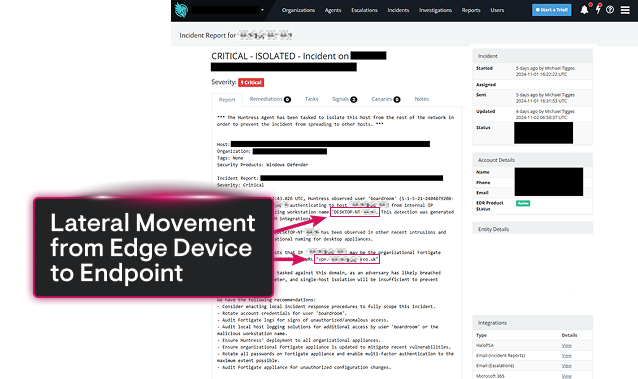
    • Steal and forge Kerberos tickets for lateral movement.

  • Post-compromise objectives Mimikatz shines in post-compromise scenarios, helping attackers escalate privileges, move laterally within networks, and maintain persistent access.

The tool’s ability to exploit existing vulnerabilities and bypass multi-factor authentication (MFA) mechanisms makes it particularly dangerous when it falls into the wrong hands.

Common Mimikatz attack techniques

Mimikatz is a Swiss Army knife for credential theft, offering numerous attack modules. Here are some of the most commonly used techniques:

Pass the Hash

By stealing NTLM hashes, attackers can authenticate without needing plaintext credentials. This allows them to gain access to systems even if passwords are encrypted.

Pass the Ticket

This technique uses captured Kerberos tickets for authentication to other systems on the network, essentially impersonating legitimate users.

Kerberos Golden Ticket

Considered one of the most powerful attacks, golden tickets allow attackers to forge Ticket Granting Tickets (TGTs) for domain admins. With this, an attacker can gain unrestricted access to any system on the network, often with persistent control.

Overpass the Hash

An advanced method of converting NTLM hashes into Kerberos tickets, enabling attackers to bypass authentication mechanisms entirely.

DC Sync Attack

This is a stealthy method where Mimikatz mimics the behavior of a Domain Controller, tricking it into replicating credentials, including admin passwords and hashes.

Each of these techniques showcases Mimikatz’s ability to exploit weaknesses in Windows security, presenting a severe threat to organizations that lack robust defenses.

Red Team and APT use cases

Mimikatz isn’t just a tool for penetration testers, it's also been routinely weaponized by threat actors and APT groups to execute high-profile attacks.

  • Red Team Operations: Security teams use Mimikatz during controlled penetration tests to measure an organization’s vulnerabilities, helping improve defenses.

  • Integration with Tools: Mimikatz often works in tandem with frameworks like Cobalt Strike, Empire, and PowerShell to enhance its effectiveness in attacks.

  • APT Usage: Notorious APT groups like APT29 and Lazarus Group have leveraged Mimikatz in campaigns, stealing credentials and executing lateral moves with surgical precision.

The dual-purpose nature of Mimikatz highlights the ethical tightrope walked by cybersecurity professionals in using the tool for defensive purposes while malicious actors exploit it as a weapon.

How to detect and defend against Mimikatz

Given its widespread usage, detecting and defending against Mimikatz requires a proactive, multi-layered security approach. Here’s how to fortify your defenses:

Detection techniques

  • Monitor LSASS Access: Endpoint Detection and Response (EDR) tools can alert on suspicious access to LSASS memory.

  • Track Anomalies: Look out for unusual login attempts, especially those tied to NTLM hashes or Kerberos tickets.

  • PowerShell Monitoring: Unusual PowerShell behavior, often used to invoke Mimikatz, should raise red flags.

  • Sysmon and Honeypots: Use tools like Sysmon to monitor system events and set up honeypots to detect attacker activity.

Defensive measures

  • Enable Credential Guard: Windows Credential Guard can block tools like Mimikatz from accessing sensitive authentication data.

  • Implement LSASS Protection: Harden LSASS using registry tweaks or advanced configurations to restrict unauthorized access.

  • Enforce Principle of Least Privilege: Limit admin access to essential personnel only, reducing the attack surface.

  • Adopt MFA: While not foolproof, multi-factor authentication adds an extra barrier, making it harder for attackers to misuse stolen credentials.

Combining detection mechanisms with proactive defenses can significantly mitigate the risks posed by tools like Mimikatz.

Legal and ethical considerations

It’s important to note that Mimikatz itself isn’t inherently malicious. The tool is entirely legal when used for authorized penetration testing and security training. However, unauthorized deployment constitutes a criminal activity that can lead to severe consequences.

To ensure ethical usage of this powerful tool:

  • Use Mimikatz strictly within authorized engagements.

  • Educate teams on the importance of responsible tool usage.

  • Advise clients to include Mimikatz-specific defenses in their security infrastructures.

By focusing on its role in raising awareness and strengthening defenses, Mimikatz can be a force for good in cybersecurity.

Frequently Asked Questions (FAQs)

Mimikatz is like the Swiss Army knife of post-exploitation tools—but for bad guys. It’s famous for extracting plaintext credentials, password hashes, Kerberos tickets, and other authentication goodies from Windows systems. Originally built for research, it’s now a go-to tool for both penetration testers and attackers. Think red teaming, privilege escalation, and lateral movement.

Short version? Mimikatz digs into the LSASS (Local Security Authority Subsystem Service) process in memory, pulling out sensitive authentication data. If someone has admin or SYSTEM-level access, they can grab:

  • Plaintext passwords (only if WDigest is enabled)

  • NTLM hashes

  • Kerberos tickets

  • With these in hand, attackers can kick off pass-the-hash or pass-the-ticket attacks to cause even more trouble.

Here’s the deal: Mimikatz is completely legal when you’ve got permission to use it. Penetration tests, red team exercises, or security research? You’re good. But using it on systems without authorization? Hard pass. That’s illegal and puts you on the wrong side of cybersecurity laws.

Once attackers are inside, Mimikatz helps them pivot and escalate privileges. Here’s the playbook:

  • Grab NTLM hashes to log into other devices without passwords.

  • Forge Kerberos tickets (like golden tickets) to impersonate users.

  • Perform DC Sync attacks to snatch password data straight from Domain Controllers.

  • Basically, they’re unlocking all the doors to sensitive systems, maintaining persistence, and escalating their access.

Spotting Mimikatz can save you a world of pain. Here’s how you can catch it in action:

  • Use EDR or XDR tools to monitor for LSASS memory tampering.

  • Flag known Mimikatz command-line arguments.

  • Look for PowerShell or scripting behaviors tied to credential dumping.

  • Set up Sysmon rules to catch unusual access patterns.

  • Bonus tip? Watch for weird Kerberos activity or replication anomalies in your domain controllers.

They’re like cousins in the credential-stealing family:

  • Pass-the-Hash (PtH): Use an NTLM hash to log into systems, no password needed.

  • Pass-the-Ticket (PtT): Use a swiped Kerberos ticket (TGT or TGS) to pretend you’re a legit user.

  • Both bypass passwords, but PtH exploits NTLM authentication, while PtT focuses on Kerberos.

Short answer? Yes—but it takes effort. Here’s your battle plan:

  • Enable Credential Guard to block LSASS access.

  • Turn on RunAsPPL to give LSASS extra protection.

  • Disable WDigest unless you absolutely need it.

  • Follow strict least privilege principles and keep an eye on admin activity.

  • While Mimikatz can’t always be outright stopped, these steps make it far harder for attackers to succeed. Keep it tight, stay vigilant.


Glitch effectBlurry glitch effect

Building a Mimikatz proof shield

Mimikatz is both a powerful weapon and a vital educational tool. Its ability to highlight vulnerabilities in Windows authentication systems makes it indispensable for security professionals. However, its misuse by bad actors underscores the need for robust defensive strategies.

Whether you’re a cybersecurity professional looking to understand your enemy or a defender seeking to harden your systems, knowing Mimikatz inside and out is a crucial step in building resilient defenses against credential theft and lateral movement.

Glitch effect

Related Resources


  • What Is a Golden Ticket Attack?
    What Is a Golden Ticket Attack?
    Learn how Golden Ticket attacks exploit Kerberos. Discover how they work, why they’re dangerous, and how to prevent them in Active Directory environments.
  • What is Pass the Hash (PtH)?
    What is Pass the Hash (PtH)?
    Learn what a Pass the Hash (PtH) attack is, how threat actors use it to move laterally across networks, and how you can defend against this common technique.
  • NTLM 101: The Basics and the Risks
    NTLM 101: The Basics and the Risks
    Learn what NTLM is, how it works, its pros and cons, and practical steps for protecting your network from NTLM-related vulnerabilities.
  • What is Kerberos? A Cybersecurity Guide to Secure Authentication Protocols
    What is Kerberos? A Cybersecurity Guide to Secure Authentication Protocols
    Learn how Kerberos works and why it’s essential for secure enterprise authentication strategies. Explore features, uses, and best practices.
  • What Is Lateral Movement in Cybersecurity?
    What Is Lateral Movement in Cybersecurity?
    Learn how lateral movement allows attackers to navigate your network undetected. Discover common techniques like Pass-the-Hash, how to detect "east-west" traffic, and 5 proven prevention strategies to stop breaches.
  • NFS Security: What It Is, How Attackers Exploit It, and How to Defend Against It
    NFS Security: What It Is, How Attackers Exploit It, and How to Defend Against It
    NFS (Network File System) is a common attack vector in enterprise environments. Learn what NFS is, how attackers exploit misconfigured shares, and the exact steps to secure NFS in your environment.
  • What Is A TrickBot?
    What Is A TrickBot?
    Discover what TrickBot malware is, how it spreads, and why it’s a major threat in cybersecurity. Learn ways to defend against TrickBot and ransomware delivery.
  • What is a Hash Value? Cracking the Code Behind Digital Fingerprints
    What is a Hash Value? Cracking the Code Behind Digital Fingerprints
    Learn what a hash value is, how it works, and why it's essential for cybersecurity. From passwords to file integrity, hashing is your digital fingerprint.
  • What is ARP Spoofing?
    What is ARP Spoofing?
    Learn what ARP spoofing is, how it works, its impact on networks, and effective ways to protect your business from this cyber threat.

Protect What Matters

Secure endpoints, email, and employees with the power of our 24/7 SOC. Try Huntress for free and deploy in minutes to start fighting threats.
Try Huntress for Free
Huntress Managed Security PlatformManaged EDRManaged EDR for macOSManaged EDR for LinuxManaged ITDRManaged SIEMManaged Security Awareness TrainingManaged ISPMManaged ESPMBook a Demo
PhishingComplianceBusiness Email CompromiseEducationFinanceHealthcareManufacturingState & Local Government
Managed Service ProvidersResellersIT & Security Teams24/7 SOCCase Studies
BlogResource CenterCybersecurity 101Upcoming EventsSupport Documentation
Our CompanyLeadershipNews & PressCareersContact Us
Huntress white logo

Protecting 215k+ customers like you with enterprise-grade protection.

Privacy PolicyCookie PolicyTerms of UseCookie Consent
Linkedin iconTwitter X iconYouTube iconInstagram icon
© 2025 Huntress All Rights Reserved.

Join the Hunt

Get insider access to Huntress tradecraft, killer events, and the freshest blog updates.

By submitting this form, you accept our Terms of Service & Privacy Policy