


Identity security needs prevention and response
A successful login is just the start. Attackers can reset MFA, add a mailbox rule, spin up a rogue app, or quietly expand access, and most of it looks like normal activity. Identity resilience requires layered defense to prevent and detect attacks fast while training users to catch what makes it past controls.
How attackers are compromising your identities
Check out how each attack actually plays out, and where Huntress steps in to shut it down.

An attacker gets into a real mailbox, reads the threads, and waits. Then adds a forwarding rule or hijacks a live conversation to send a request that looks normal. Managed ISPM locks down the settings BEC depends on, Managed ITDR catches the anomalies, and Managed SAT trains people to slow down and ask questions.

A stolen token or reused password makes an attacker login look legitimate. Managed ISPM closes the weak paths that make credentials easy to steal. Managed ITDR watches post-login activity: new sessions, rogue apps, and stealth attempts to establish persistence to stay hidden.

One over-privileged account can turn a small foothold into full control. Managed ISPM strips out the excess privilege and risky defaults attackers count on. Managed ITDR flags identity behavior that signals an account is being abused.

Attackers still get in with nothing more than a convincing email. Managed SAT trains users to defend against real-world threats, and captures risky behaviors in a controlled environment where it's safe to learn from mistakes. When someone clicks what they shouldn't, Managed ITDR is watching to shut attackers down.

Go deeper on identity resilience
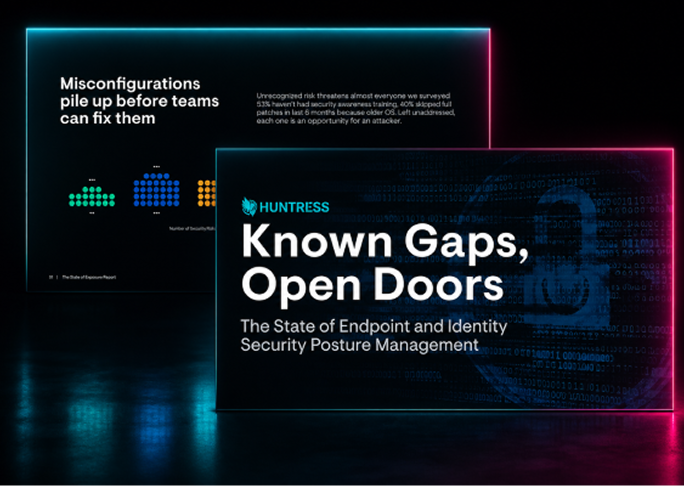
A data-backed look at the identity and endpoint gaps attackers exploit most, and what it takes to close them before they become incidents.
Huntress experts break down why identity has become the new perimeter, and how ITDR helps you catch and stop identity attacks earlier.
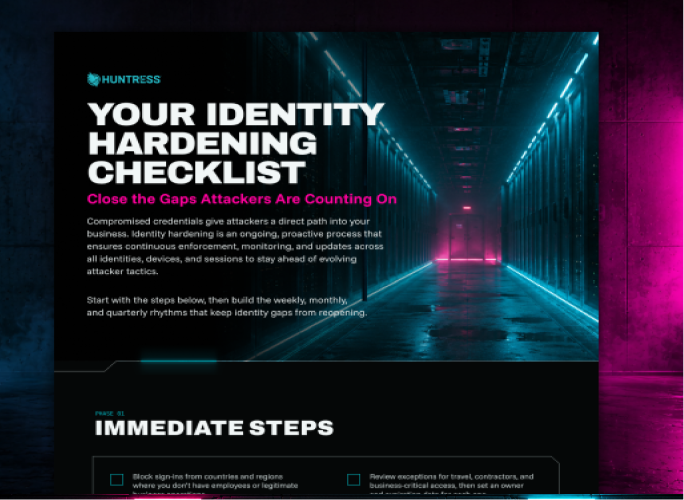
MFA is just the starting line. Learn what mature identity hardening actually looks like, from closing MFA exceptions to catching drift before attackers do.

Your platform for identity resilience
Huntress connects prevention, detection, and response into one managed platform, so identity security keeps getting better without adding to your plate.
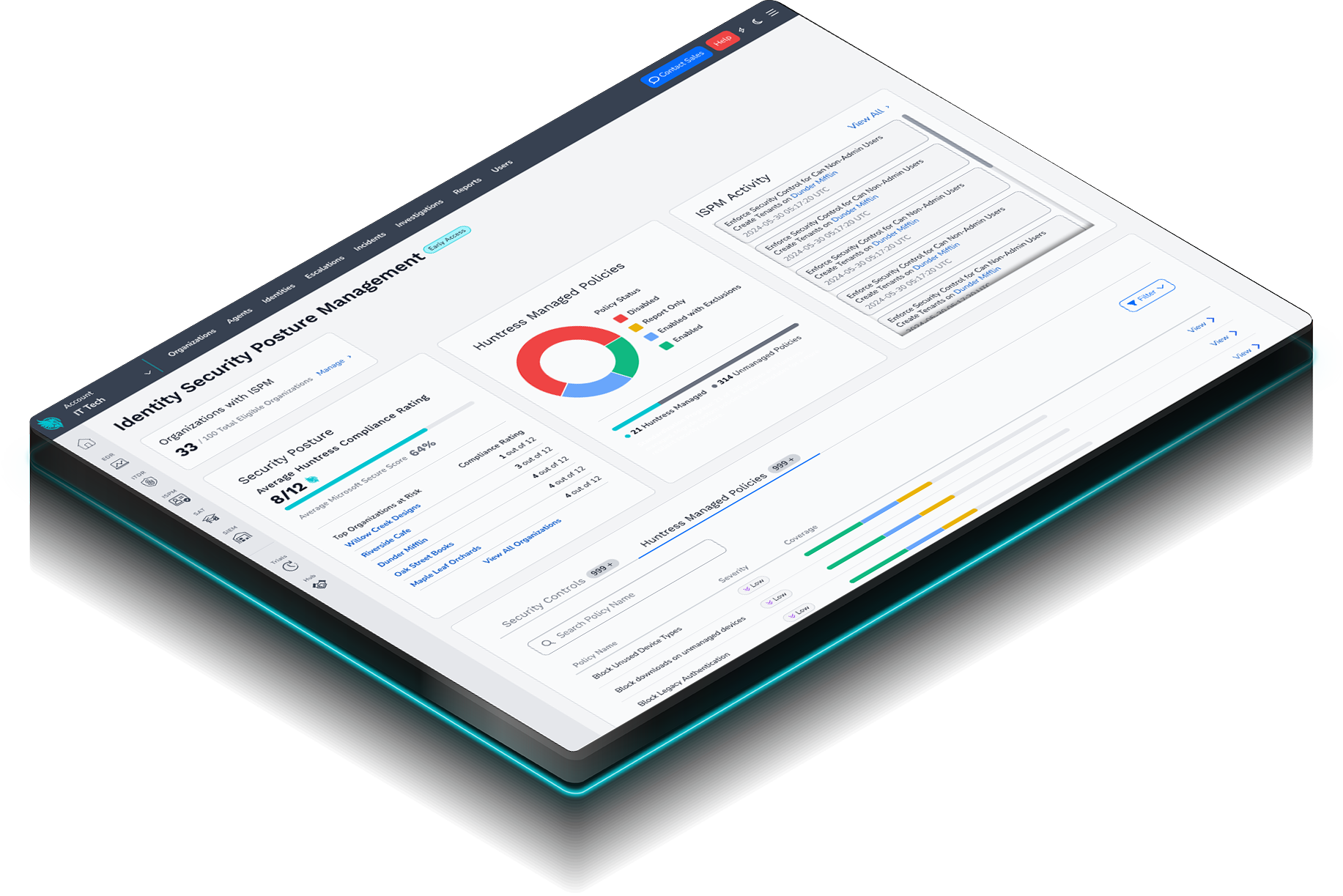


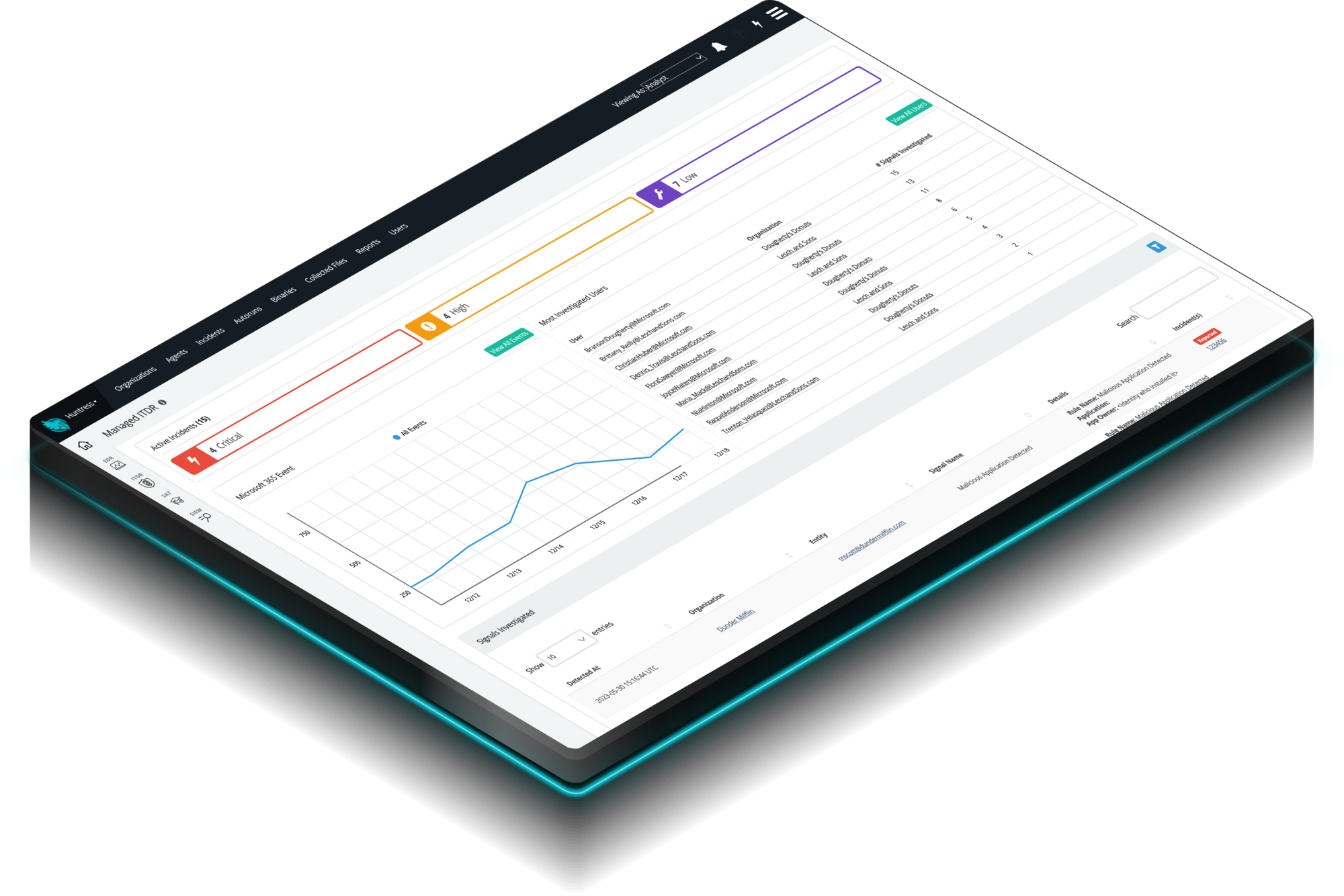
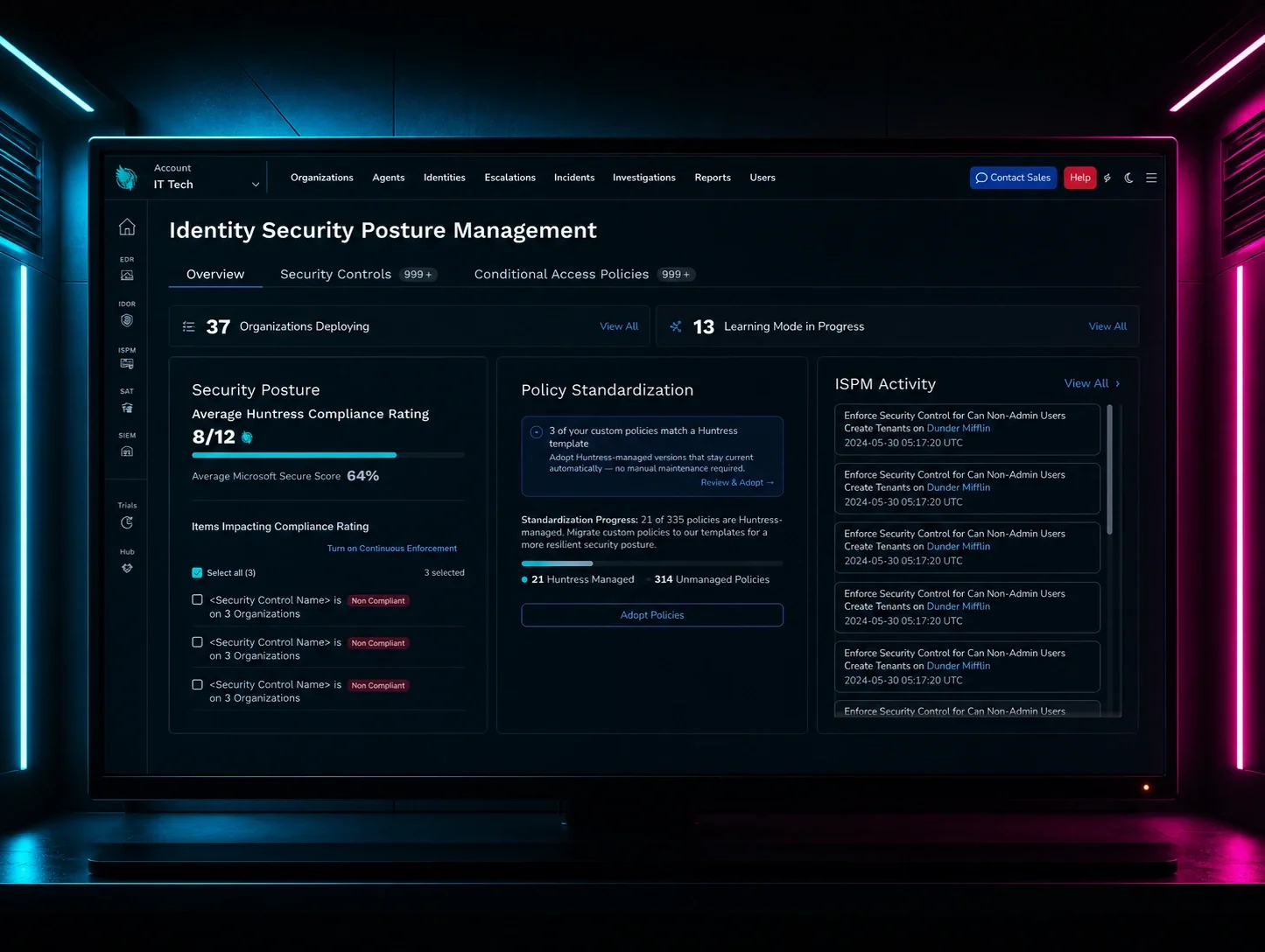
Managed ISPM is the prevention layer for Microsoft 365 environments. IT finds and fixes the misconfigurations, risky access, and policy drift that lead to account takeover, BEC, and privilege escalation. Huntress builds the hardening framework, deploys best-practice controls, tests impact with Learning Mode before anything goes live, and catches drift within minutes before attackers take advantage of exposure.
- Your hardening to-do list, done for you
- Drift fixed in ~15 minutes, not 12–24 hours
Managed ITDR is the detection and response layer for Microsoft 365 and Google Workspace. It watches for suspicious logins, session hijacking, rogue apps, mailbox manipulation, and other abuse that happens after an adversary is already in. When something looks wrong, the Huntress SOC investigates and helps contain it fast.
- 16M+ identities protected

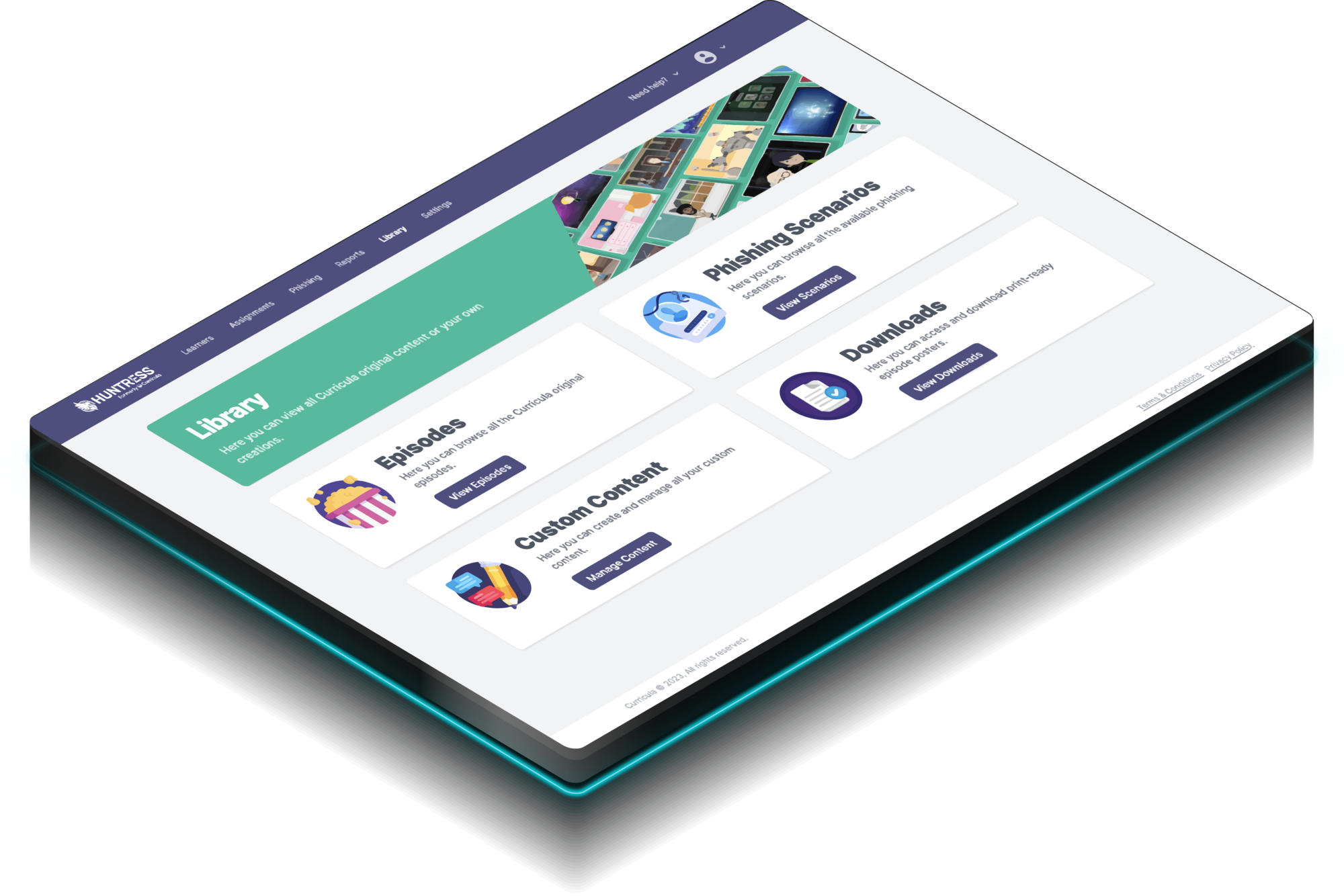
Managed Security Awareness Training covers the human side of identity protection. It preps users for the phishing, impersonation, and fraud tactics attackers are using right now, and addresses risky user behaviors happening in the wild. SAT closes the big gap technical controls can't: the moment someone decides whether to click.
- Training built on threat intel from 5M+ endpoints and 16M+ identities
- 98% completion rate for learners who start assignments


Frequently Asked Questions
Identity resilience means making common attack paths that abuse identities harder to use, catching them quickly, limiting how far an incident spreads, and improving after each one. It shrinks both your exposure and the damage when something gets through your layered defenses.
Measure identity resilience by checking whether your environment can prevent, detect, contain, and recover from identity abuse. Start with exposure: Conditional Access coverage, MFA, admin and guest access, app permissions, mailbox protections, and policy drift. Then track how fast suspicious activity gets identified, investigated, contained, and remediated. Check whether fixes stick and whether one compromised account can reach more systems than it should. The real measure is fewer usable attack paths and less time for attackers to operate.
Identity is the control plane attackers use to reach data, money, and systems. Credentials, stolen sessions, trusted apps, and mailbox changes can make malicious activity look normal even after a login succeeds. A resilient organization makes those paths harder to use and catches abuse fast. In practical terms, identity resilience connects prevention, detection, response, and ongoing hardening into one continuous motion.
AI makes phishing and business email compromise (BEC) faster and harder to spot. Identity resilience has to account for attacks that look legitimate: real login pages, trusted accounts, realistic writing, and requests that fit normal workflows. Organizations need strong identity controls, post-login monitoring, current user training, and repeatable response process. The identity posture gaps attackers exploit give AI-assisted attacks room to move even faster.
Organizations struggle because identity security is scattered across settings, portals, teams, and tenants. They may know gaps exist but lack a clear baseline, time to assess impact, confidence to enforce changes, or a process to catch drift. Over-privileged accounts, stale access, legacy authentication, risky app permissions, and mailbox manipulation can sit open while teams stay heads-down on daily operations. Identity Security Posture Management (ISPM) turns this from a one-time audit into continuous assessment and enforcement.
Huntress delivers these capabilities as one connected operating model, through a single platform. Managed ISPM hardens Microsoft 365 and keeps policies aligned as settings change. Managed ITDR detects and responds to active threats across Microsoft 365 and Google Workspace. Managed SAT trains employees to spot tricks like fake vendor requests and invoice fraud. Together, these become a layered defense to prevent, detect, and respond to identity threats.
