Attacks don’t stay in one place.
Neither do we.

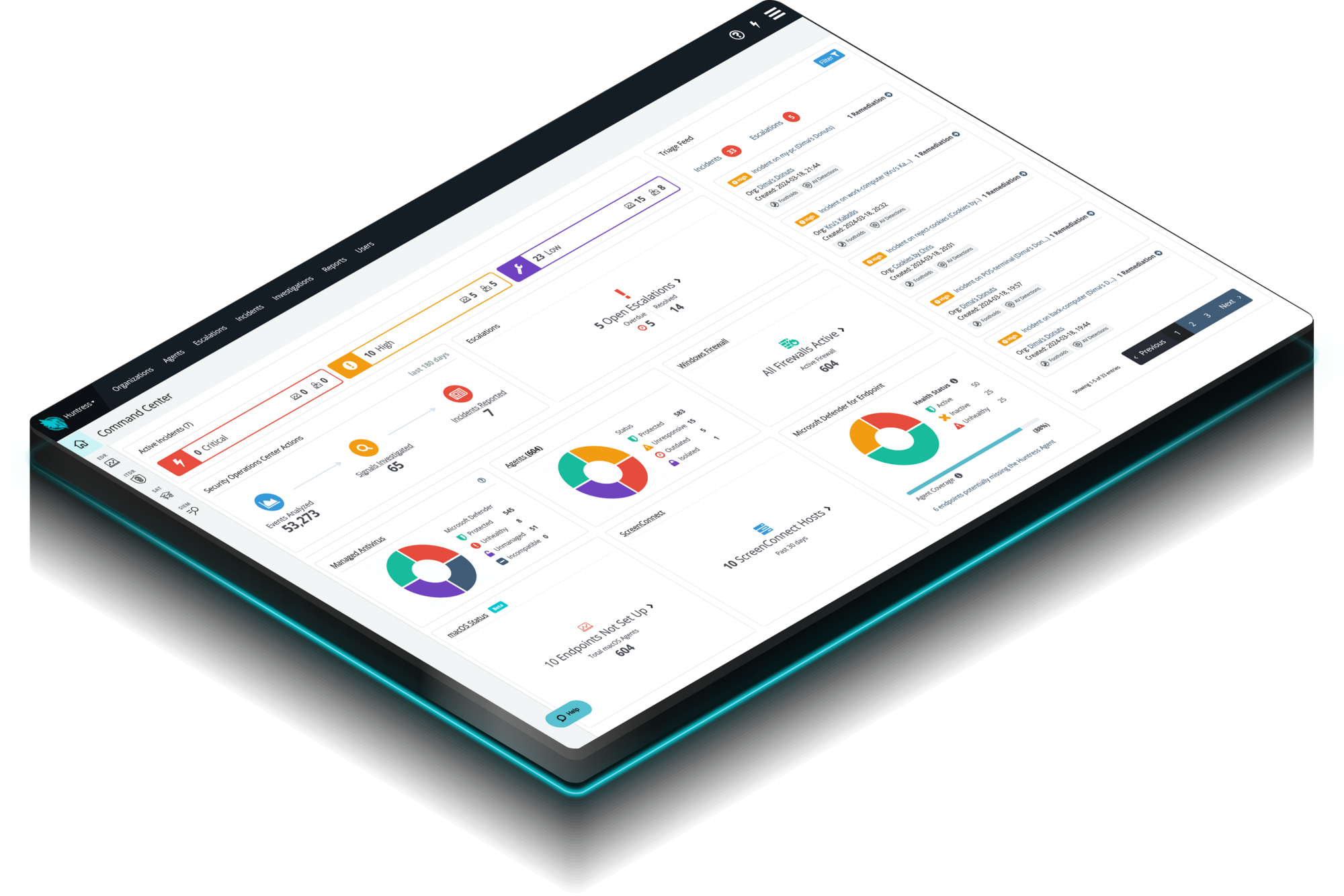
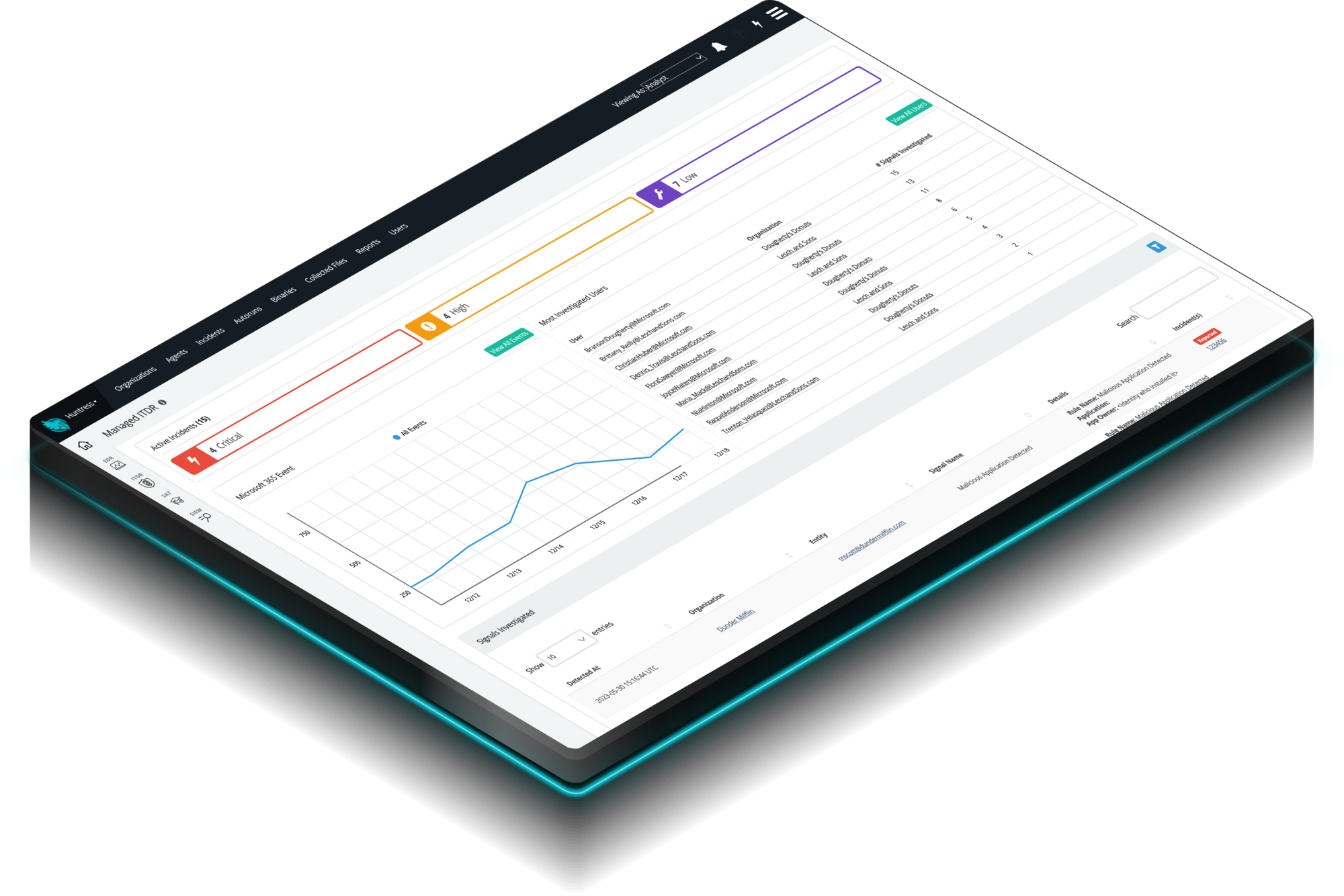
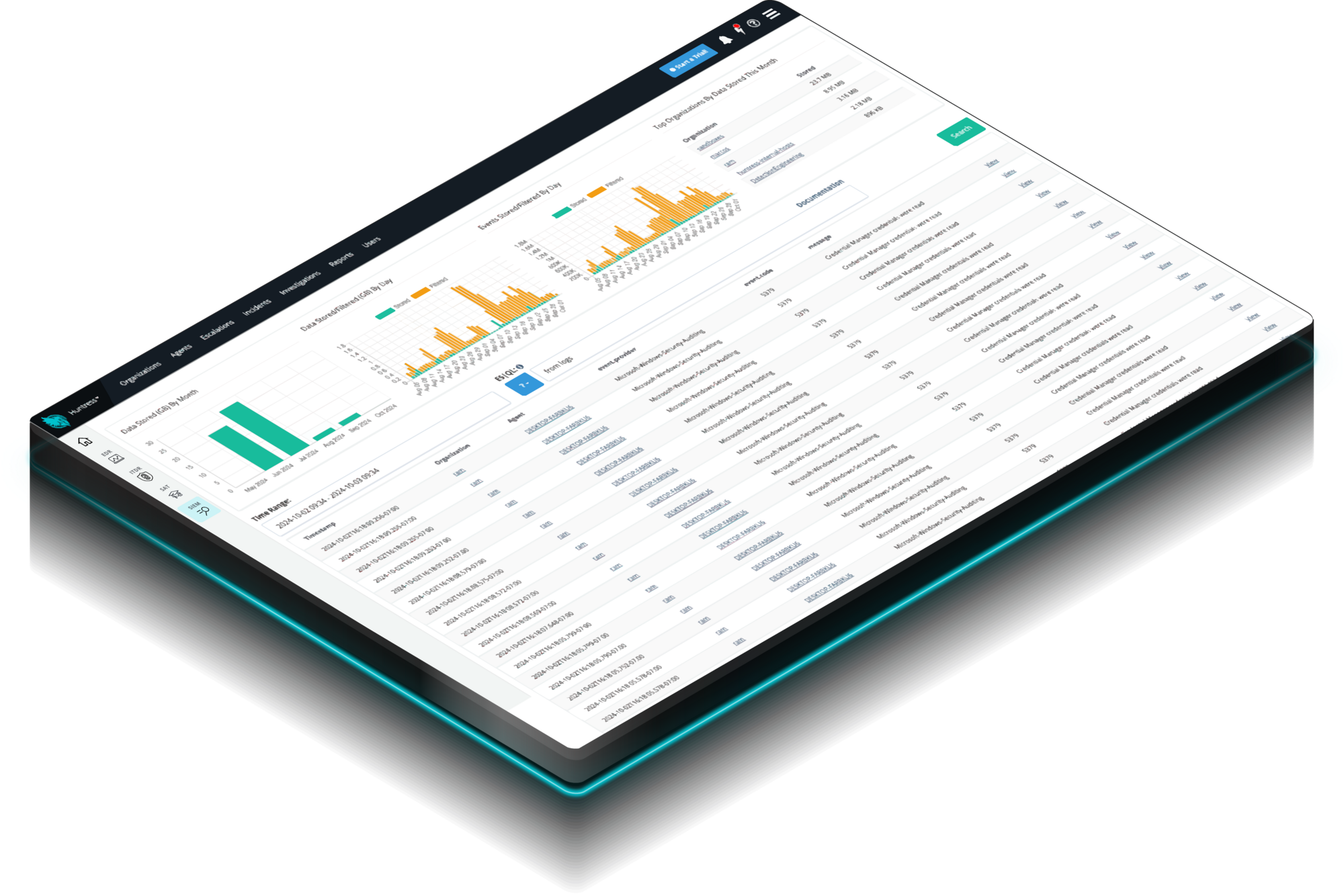
Huntress platform showing one incident correlated across an EDR detection, an ITDR identity match, and the SOC dashboard

Most security tools hand off the story mid-chapter. Huntress connects your endpoint, identity, and log signals into one unified security platform, so one detection drives a complete response.

Over 270k+ businesses protected from ransomware by Huntress

The impact of a unified security platform

88%
identity attacks stopped via EDR + ITDR correlation
70+
correlation rules running across EDR, ITDR & SIEM
1.7M
Windows endpoints with matched cloud identities

Most attacks cross product lines. Your defenses should too.

An infostealer lands on a laptop, and credentials are harvested. Three minutes later, someone is logging into an email from halfway around the world. Your EDR saw the first part, but nobody caught the second.

The Problem
The Problem

When EDR, ITDR, and SIEM exist in silos, your team becomes the integration layer: manually correlating timestamps, chasing logs, and making educated guesses under pressure, all while attackers are exploiting their access.

Endpoint-only gaps
Endpoint-only gaps

The host is isolated, but the investigation stops there. Which users logged in? Were credentials stolen? Are sessions still active? Those answers live somewhere else, and finding them takes time you don’t have.

Identity-only gaps
Identity-only gaps

A suspicious sign-in fires an alert. But was this account already compromised on a machine? Are there other sessions to revoke? Without endpoint context, you’re reactive, only responding after the attacker has already moved.

Huntress platform

Correlation 1: EDR + ITDR

Infostealer on the machine. Identity locked down in one motion.

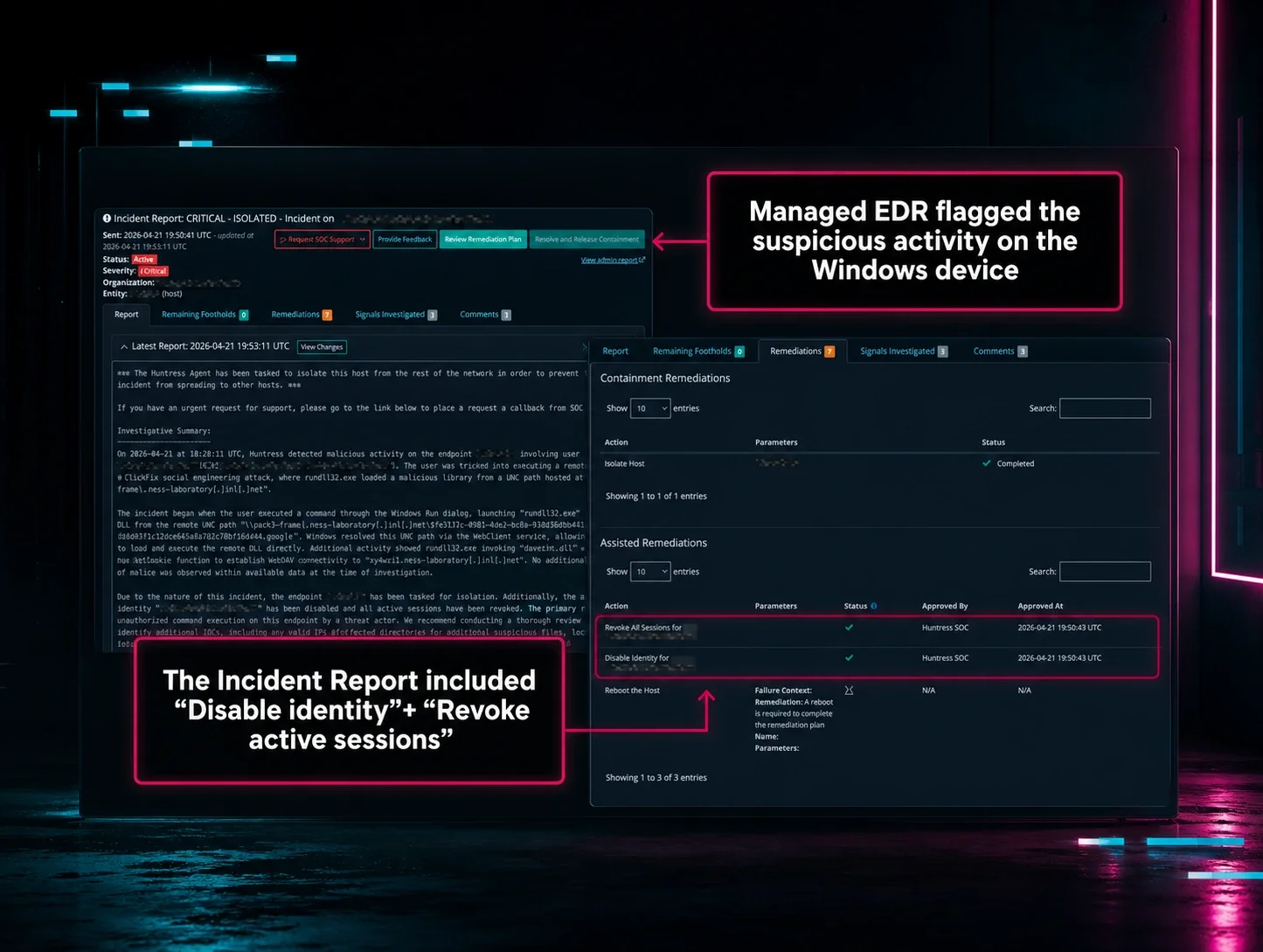
When Managed EDR detects activity like infostealers on a Windows endpoint, Huntress automatically maps that compromised machine to the Microsoft 365 accounts that were logged in. The Incident Report sent by our SOC doesn’t just say “malware found.” It includes ready-to-execute, identity-level actions.

The Huntress Agentic Security Platform uses direct endpoint evidence to infer identity risk, which means you’re often acting before traditional identity signals are sent from your IdP (Identity Provider).

  • Endpoint compromise and identity exposure are treated as one event, not two
  • Guided remediation: Disable identity and revoke active sessions. All surfaced automatically.
  • Stolen credentials contained before they can be replayed or sold
Huntress platform

Correlation 2: SIEM + EDR

Eleven minutes you didn’t know you were losing.

When Managed SIEM and Managed EDR see the same intrusion together, SIEM almost always sees it first. That’s because it catches the early-stage signals that happen before malware ever touches an endpoint by looking at credential abuse, network enumeration, and reconnaissance commands in the logs.

In a real Huntress incident, SIEM detected an Akira ransomware intrusion 11 minutes ahead of EDR alone. In those 11 minutes, the attacker enumerated the network, established SSH persistence, and even tried to uninstall the Huntress agent. SIEM context meant our SOC could act before any of that finished.

  • SIEM catches early-stage attacker behavior before malware lands
  • EDR and SIEM signals correlated to produce higher-confidence detections
  • VPN and gateway logs are stored and hunted. Without SIEM, devices overwrite these in hours
Huntress platform

Correlation 3: SIEM + ITDR

The logs that vanish & the attacks they were hiding

VPN devices and network gateways don’t log to a SIEM by default. Most overwrite their local logs in hours. Not because anyone intended it that way, but because storage isn’t what those devices are built for.

That missing first chapter of who connected, from where, and when, is exactly where most identity compromises begin. When SIEM ingests those logs, and ITDR sees the resulting account behavior, the full story is finally readable: initial access, lateral movement, and identity abuse in a single, correlated timeline.

  • VPN and gateway logs are retained and hunted, not overwritten in hours
  • Account behavior correlated with network-level evidence you’d otherwise lose
  • Identity abuse is detected earlier, with the context needed to respond correctly

Built to work as one, not bolted together after the fact.

Huntress doesn’t connect point solutions and call it a platform. EDR, ITDR, and SIEM share a common detection engine, a common signal layer, and a common SOC, so correlated response happens automatically both from the platform and our SOC analysts.

Laptop with a trend line icon

Managed EDR

Endpoint

What’s happening on the machine

Continuous monitoring across Windows, Mac, and Linux. Detects malware, persistence, and lateral movement. The EDR agent also collects identity context like logged-in users and active sessions so correlations happen at the source, not downstream.

Shield with a fingerprint icon

Managed ITDR

Identity

What’s happening to the identity

Monitors Microsoft 365 and Google Workspace for account takeover, BEC, and suspicious login behavior. When EDR detects a compromised machine, ITDR acts on the associated identity to revoke sessions and disable accounts without waiting on logs.

Warehouse icon

Managed SIEM

Logs

What happened before and after

Ingests VPN, firewall, endpoint, and cloud logs. Retains them for 7 years. Actively hunted by Huntress’s 24/7 SOC. Provides pre-attack context like initial access and reconnaissance that endpoint and identity tools miss on their own.

Your Security Platform for Peace of Mind

The Huntress security platform is built, owned, and operated entirely by our team from first signal through remediation. Predictable pricing with no noise, just meaningful alerts.

Huntress Managed EDR doesn't just watch your endpoints—it’s a complete solution. From the second a threat appears until it’s eliminated, we handle everything. You get 24/7 continuous protection, detection, and response that disrupts and remediates threats.

  • Industry-leading MTTR
  • 5M+ Endpoints protected

Identity Threat Detection and Response (ITDR)

Finds and stops identity-based threats in Microsoft 365 and Google Workspace—because identity is the new endpoint, and attackers know it. Huntress Managed ITDR is designed to detect, respond to, and resolve critical identity-based threats like account takeovers, business email compromise, unauthorized logins, and more.

  • Industry-leading 3min MTTR
  • 14M+ identities protected

Huntress Managed SIEM takes away the complexity and overhead usually associated with traditional SIEMs, giving you everything you need and nothing you don’t. 24/7 threat response and strengthened compliance, fully managed by SOC experts, at a predictable price.

  • Smart Filtering to capture only security-relevant data
  • Total Compliance with long-term retention, search, and reporting

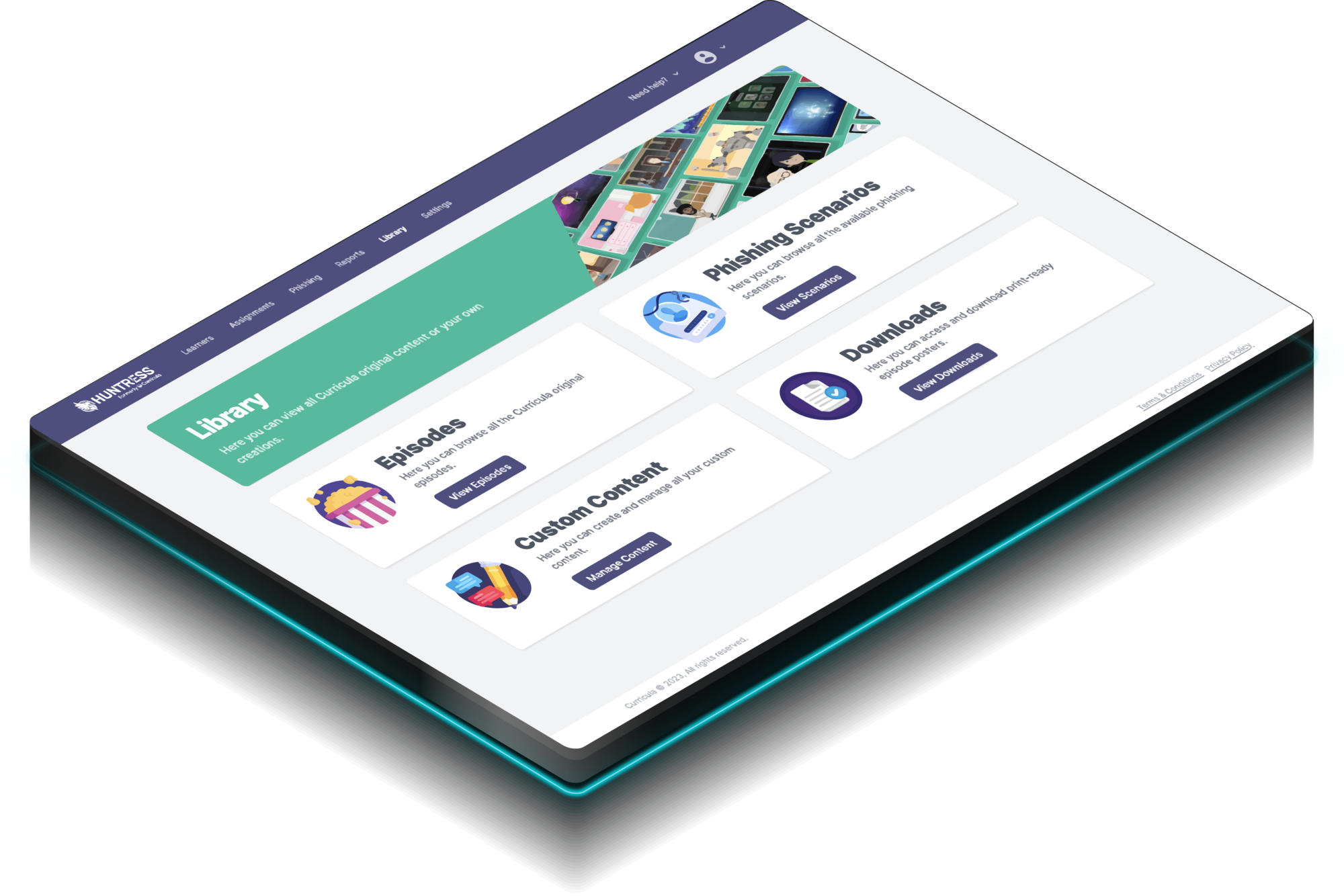
Engaging, expert-backed, personalized training content built on real-world threat intelligence and created by Emmy® Award-winning animators to reduce human risk and build a strong security culture.

  • Training built on threat intel from 5M+ endpoints and 14M+ identities
  • 98% completion rate for learners who start assignments

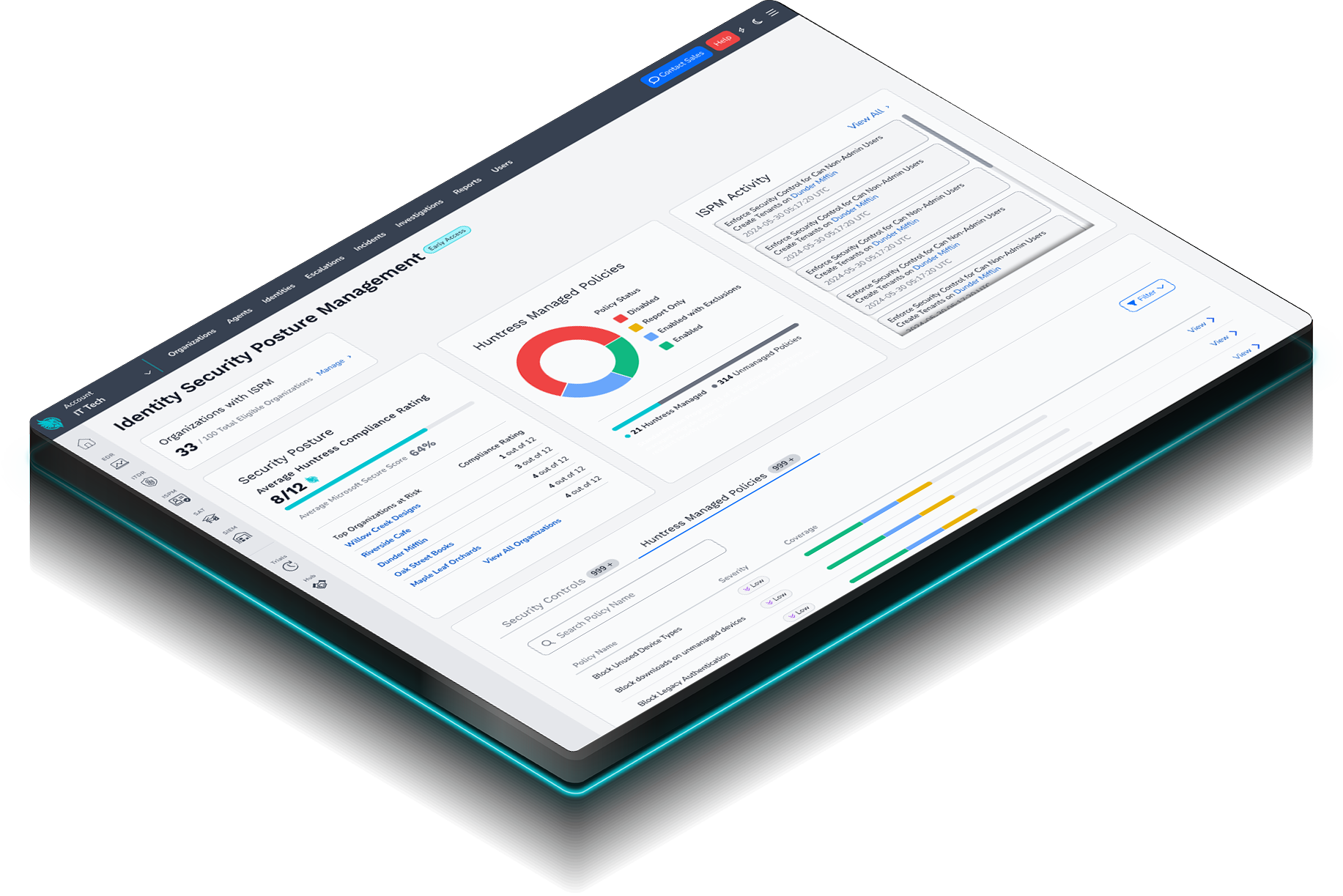
Most hackers don't break in — they just take advantage of messy settings, bad defaults, and accounts with too much access. Huntress Managed Identity Security Posture Management (ISPM) continuously finds and closes misconfigurations, risky access, and policy drift in Microsoft 365 so those attack paths stay closed.

  • Your hardening to-do list, done for you
  • Drift fixed in ~15 minutes, not 12–24 hours

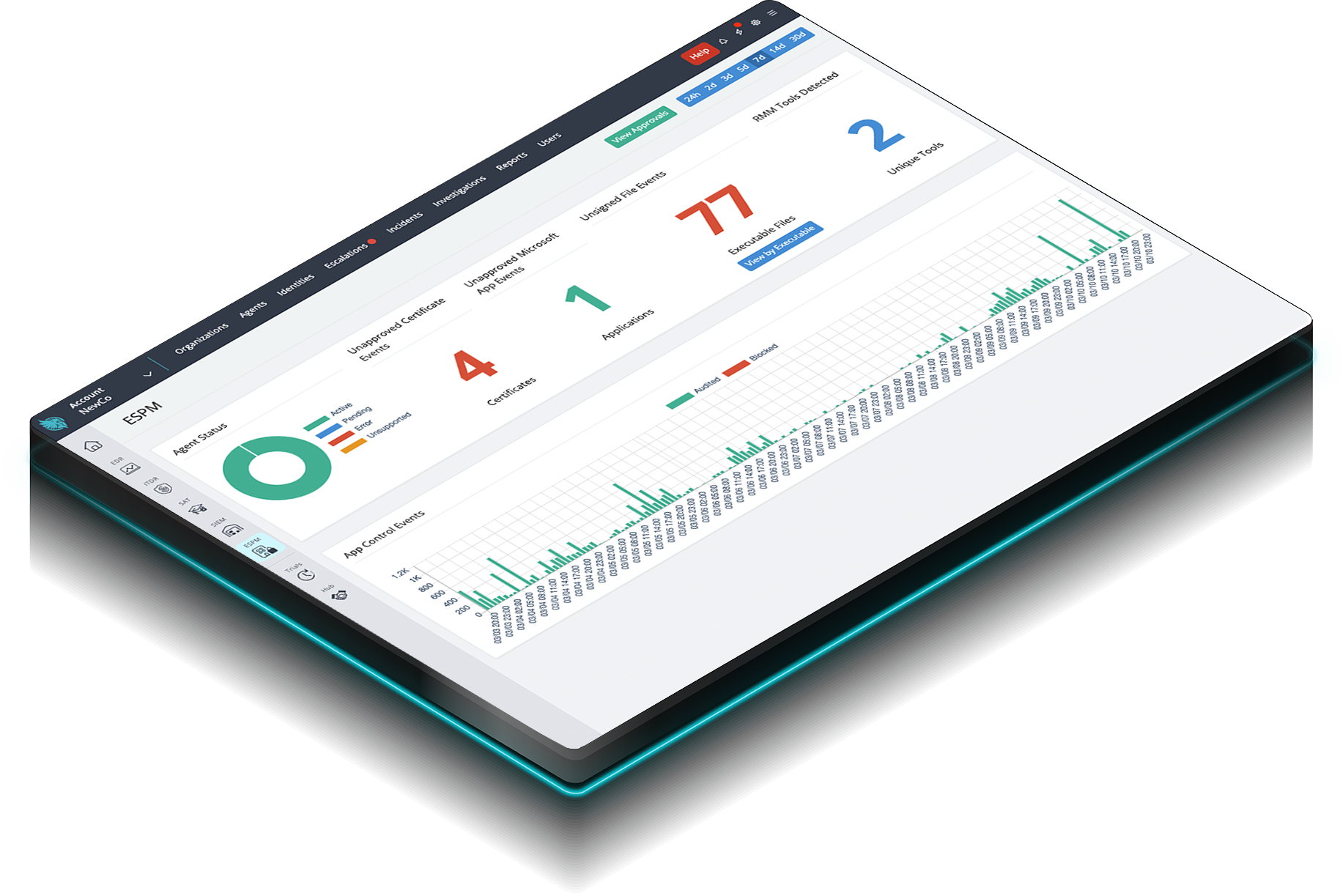
Huntress Endpoint Security Posture Management is proactive security that hardens endpoints to defend against attacks like ransomware and infostealers, and prevent breaches. Get broad endpoint visibility and control over configurations, applications, vulnerabilities, and more in one location and a single solution.

  • Reduce the attack surface to take away the hacker’s advantage
  • A managed approach for less overhead and fewer headaches
2025 World’s 50 Most Innovative Companies

2025 World’s 50 Most Innovative Companies

Top 25 CRN Technology Disrupters

Top 25 CRN 
Technology Disrupters

2025 Best SIEM Solution SC Awards Europe

2025 Best SIEM Solution SC Awards Europe

G2 Award LogoG2 Award LogoG2 Award LogoG2 Award Logo

One unified security platform, one response across endpoint, identity, and logs.

See what cross-product correlation looks like in a live environment.

Frequently Asked Questions

Cross-product correlations connect signals across Managed EDR, Managed ITDR, and Managed SIEM to uncover attacks that span endpoints, identities, and infrastructure. Instead of investigating separate alerts, Huntress correlates them into a single incident with guided remediation, giving you the context and actions needed to stop attackers faster.

Most attacks don’t stay confined to one system. An attacker might compromise an endpoint, steal credentials, and access cloud accounts minutes later. Separate tools only show part of the story. Huntress automatically correlates activity across products, reducing manual investigation and helping your team respond before attackers can move further.

When Managed EDR detects malware like an infostealer on a Windows endpoint, Huntress automatically identifies the Microsoft 365 identities that were logged into that device. Those identities are added to the Incident Report with guided ITDR remediation actions like revoking sessions or disabling accounts, helping stop stolen credentials before they’re abused.

Each correlation uses the products involved in that attack path. For example, EDR and ITDR Correlations require both Managed EDR and Managed ITDR, while SIEM correlations require Managed SIEM. The more Huntress products you deploy, the more attack paths the platform can automatically correlate into a unified investigation and response.

Managed SIEM captures and retains logs from VPNs, firewalls, cloud services, and other infrastructure that often disappear within hours. This gives Huntress visibility into attacker reconnaissance and initial access before malware executes. In one real incident, SIEM provided an 11-minute head start over endpoint detection alone.

Current EDR and ITDR Correlations support Huntress Managed EDR on Windows endpoints and Managed ITDR for Microsoft 365 identities. Managed SIEM correlations ingest logs from VPNs, firewalls, endpoints, and cloud services to provide additional context across the attack lifecycle.

Learn more about cross-product correlation

Read more about Learn how unified EDR and ITDR stop attacks before they spread
Learn how unified EDR and ITDR stop attacks before they spread
Blog

Learn how Huntress EDR/ITDR correlations automatically stop infostealer-driven attacks by linking an endpoint compromise to the compromised cloud identity.

Read more about Get the Straightforward Buyer’s Guide to EDR
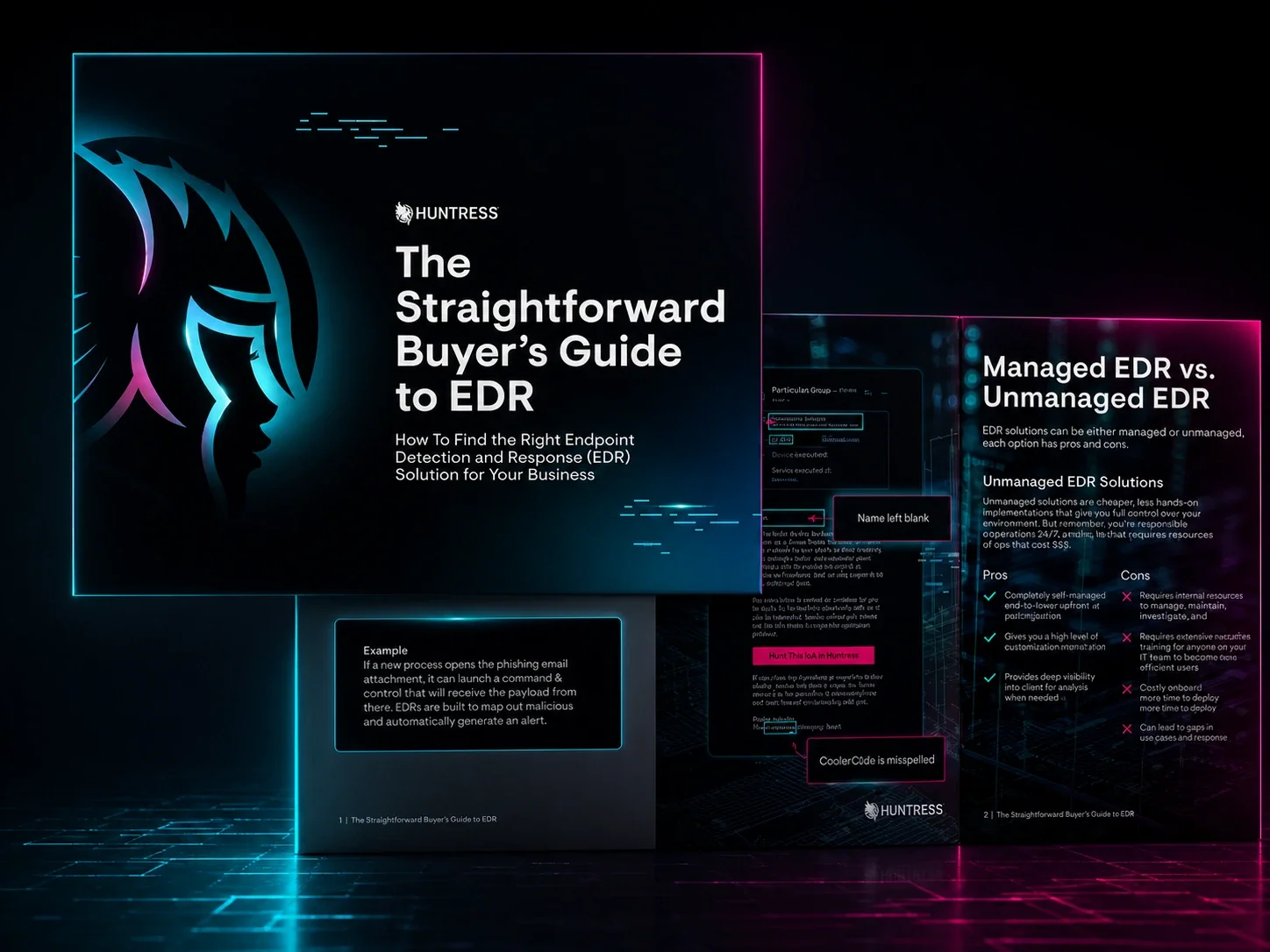
Get the Straightforward Buyer’s Guide to EDR
Guide

Learn more about our all-encompassing guide to EDR that suits your needs.

Read more about Learn how to solve the SIEM problem
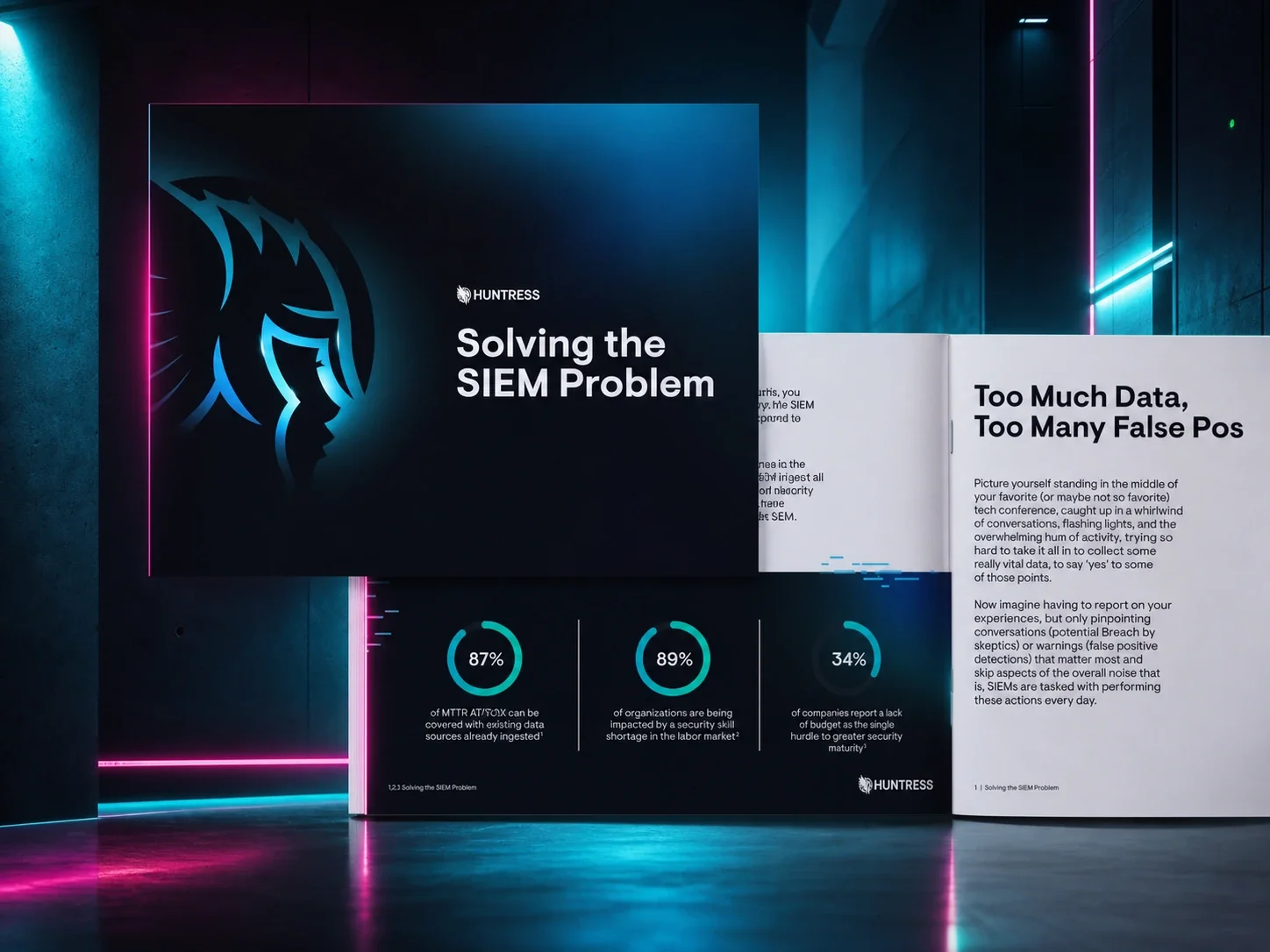
Learn how to solve the SIEM problem
eBook

Dive into the most common problems SIEM users face and learn how to solve them.

See Huntress in action.

Our platform combines a suite of powerful managed detection and response tools for endpoints and Microsoft 365 identities, science-backed security awareness training, Managed SIEM, and the expertise of our 24/7 Security Operations Center (SOC).

Speak with Our Experts
By submitting this form, you accept our Terms of Service & Privacy Policy