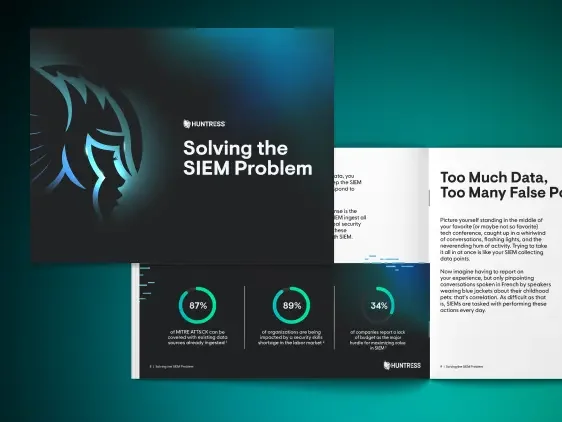
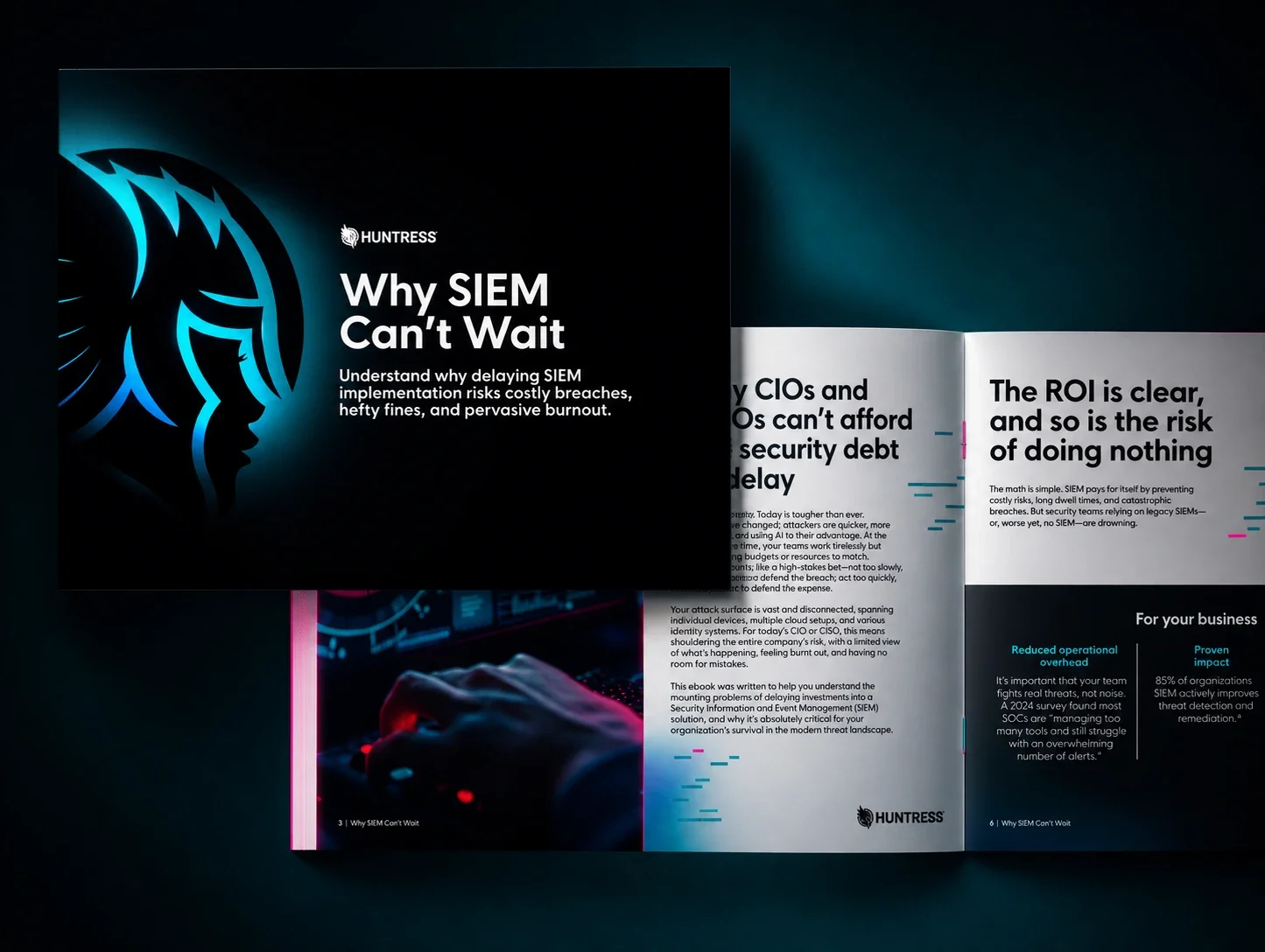
Dive into the most common problems SIEM users face and learn how to solve them. Whether you’re grappling with too many false positives, struggling to find the right expertise, or facing unpredictable costs, you’ll get the insights you need to make informed decisions about your security.
Download Your Ebook
SIEM was supposed to give you clarity. For a lot of teams, it gave them a second job and a bigger bill. The data piles up, the alerts never stop, and the threats still slip through.
This guide names the real problems with traditional SIEM and lays out a better way to get the visibility you need without the headache.
The core SIEM problems
Cost: Data ingest and storage costs climb fast and unpredictably
Noise: Endless alerts bury the few that matter and burn out your team
Complexity: Tuning and maintaining a SIEM is a full-time job most teams can't staff
No response: Detection alone doesn't stop anything; someone has to act
A better approach
The fix isn't more tooling. It's a SIEM that's managed for you, priced so you can plan, and tuned so your team sees signal instead of noise.
How Huntress solves it
Managed SIEM gives you managed threat response and compliance support at a predictable price, with the Huntress AI-centric SOC watching and working to keep your organization protected 24/7.
Download the guide to see how to get SIEM's value without its baggage.
Next-Level Threat Hunting with Huntress Managed SIEM
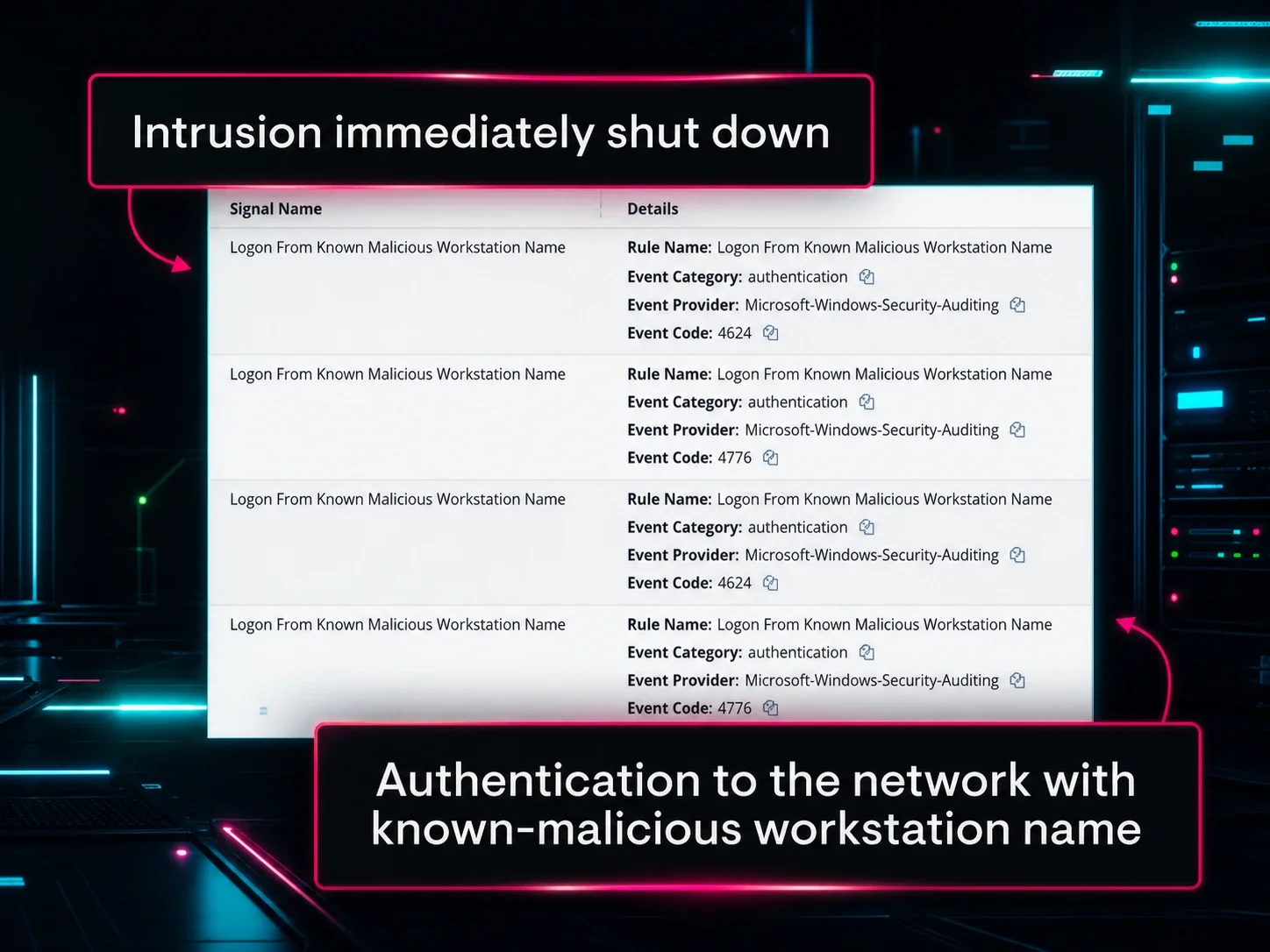
Hackers are constantly finding new ways to sneak past defenses. But this is your new way to shut them down.
Huntress Managed SIEM takes threat hunting to the next level—and you’ll see how in this exclusive 45-minute session for our partners.
Join us for an interactive technical onboarding session designed to help new Huntress partners hit the ground running. In this livestream, you’ll get a full walkthrough of the onboarding journey—from platform essentials and agent deployment to managing alerts, reports, and security workflows.
New to SIEM? Learn the biggest first-time SIEM buying mistakes, what to look for, and how to choose with confidence. Our guide includes a SIEM buying checklist.
Breaking the Kill Chain: How to Stop Ransomware Before the Encryption Starts
The ransom note isn't the beginning of an attack—it's the finish line. Most security failures happen because teams focus on the "boom" rather than the silent precursors. This virtual event pulls back the curtain on the critical window between initial breach and total lockout.
Technical Partner Onboarding with Huntress (Session 1)
Join us for an interactive technical onboarding session designed to help new Huntress partners hit the ground running. In this livestream, you’ll get a full walkthrough of the onboarding journey—from platform essentials and agent deployment to managing alerts, reports, and security workflows.
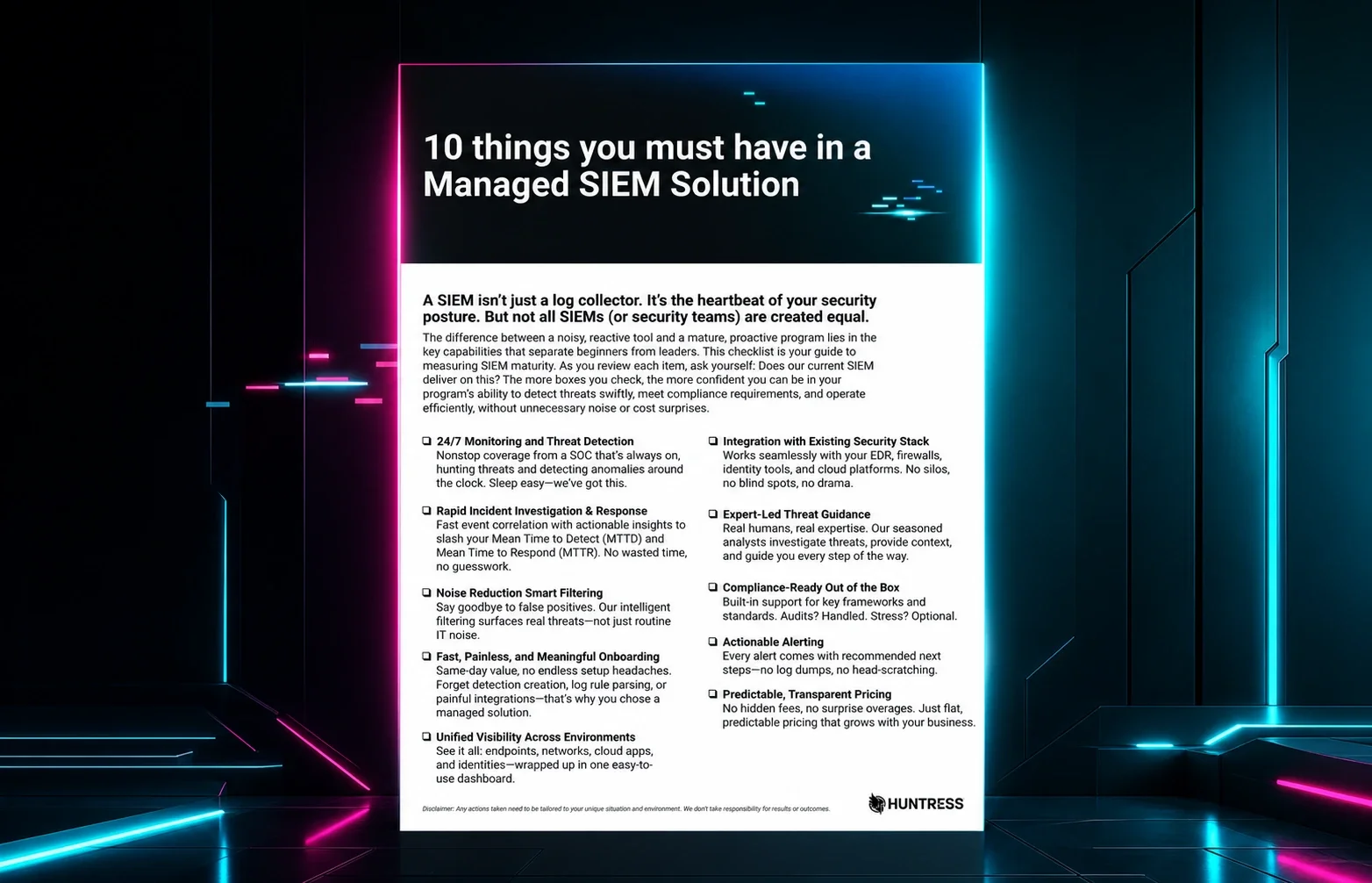
10 things you must have in a Managed SIEM Solution
With the right solution, enjoy fewer false positives, faster response, smooth compliance, and no surprise costs. Download this checklist to see where you can strengthen your threat detection.
A One-Two Punch: EDR + SIEM for Faster, Smarter Threat Response (NA)
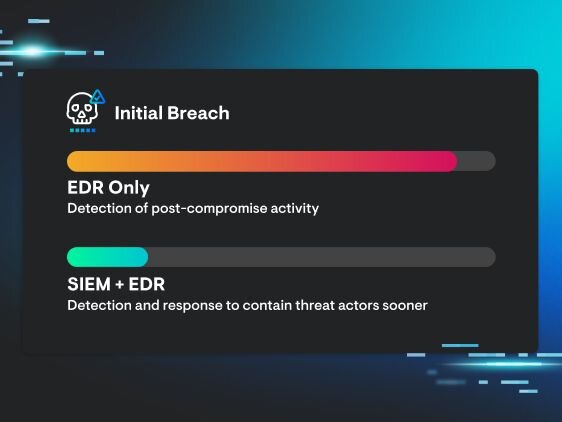
Today’s attackers don’t stop at endpoints—so your security can’t, either. By combining EDR’s granular endpoint intelligence with SIEM’s enterprise-wide analytics, you pivot from reactive to resilient. And in this session, you’ll learn how to do it.
Choosing the right SIEM isn’t easy, and one wrong move can leave you with a noisy, overpriced system that doesn’t deliver what you need.
[PH] Learn More About Phishing
[PH] Huntress delivers everything you want from a security tool, all designed with the unique needs of outsourced IT and security teams in mind.
[PH] Phishing attempts can show up as messages from your bank, your boss, your utility providers, or even the government. One click from one user can compromise an entire network and inadvertently let hackers deploy ransomware, steal information, or worse.
[PH] The median time it takes for a user to click a link and enter information is less than 60 seconds. With a turnaround time that quick, it's no wonder phishing is one of the preferred methods used by hackers. (2024 Verizon Data Breach Report)