Buying your first SIEM should make you safer. Too often, it just makes you busier and puts you in tech debt. Most first-time buyers don't get burned by the technology. They get burned by the decisions around it.
Here are the seven mistakes we see most, and how to avoid each one.
The seven mistakes
Buying on raw features instead of outcomes: A long checklist doesn't catch threats. Coverage and response do.
Underestimating the true cost: Licensing is the start. Data ingest, storage, and tuning are where budgets blow up.
Forgetting who runs it: A SIEM with no one watching it is just an expensive log pile.
Ignoring data and alert volume: More data isn't better if it buries your team in noise.
Skipping compliance fit: If it doesn't map to the standards you answer to, you'll pay twice.
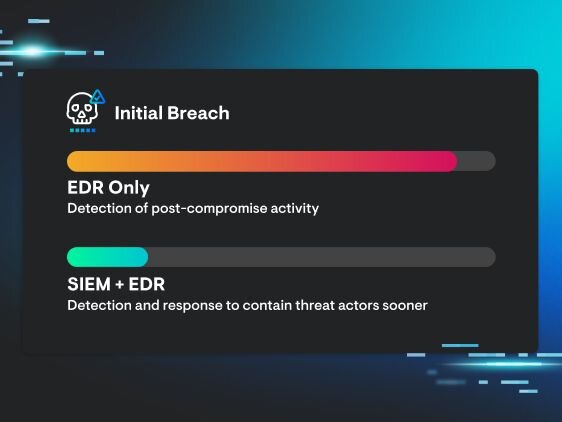
No plan for response: Detecting a threat means nothing if nobody acts on it fast.
Locking in before you've tested it: Trial opportunities reveal the gaps a demo hides.
A simple SIEM-selection checklist
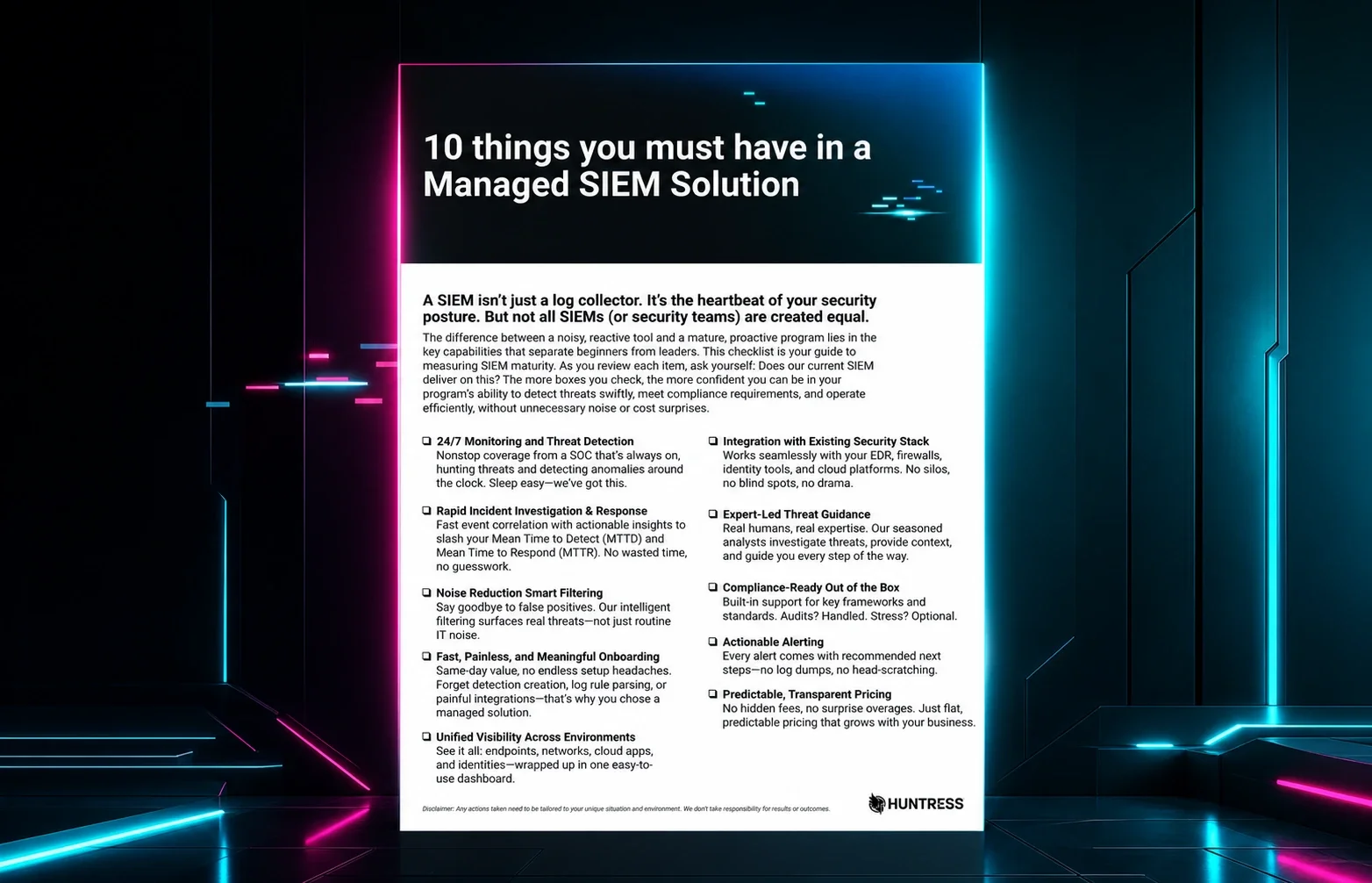
Total cost, including ingest and storage, not just the license
Who monitors and responds, and how fast
How well it maps to your compliance needs
How much tuning it takes to cut the noise
Whether you can test it on your real data first
A SIEM you don't have to babysit
Most of these mistakes come from buying a tool and inheriting a job. Managed SIEM flips that—predictable pricing, managed monitoring, and response handled by the award winning Huntress SOC.
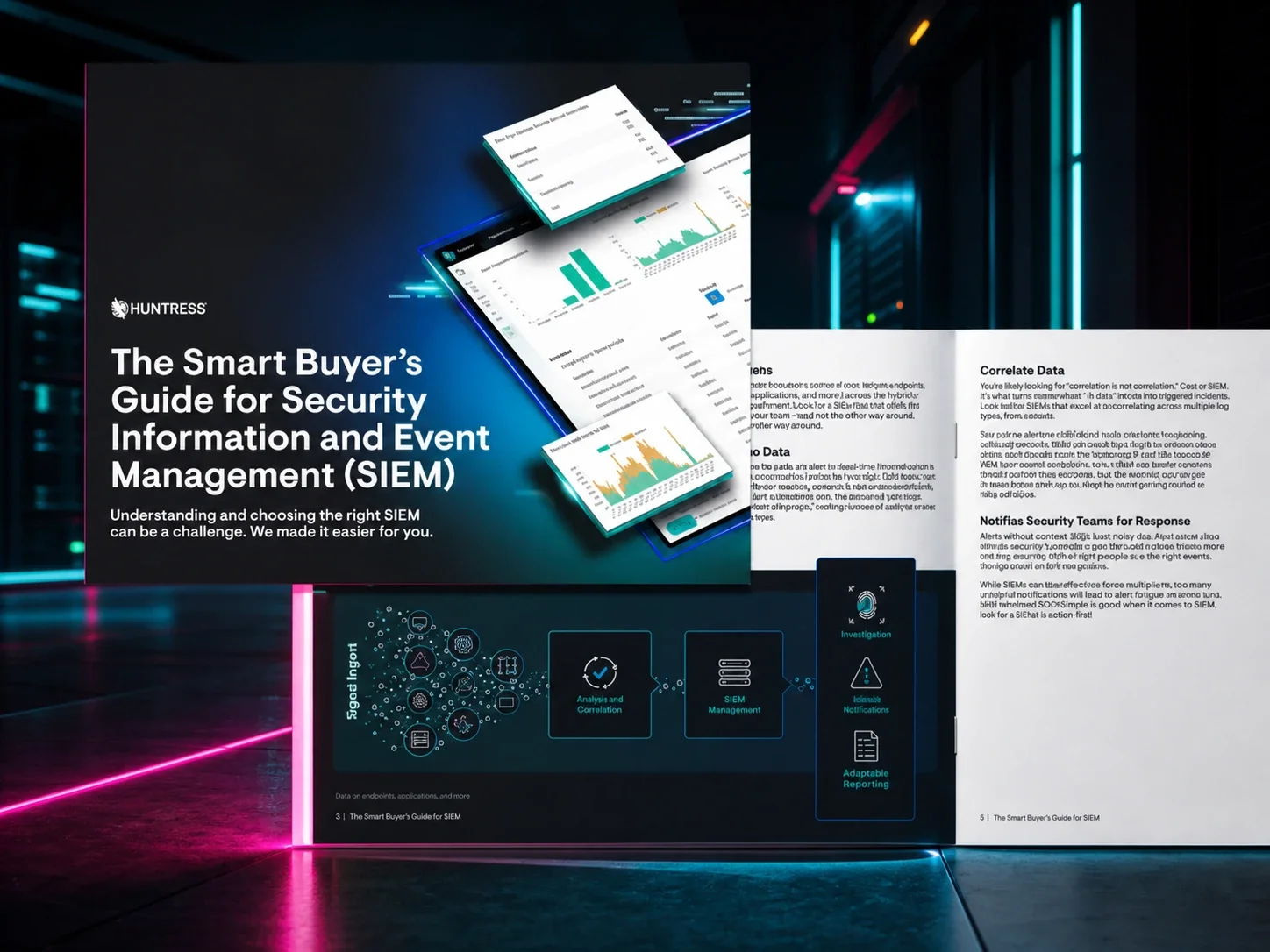
Download the guide to dodge the costly mistakes before you sign anything.