

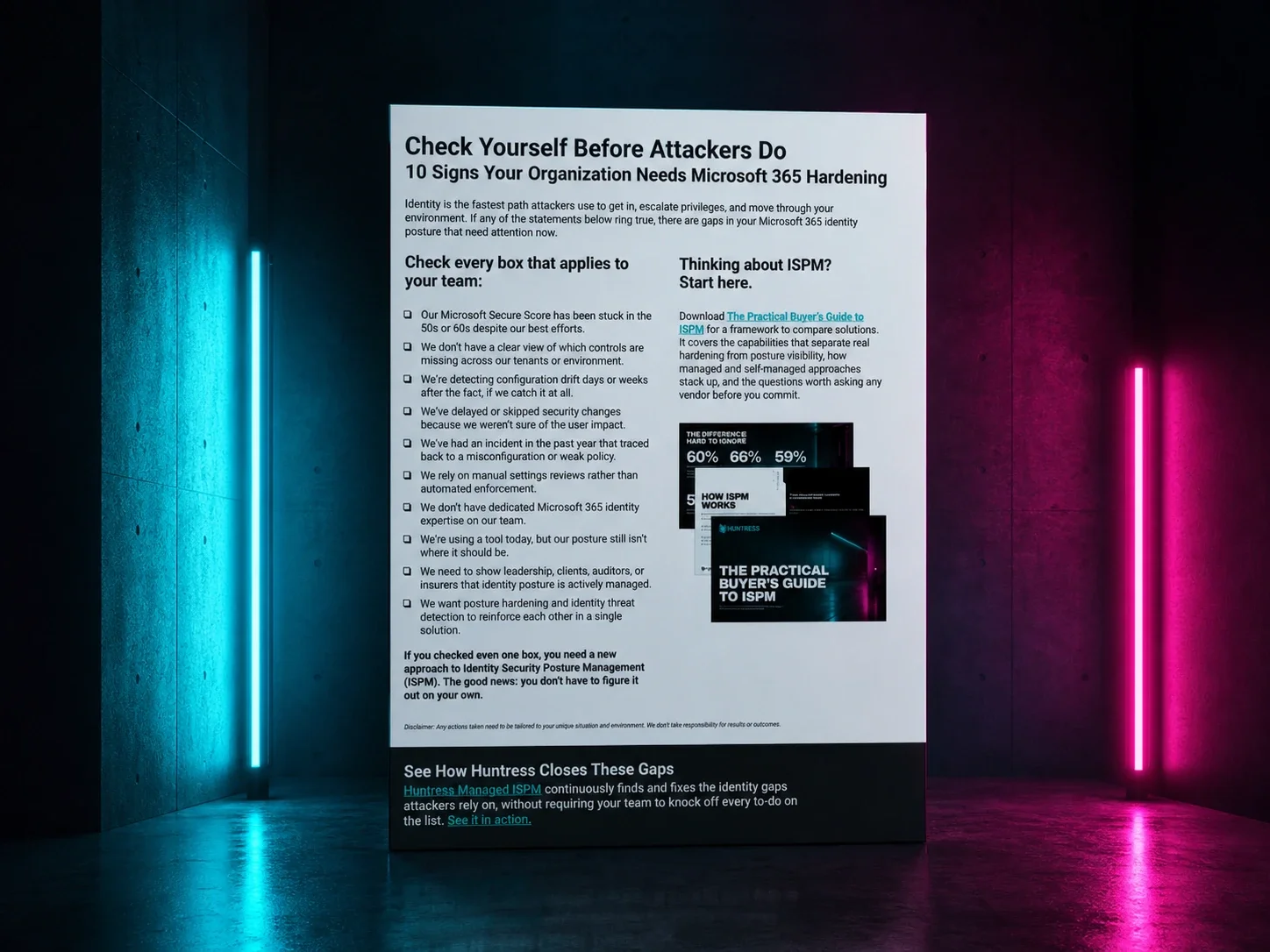
Checklist
10 Signs Your Organization Needs Microsoft 365 Hardening
Use this checklist to quickly assess if your organization has the Identity Security Posture Management (ISPM) gaps that attackers rely on.
We built this guide for IT and security leaders evaluating Identity Security Posture Management solutions to harden Microsoft 365 and close identity gaps.
Inside, you’ll get practical guidance on what capabilities actually matter, how to evaluate your needs, and how to choose the right identity management model for your organization.
Attackers don’t need to break in when gaps and misconfigured policies let them in without a fight. Identity is one of the fastest attack paths they use to gain access, escalate privileges, and move laterally. That means small configuration gaps can become big problems fast.
The Practical Buyer’s Guide to ISPM solutions helps you cut through the noise and focus on which capabilities reduce risk, how to evaluate solutions with confidence, and whether a managed or self-managed model is the right fit for your team.
Here’s a peek at what you’ll find inside:
Why ISPM has become a must-have for teams who need to harden Microsoft 365.
What strong ISPM should actually do, from continuous posture assessment to drift detection and enforcement.
The difference between posture visibility tools and true hardening-focused ISPM.
The questions to ask vendors before you buy, so you can separate real outcomes from another dashboard.
Whether a managed or self-managed approach is the better fit for your organization.
If you’re evaluating ISPM solutions, this guide will help you separate another posture dashboard from a solution that actually improves security outcomes.
Identity is one of the fastest attack paths for gaining access, escalating privileges, and moving laterally. Attackers don’t need to break through your perimeter when gaps and misconfigured policies let them in without issue.
Related Resources
Use this checklist to quickly assess if your organization has the Identity Security Posture Management (ISPM) gaps that attackers rely on.
Managed ISPM finds the identity gaps attackers look for, and closes them for you.
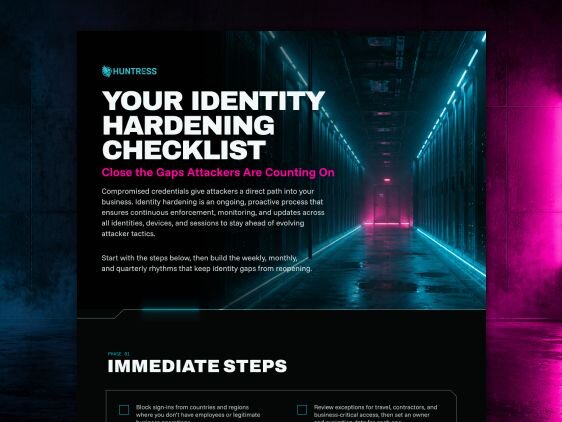
Download your free checklist for hardening identity security. Get quick wins for this week and a plan for ongoing monitoring, MFA enforcement, and access control.
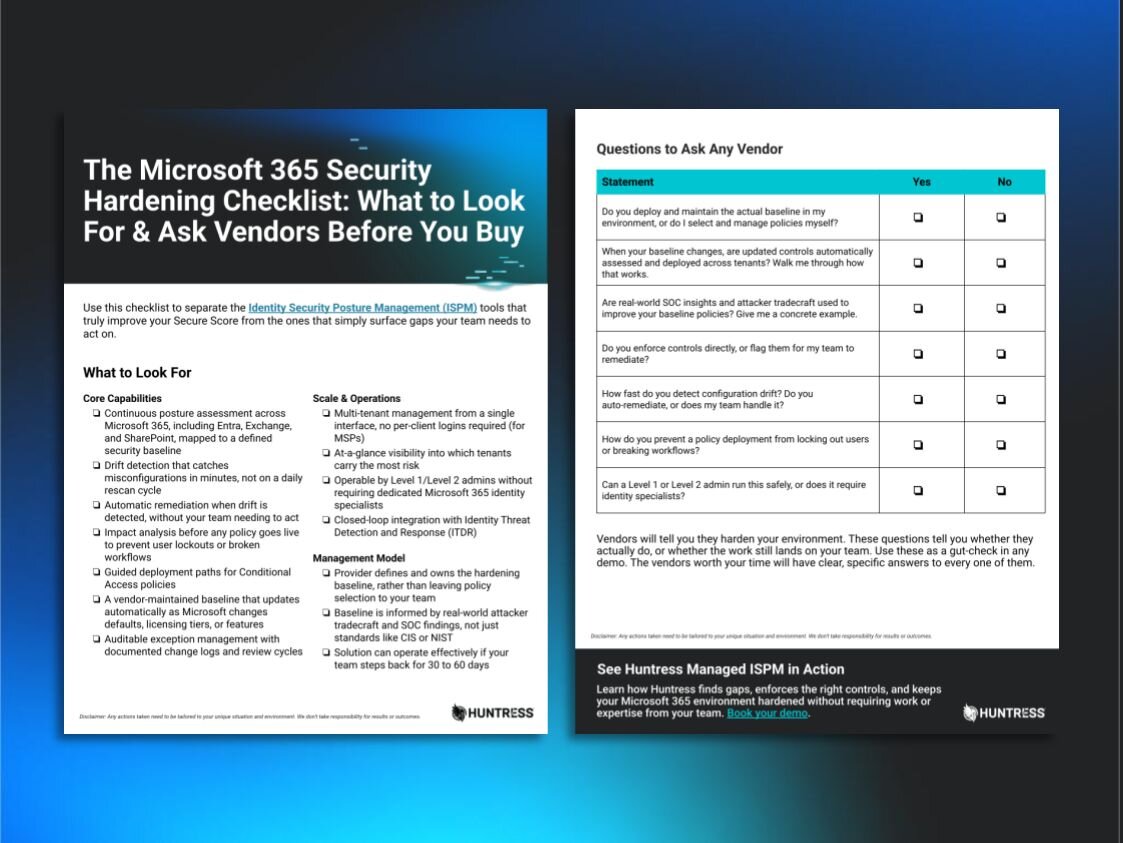
Close gaps, don't just find them. Before you invest in another tool that only surfaces problems, download this checklist to cut through the vendor noise. Discover the core capabilities, ideal management model, and critical questions you need to ask to find an Identity Security Posture Management (ISPM) solution that automatically enforces controls and hardens your Microsoft 365 environment.
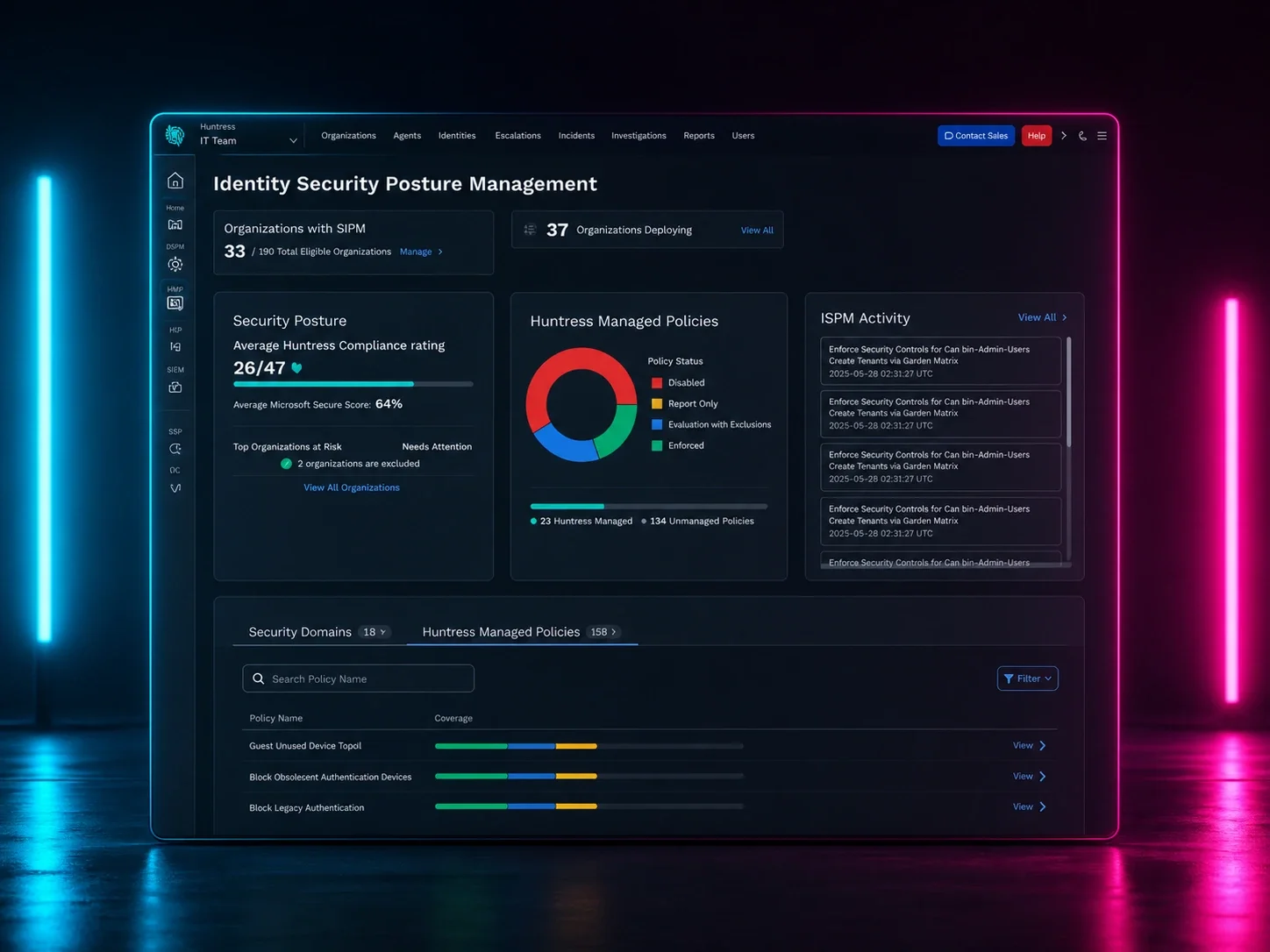
Huntress Managed ISPM finds and closes Microsoft 365 identity gaps before attackers do. Learn why visibility isn't enough and what real identity hardening takes.
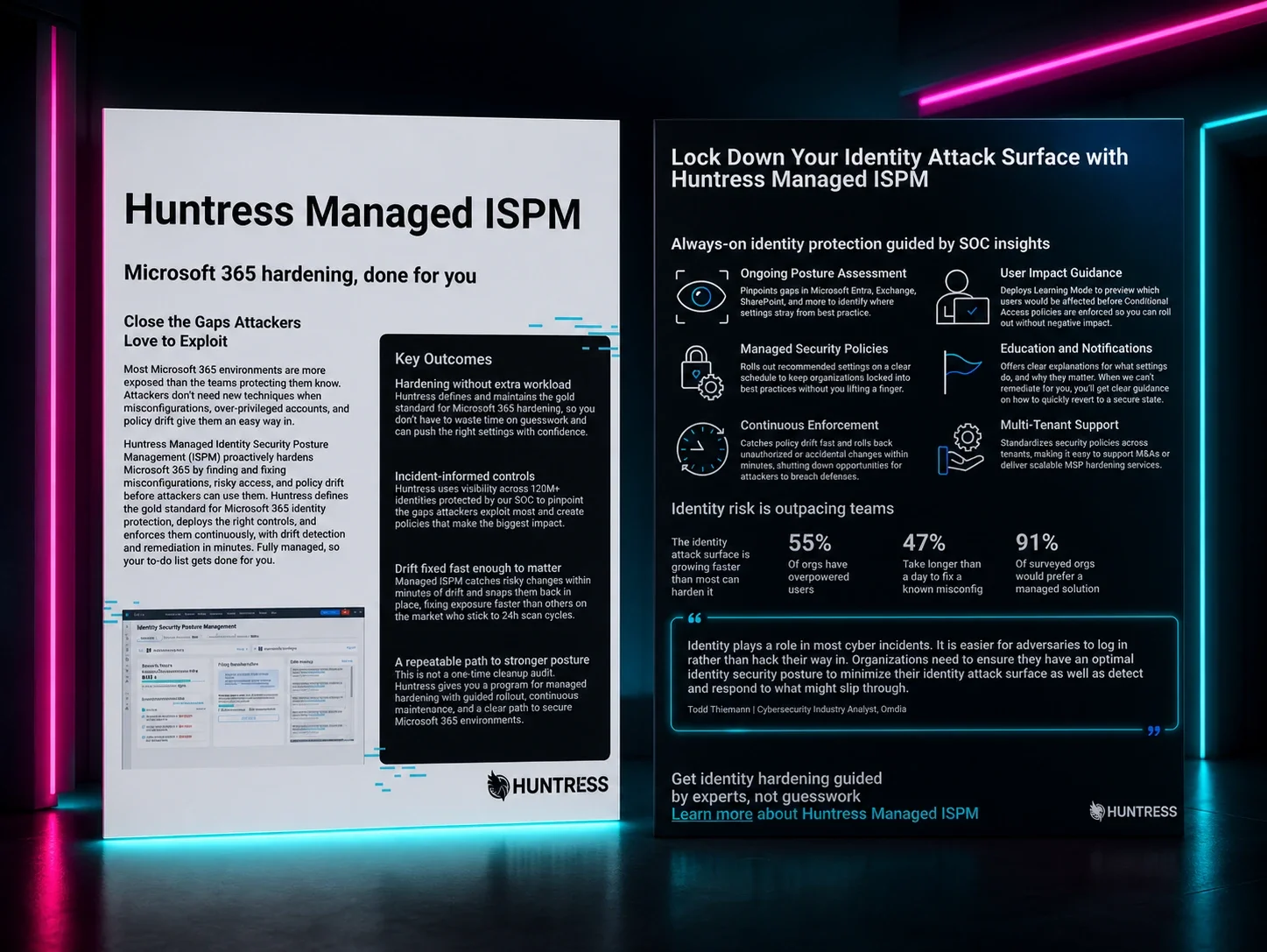
Download the Huntress Managed ISPM datasheet to see how continuous, SOC‑guided identity security posture management for Microsoft 365 finds and fixes misconfigurations before attackers can exploit them.
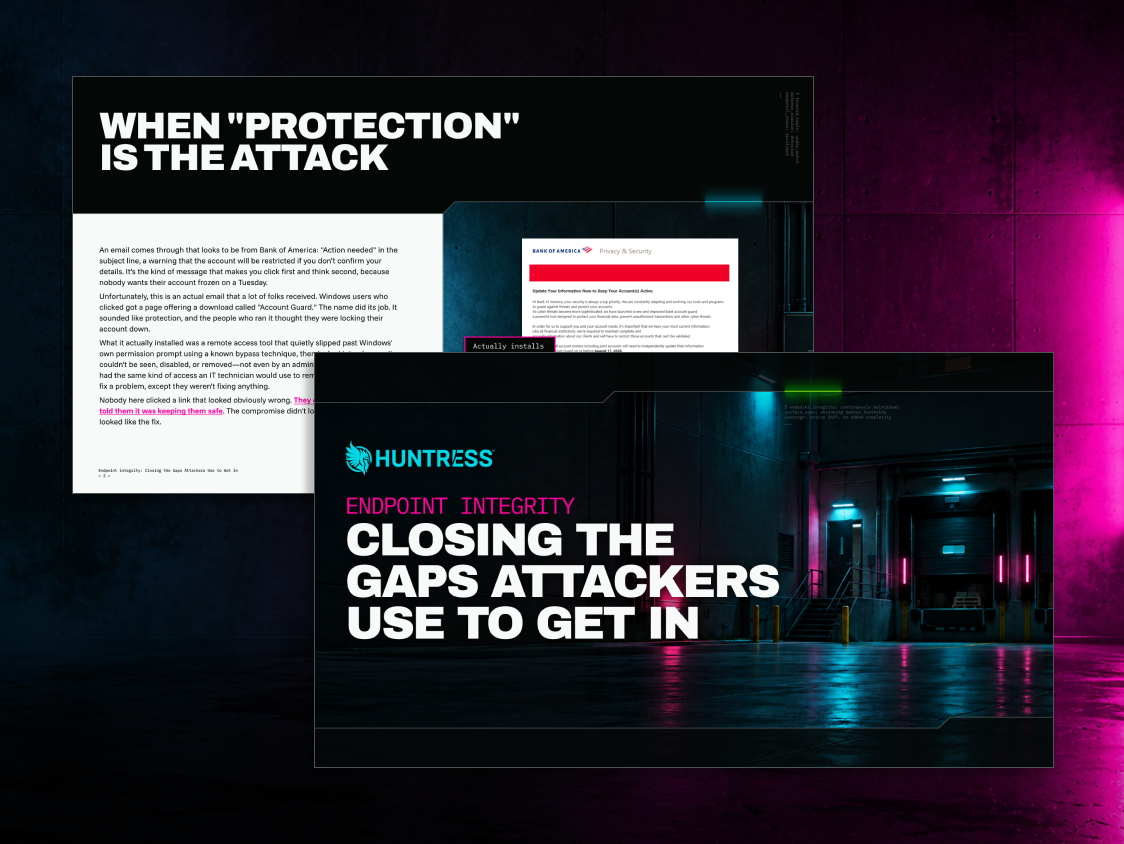
Endpoints are at risk from modern threats. Read the Huntress eBook to learn tactics attackers use to bypass defenses and how endpoint integrity closes the gaps.

We’ll walk through a handful of the most common (and most dangerous) Microsoft 365 misconfigurations we see across tenants, show how attackers abuse them for initial access and lateral movement, and talk through what “good” actually looks like. Then we’ll tackle the harder truth: even when IT teams and MSPs have the right tools, they’re buried under tickets and tenant sprawl.
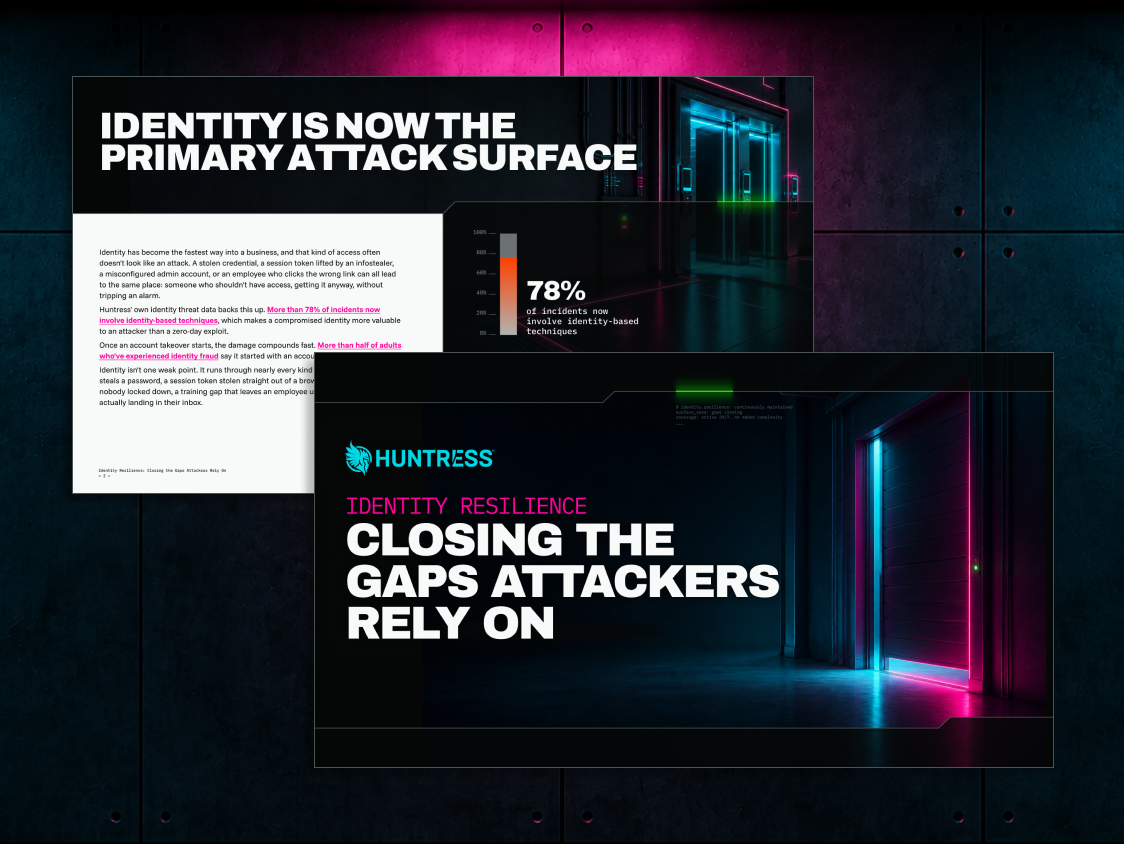
Identity has become the top attack target. Get the free Huntress ebook and learn how to build real resilience and close the gaps attackers rely on.
