


On-Demand Virtual Event
In this session, we’ll dig into the five pillars of the NIST framework - identify, protect, detect, respond, recover - and help you apply them to your business.
Our platform aligns with the NIST Cybersecurity Framework to keep you protected.
Our Huntress Managed Security Platform aligns with the NIST Cybersecurity Framework to keep you protected.
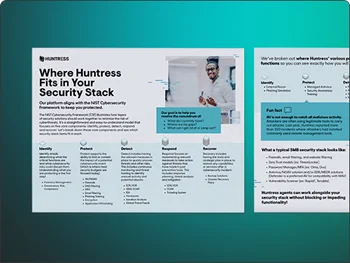
The NIST Cybersecurity Framework (CSF) illustrates how layers of security solutions should work together to minimize the risk of cyberthreats. It’s a straightforward and easy-to-understand model that focuses on five core components:
In this datasheet, we'll break down these core components and see which security stack items fit in each. Our goal is to help you resolve the conundrum of:
Read more about this in our blog post, Navigating the NIST Cybersecurity Framework.


In this session, we’ll dig into the five pillars of the NIST framework - identify, protect, detect, respond, recover - and help you apply them to your business.
In these videos, we’ll dig into the five pillars of the NIST framework - identify, protect, detect, respond, recover - and help you apply them to your business.

Watch our virtual event to hear our panel get candid about how they have built their tech stack, road bumps they’ve encountered along the way and how they lean on managed services themselves.
