


Video
What is ITDR?
Hackers have a new favorite flavor of tradecraft: identity. Hear about what identity attacks are, how they work, and how ITDR protects businesses.
In 2026, there’s no such thing as a "perfect" perimeter. The modern approach is an “Assume Breach” mentality, but that doesn’t mean you should leave your doors wide open.
Today’s attackers have moved away from noisy, complex exploits in favour of the path of least resistance: using your own tools and misconfigured credentials.
That’s why we’re unpacking the 2026 Huntress Cyber Threat Report to show you how to maintain elite detection while using posture management to strip away the "unforced errors" that attackers rely on. Here’s what Huntress experts, Sean Stitt and Justin Allen, will get into:
Key insights from Huntress’ 2026 Cyber Threat Report.
Local intel: Real-world incident breakdowns from Australia and New Zealand.
Closing the gaps: A breakdown of the configuration drift that bypasses even the best sensors.
Huntress ESPM & ISPM: How to harden your environment to ensure attackers have nowhere to hide.
Live Q&A



Related Resources
Hackers have a new favorite flavor of tradecraft: identity. Hear about what identity attacks are, how they work, and how ITDR protects businesses.
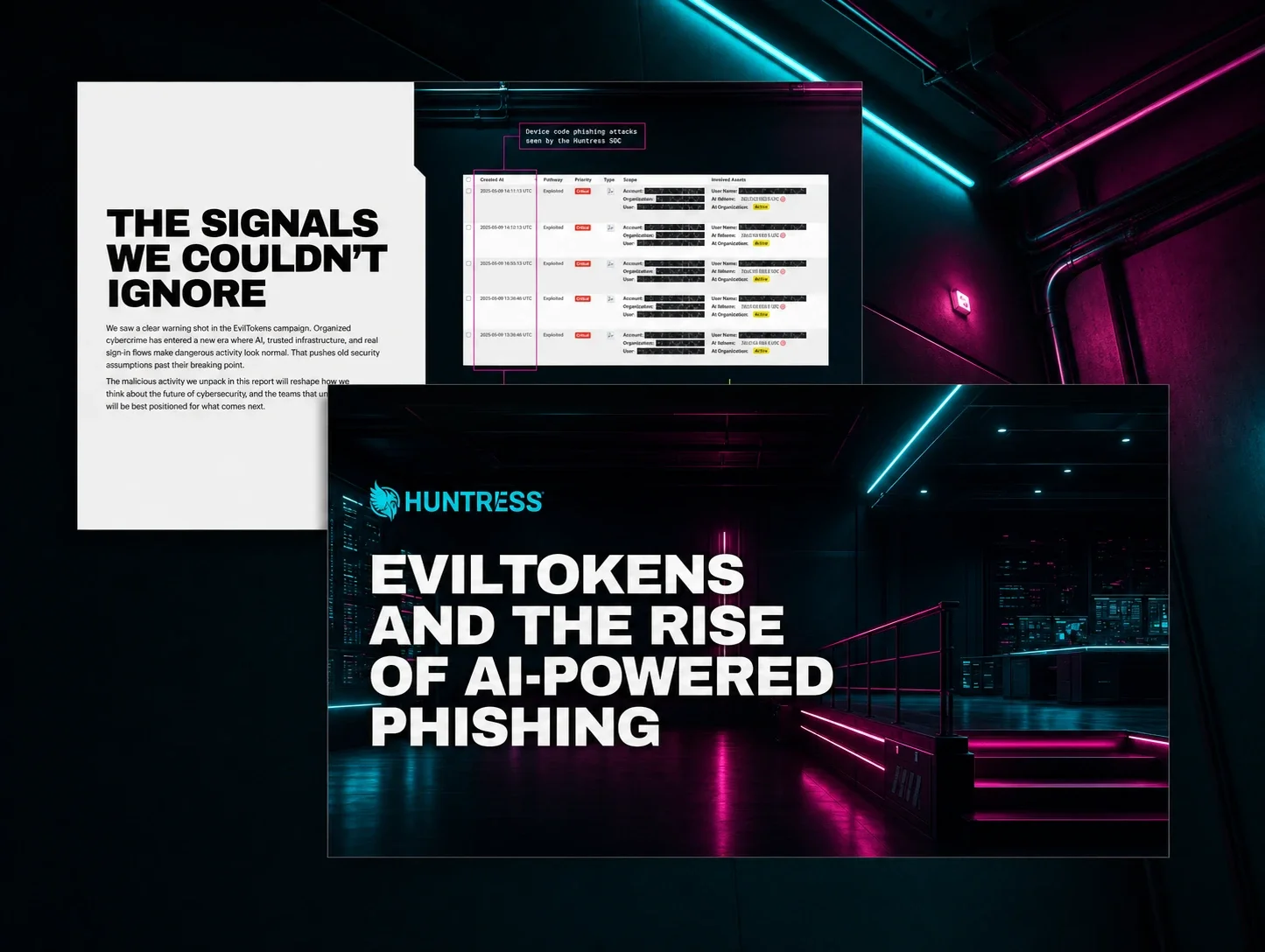
See how the EvilTokens Phishing-as-a-Service campaign uses AI and device code phishing to steal Microsoft 365 tokens at scale — and the steps defenders can take to get ahead of it.
Ransomware is a type of malware that cuts off your access to computers, systems, or networks. Attackers encrypt or steal sensitive data, lock up your endpoints, and send a ransom message demanding cryptocurrency payment on a short timeline.
[Summary text goes here]
