Explore our Ransomware Guide to learn about the threat it poses to your business, the effects of an attack, and what you can do to protect your endpoints.
Published: 12/2/2025
Written By: Lizzie Danielson
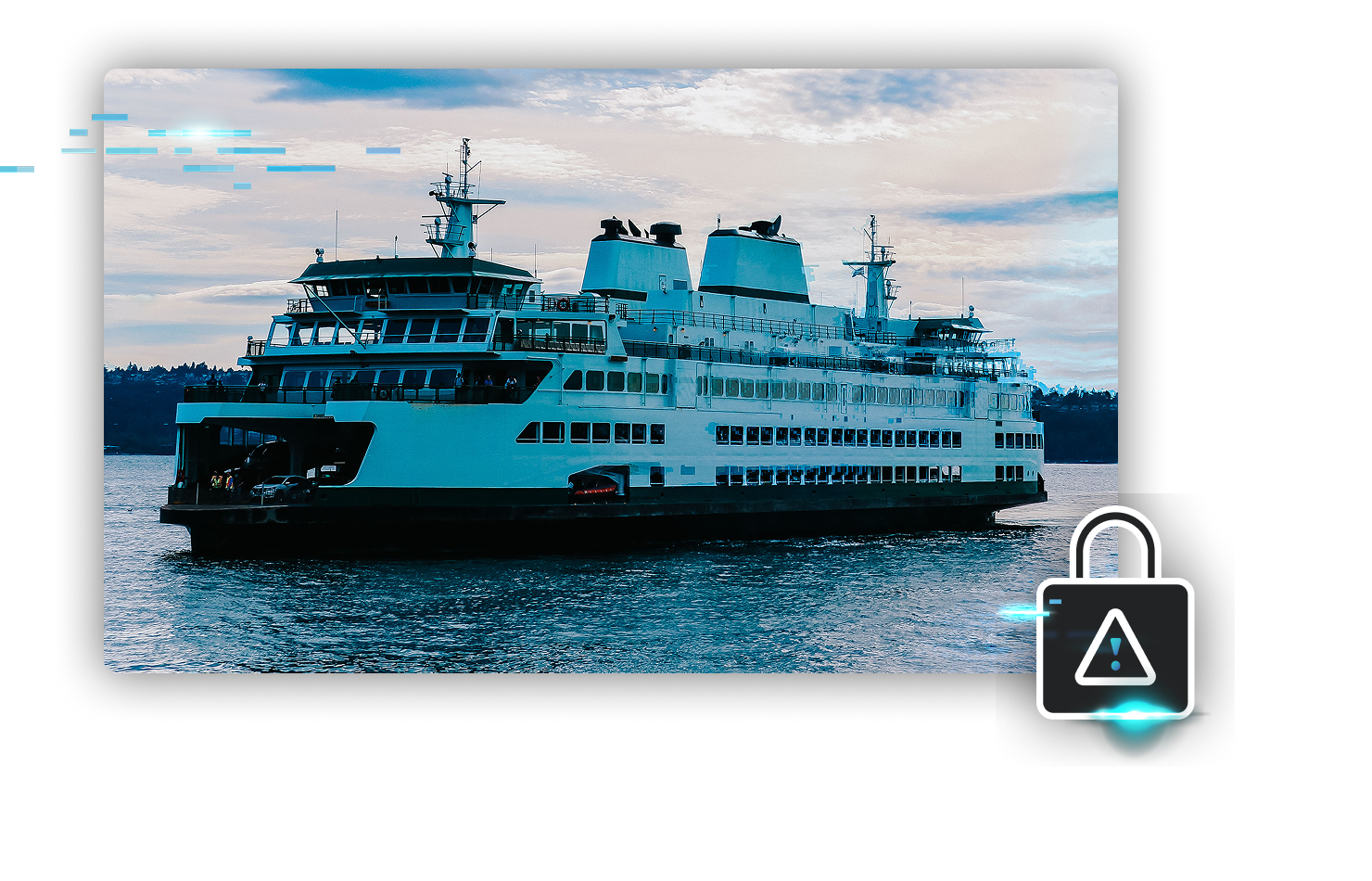
The Steamship Authority ransomware attack was a serious cyber incident targeting the Woods Hole, Martha’s Vineyard, and Nantucket Steamship Authority in June 2021. This attack disrupted ferry operations, delaying travel for passengers and freight, and showcased the vulnerabilities of critical transportation infrastructure to ransomware threats.
The attack took place on June 2, 2021, leading to immediate impacts on ferry reservations, online services, and daily operations. Recovery extended for days, as systems were gradually restored.
The identities behind the ransomware used in this attack remain unknown. Security experts suspect the involvement of a sophisticated ransomware group, possibly with financial motives.
The attack began by encrypting key IT systems, leading to interruptions in the Steamship Authority’s reservation system and website functionality. Passengers attempting to book or modify trips were met with error messages, while internal systems required extensive restoration efforts.
The primary victim was the Steamship Authority itself. However, the broader impact extended to passengers, businesses relying on timely freight shipping, and the local communities of Martha’s Vineyard and Nantucket, all of whom faced travel disruptions.
It remains undisclosed whether a specific ransom was demanded in this case. The Steamship Authority publicly stated they would not negotiate or pay ransoms, focusing instead on recovery.
The type of ransomware and source code used in the attack have not been publicly detailed. However, like other ransomware campaigns, it likely utilized phishing emails or exploited unpatched vulnerabilities to gain access and encrypt target systems.
The attack likely involved standard ransomware TTPs, including phishing emails, exploiting system vulnerabilities, and encrypting critical data to halt operations.
While specific IoCs for this attack have not been disclosed, organizations should monitor for malicious email attachments, unusual data encryption activity, and anomalies in network traffic as general signs of ransomware activity.
This attack caused significant operational disruption, delaying ferry schedules and impacting local businesses. Financial losses included lost revenue from interrupted services and expenses related to restoring systems. Reputationally, it highlighted vulnerabilities in critical services.
The Steamship Authority quickly engaged cybersecurity experts to contain the damage, restore backups, and implement enhanced security measures. Recovery took several days, with ongoing efforts to harden their systems against future threats.
There’s no indication that this specific ransomware campaign remains active. However, similar ransomware threats continue to evolve and target critical infrastructure worldwide.
To prevent ransomware attacks like this, organizations should:
Regularly update and patch systems to address vulnerabilities.
Conduct employee training on recognizing phishing attempts.
Implement robust backups and disaster recovery plans.
Use firewalls and endpoint security tools to monitor network traffic.
Stay informed about the Steamship Authority Cyberattack and other cyber threats by visiting the Huntress Blog.
Learn more about ransomware protection strategies through these Huntress resources:
Ransomware is a type of malware that cuts off your access to computers, systems, or networks. Watch the video from our Security Operations Center (SOC) for a breakdown of the ransomware attack path, so you can spot it early, shut it down, and steer clear of hacker paydays.
By the time you see the ransom note, the attack's been underway for hours, sometimes days. The encryption is the last step, not the first. If you only react when files lock up, you've already lost the part that mattered.
This ransomware likely spread through phishing emails or by exploiting vulnerabilities in outdated systems. Its main function was to encrypt critical IT systems.
There’s no public record of a universal decryptor for this ransomware. Professional cybersecurity assistance is often needed to address such attacks.
This attack specifically targeted the transportation industry, disrupting ferry services vital to local communities and businesses.
Businesses can protect themselves by implementing strong cybersecurity protocols, training employees to detect phishing attempts, maintaining up-to-date system patches, and developing reliable backup strategies.