




Learn what Mimikatz is, how it works, and how to detect and defend against its attacks. Protect your network from credential theft and lateral movement.
What Is Lateral Movement in Cybersecurity?


 Summarize This PageSummarize This Page
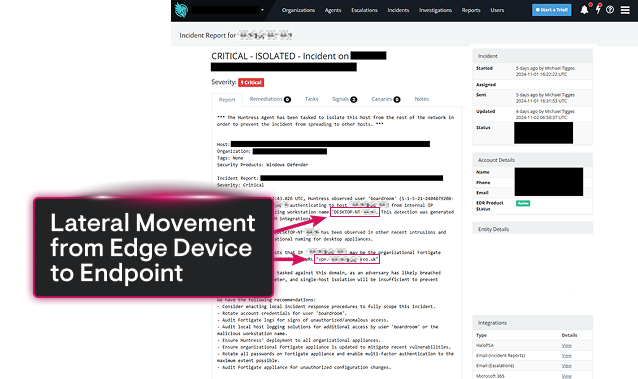
Lateral movement is like a digital game of sneaking through a maze. Once attackers wiggle their way into a network, they move around inside, hopping between systems and accounts. Why? To escalate their access, avoid getting caught, and aim for high-value targets like sensitive data or domain controllers. It’s what makes a small breach become a big problem.
When attackers want to spread inside a network, they get creative with how they move. Here’s how they pull it off:
Harvesting credentials left lying around on systems to unlock more doors.
Scanning the network to map out where valuable assets might be hiding.
Abusing trusted protocols like RDP, SMB, or WMI to blend in like they belong there.
Basically, they use legit tools to play the long con and bypass your security defenses.
Hackers don’t just wing it. They’ve got their go-to moves for lateral movement:
Pass-the-Hash or Pass-the-Ticket Attacks: Using stolen credentials to masquerade as an authorized user.
RDP Abuse: Taking over systems remotely with admin tools.
WMI Exploitation: Running commands on other devices without raising alarms.
PsExec Tool Usage: A favorite for executing commands on remote systems.
Credential Dumping from LSASS (Local Security Authority Subsystem Service): Extracting passwords from memory like cracking a safe.
Exploiting Weak Service Permissions or sloppy Active Directory setups.
Pro tip? Most of these have perfectly valid business purposes, which makes them extra hard to detect. Sneaky, right?
Catching lateral movement is tricky, but not impossible if your defenses are on point. Focus on:
East-West Traffic Monitoring: Keep an eye on internal network activity, not just inbound/outbound traffic.
EDR: These tools are your network’s watchdogs, alerting you to shady behavior on devices.
Unusual Login Patterns: Spot when users aren’t acting like their usual selves.
Behavior Analytics: User and Entity Behavior Analytics (UEBA) tools find anomalies in how users interact with systems. Weird patterns = red flags.
Log Correlation: Collect logs from all your systems and piece together the story. Think detective work, but automated.
Early detection makes all the difference. The sooner you spot them, the less damage they can do.
Want to stop lateral movement in its tracks? Gear up with these essentials:
Microsoft Defender for Endpoint for device monitoring and control.
BloodHound for mapping out Active Directory weaknesses.
Zeek or Suricata to analyze network activity like a boss.
On top of tools, adopt a zero trust approach. Assume every device or user could be the bad guy until proven otherwise. Add in strict access controls for good measure.
MITRE ATT&CK is like the attacker’s playbook, and lateral movement is definitely in there. Techniques like:
T1021 (Remote Services): Cover methods hackers use to exploit remote connections.
T1550 (Pass-the-Hash): Focuses on leveraging stolen credential hashes.
This framework gives cybersecurity teams a heads-up on what attackers might try next and helps them defend smarter, not harder.
Ransomware operators love lateral movement. Why? It lets them hit the biggest, most critical systems before making their ransom demand.
Picture this: They quietly take over your backups, file servers, and domain controllers. Then, bam! They lock it all down at once. More damage means more leverage to force you to pay up. That’s why stopping lateral movement early is so important.
Hackers may be silent, but they leave clues. Don’t miss them.