

Don’t let overlooked obligations become incidents. Learn how.
Utility navigation bar redirect icon
Portal LoginSupportBlogContact
Search
Close search
Huntress Logo in Teal
  • Platform Overview
    Managed EDR

    Get full endpoint visibility, detection, and response.

    Managed EDR

    Get full endpoint visibility, detection, and response.

    Managed ITDR: Identity Threat Detection and Response

    Protect your Microsoft 365 and Google Workspace identities and email environments.

    Managed ITDR: Identity Threat Detection and Response

    Protect your Microsoft 365 and Google Workspace identities and email environments.

    Managed SIEM

    Managed threat response and robust compliance support at a predictable price.

    Managed SIEM

    Managed threat response and robust compliance support at a predictable price.

    Managed Security Awareness Training Software

    Empower your teams with science-backed security awareness training.

    Managed Security Awareness Training Software

    Empower your teams with science-backed security awareness training.

    Managed ISPM

    Continuous Microsoft 365 and identity hardening, managed and enforced by Huntress experts.

    Managed ISPM

    Continuous Microsoft 365 and identity hardening, managed and enforced by Huntress experts.

    Managed ESPM

    Proactively secure endpoints against attacks.

    Managed ESPM

    Proactively secure endpoints against attacks.

    Integrations
    Integrations
    Support Documentation
    Support Documentation
    See Huntress in Action

    Quickly deploy and manage real-time protection for endpoints, email, and employees - all from a single dashboard.

    Huntress Cybersecurity
    See Huntress in Action

    Quickly deploy and manage real-time protection for endpoints, email, and employees - all from a single dashboard.

    Huntress Cybersecurity
  • Threats We Stop
    Phishing
    Phishing
    Business Email Compromise
    Business Email Compromise
    Ransomware
    Ransomware
    Infostealers
    Infostealers
    View Allright arrowView Allright arrow
    Industries We Serve
    Education
    Education
    Financial Services
    Financial Services
    State and Local Government
    State and Local Government
    Healthcare
    Healthcare
    Law Firms
    Law Firms
    Manufacturing
    Manufacturing
    Utilities
    Utilities
    View Allright arrowView Allright arrow
    Tailored Solutions
    MSPs
    MSPs
    Resellers
    Resellers
    SMBs
    SMBs
    Compliance
    Compliance
    What Gets Overlooked Gets Exploited

    Most days, nothing happens. But one day, something will.

    Huntress Cybersecurity
    Cybercriminals Have Evolved

    Get the intel on today’s cybercriminal groups and learn how to protect yourself.

    Huntress Cybersecurity
  • Pricing
  • Community Series
    The Product Lab

    Shape the next big thing in cybersecurity together.

    The Product Lab

    Shape the next big thing in cybersecurity together.

    Fireside Chat

    Real people. Real perspectives. Better conversations.

    Fireside Chat

    Real people. Real perspectives. Better conversations.

    Tradecraft Tuesday

    No products, no pitches – just tradecraft.

    Tradecraft Tuesday

    No products, no pitches – just tradecraft.

    _declassified

    Exposing hidden truths in the world of cybersecurity.

    _declassified

    Exposing hidden truths in the world of cybersecurity.

    Resources
    Upcoming Events
    Upcoming Events
    Ebooks
    Ebooks
    On-Demand Webinars
    On-Demand Webinars
    Videos
    Videos
    Whitepapers
    Whitepapers
    Datasheets
    Datasheets
    Cybersecurity Education
    Cybersecurity 101
    Cybersecurity 101
    Cybersecurity Guides
    Cybersecurity Guides
    Threat Library
    Threat Library
    Real Tradecraft, Real Results
    Real Tradecraft, Real Results
    2026 Cyber Threat Report
    2026 Cyber Threat Report
    The Huntress Blog
    When Cybersecurity and Cyber Insurance Don’t Quite Connect—And What We’re Doing Differently with Acrisure
    Huntress Cybersecurity
    When Cybersecurity and Cyber Insurance Don’t Quite Connect—And What We’re Doing Differently with Acrisure
    Huntress Cybersecurity
    How EvilTokens Turbocharges Old School Phishing with AI
    Huntress Cybersecurity
    How EvilTokens Turbocharges Old School Phishing with AI
    Huntress Cybersecurity
    “Service Agreement” Email Kickstarts Rogue RMM Tiflux Triple Threat
    Huntress Cybersecurity
    “Service Agreement” Email Kickstarts Rogue RMM Tiflux Triple Threat
    Huntress Cybersecurity
  • Why Huntress

    Go beyond AI in the fight against today’s hackers with Huntress Managed EDR purpose-built for your needs

    Huntress Cybersecurity
    Why Huntress

    Go beyond AI in the fight against today’s hackers with Huntress Managed EDR purpose-built for your needs

    Huntress Cybersecurity
    The Huntress SOC

    24/7 Security Operations Center

    The Huntress SOC

    24/7 Security Operations Center

    Reviews

    Why businesses of all sizes trust Huntress to defend their assets

    Reviews

    Why businesses of all sizes trust Huntress to defend their assets

    Case Studies

    Learn directly from our partners how Huntress has helped them

    Case Studies

    Learn directly from our partners how Huntress has helped them

    Community

    Get in touch with the Huntress Community team

    Community

    Get in touch with the Huntress Community team

    Compare Huntress
    Bitdefender
    Bitdefender
    Blackpoint
    Blackpoint
    Breach Secure Now!
    Breach Secure Now!
    Crowdstrike
    Crowdstrike
    Datto
    Datto
    SentinelOne
    SentinelOne
    Sophos
    Sophos
    Compare Allright arrowCompare Allright arrow
  • HUNTRESS HUB

    Login to access top-notch marketing resources, tools, and training.

    Huntress Cybersecurity
    HUNTRESS HUB

    Login to access top-notch marketing resources, tools, and training.

    Huntress Cybersecurity
    Partners
    MSPs

    Join our partner community to deliver expert-led managed security.

    MSPs

    Join our partner community to deliver expert-led managed security.

    Resellers

    Partner program designed to grow your cybersecurity business.

    Resellers

    Partner program designed to grow your cybersecurity business.

    Tech Alliances

    Driving innovation through global technology Partnerships

    Tech Alliances

    Driving innovation through global technology Partnerships

    Microsoft Partnership

    A Level-Up for Your Business Security

    Microsoft Partnership

    A Level-Up for Your Business Security

  • Press Release
    Huntress Announces Collaboration with Microsoft to Strengthen Cybersecurity for Businesses of All Sizes
    Huntress Cybersecurity
    Press Release
    Huntress Announces Collaboration with Microsoft to Strengthen Cybersecurity for Businesses of All Sizes
    Huntress Cybersecurity
    Our Story

    We're on a mission to shatter the barriers to enterprise-level security.

    Our Story

    We're on a mission to shatter the barriers to enterprise-level security.

    Newsroom

    Explore press releases, news articles, media interviews and more.

    Newsroom

    Explore press releases, news articles, media interviews and more.

    Meet the Team

    Founded by former NSA Cyber Operators. Backed by security researchers.

    Meet the Team

    Founded by former NSA Cyber Operators. Backed by security researchers.

    Careers

    Ready to shake up the cybersecurity world? Join the hunt.

    Careers

    Ready to shake up the cybersecurity world? Join the hunt.

    Awards
    Awards
    Contact Us
    Contact Us
  • Portal Login
  • Support
  • Blog
  • Contact
  • Search
  • Get a Demo
  • Start for Free
Portal LoginSupportBlogContact
Search
Close search
Get a Demo
Start for Free
HomeCybersecurity 101
What Is a Deepfake?

What Is a Deepfake?

Written by: Lizzie Danielson

Published: 6/30/2025

Last updated: 5/7/2026

woman at laptop
ChatGPT logoChatGPTOpens in new tabClaude logoClaudeOpens in new tabPerplexity logoPerplexityOpens in new tabGoogle Gemini logoGoogle AIOpens in new tab
AI sparkle iconSummarize This Page
ChatGPT logoChatGPTOpens in new tabClaude logoClaudeOpens in new tabPerplexity logoPerplexityOpens in new tabGoogle Gemini logoGoogle AIOpens in new tab
On This Page
Key Takeaways
What exactly is a deepfake?
How deepfakes work
How to spot a deepfake
What to do if you think you're being tricked
Why are threat actors using deepfakes?
Why deepfakes are a serious cybersecurity concern in 2026
How to combat deepfakes
How Huntress helps protect against deepfakes

Key Takeaways

  • Deepfakes are AI-generated videos, images, and audio clips that make people say and do things that never happened and they're convincing enough to fool most people.

  • Threat actors are already using deepfakes to commit fraud, steal credentials, and spread misinformation. This isn't a future threat, it's happening now.

  • Spotting a deepfake takes a critical eye. Unnatural movement, audio sync issues, and suspiciously provocative content are all red flags.

  • If you think you're being tricked, slow down. Verify through a separate channel before you act on anything.

  • 2026 is a turning point. Deepfake-as-a-service platforms have made this technology accessible to threat actors at every skill level and most organizations aren't ready.

What exactly is a deepfake?

A deepfake is a video, image, or audio clip created using artificial intelligence (AI) that makes a real person appear to say or do something they never did. These AI-generated fakes can be incredibly convincing and are increasingly used in scams, misinformation campaigns, and other forms of digital manipulation.

The word "deepfake" is a mashup of "deep learning" (a type of AI) and "fake" — which pretty much says it all.


Who created deepfake technology?

Deepfakes didn't appear overnight. They're the result of decades of academic research.

The roots go back to 1997 when researchers Christoph Bregler, Michele Covell, and Malcolm Slaney built a program called Video Rewrite that could sync new audio to existing facial footage. It was originally meant for movie dubbing, but it laid the groundwork for everything that came after.

The real turning point came in 2014 when machine learning researcher Ian Goodfellow — then a PhD student at the University of Montreal — introduced the Generative Adversarial Network (GAN). A GAN pits two AI systems against each other: one generates fake content and the other tries to detect it. The result is a system that keeps getting better at deception. Goodfellow's invention is widely credited as the foundation of modern deepfake technology.

The term "deepfake" itself entered public use in late 2017 when an anonymous Reddit user started sharing AI-manipulated videos and the open-source code behind them on GitHub. From there, apps and tools made the technology accessible to anyone — no technical background needed.

By 2025 "deepfake-as-a-service" platforms put this capability on-demand for threat actors worldwide. No expertise required.


How deepfakes work

At the core of deepfake technology is the GAN. Two AI systems run in a loop: one creates the fake content (the "generator") and the other evaluates whether it passes as real (the "discriminator"). The generator keeps improving until the output is convincing enough to fool the discriminator and ultimately a real person.

By processing large datasets of images, videos, and audio recordings of a target, the system learns to replicate their likeness, voice, and mannerisms with striking accuracy. Modern tools have simplified this dramatically. Today, someone with zero technical expertise can create a convincing deepfake using a smartphone app or a web-based service.


How to spot a deepfake

Detecting a deepfake isn't always easy, but there are signs something may be off.

Unnatural movements. Watch for stiff or robotic facial expressions, body language that doesn't feel quite right, and unusual blinking or eye movement. Real people blink regularly and naturally AI-generated faces may blink too much, too little, or not at all.

Visual artifacts. Look for blurry edges around the face, flickering, inconsistent lighting, or skin texture that looks oddly smooth especially near the hairline and ears. Pay close attention to accessories: reflections in glasses may not match the surrounding environment, and hats or jewelry may cast incorrect (or no) shadows.

Eye and facial detail inconsistencies. Deepfake eyes often lack depth or appear unusually still, without the subtle changes in pupil size or focus that occur naturally. Check whether eyebrow movement matches facial expressions. A smile with completely stationary eyebrows is a red flag. Also look for whether the apparent age of the skin matches the eyes and hair.

Audio irregularities. Pay attention to how well the voice syncs with lip movement. Mismatched timing, a robotic tone, or an unusual cadence are all red flags. Compare the voice to known recordings of the person if you can, altered voices often sound subdued or slightly off in tone.

The content seems designed to provoke. Deepfakes are often used to manufacture controversy or urgency. If a video shows someone saying something shocking, out of character, or demanding immediate action, treat it with skepticism and verify independently before sharing or acting.

Nobody else is reporting it. If a major news-worthy clip hasn't been picked up by credible outlets, that's a reason to question it.


See it in action: A real-world deepfake attack

Watch how convincing a deepfake can be — and what to look for.

https://youtube.com/shorts/ECDAlrVZO5s?si=yLFqX53JrAmvEZ6t


What to do if you think you're being tricked

Whether it's a voice call from your "CEO" demanding an urgent wire transfer, a video message from a colleague, or a viral clip of a public figure saying something alarming, here's what to do.

  1. Pause before you act. Deepfake attacks are built around urgency. If something feels rushed, that's your first warning sign.

  2. Verify through a separate channel. Call the person back on a known phone number. Send a separate email. Never verify using the same channel the suspicious message came from.

  3. Look for the telltale signs outlined above. Trust your instincts if something feels slightly off.

  4. Report it. If you suspect a deepfake is being used to commit fraud or impersonate someone, flag it to your IT or security team right away.

  5. Don't share it. Spreading an unverified deepfake can accelerate misinformation fast. Verify first.

Want to learn more? The Huntress _declassified webinar series tackles the most pressing cybersecurity threats including how deepfakes are being used against businesses right now.


Why are threat actors using deepfakes?

Deepfakes work because they exploit one of the most fundamental human instincts: we trust what we see and hear.

Social engineering and phishing. A fake video of a trusted contact asking you to click a link is far more convincing than a standard phishing email. Deepfakes make social engineering dramatically harder to catch.

Credential theft. Deepfakes can be used to bypass identity verification including voice authentication systems to gain unauthorized access to accounts and systems.

Reputation attacks. Organizations and public figures can be targeted with fabricated "evidence" of criminal behavior or controversial statements. It's costly and time-consuming to undo the damage even after the fake is exposed.

Misinformation and political manipulation. Deepfake-style technology has been used to spread false narratives during elections and conflicts, manufacturing fake speeches from world leaders and seeding confusion at critical moments.

As Ben Bernstein, technical account manager at Huntress, put it: "We can no longer trust voice authentication over the phone. I could effortlessly feed an interview or podcast into a deepfake AI solution, effectively training it to mimic a target's voice. Imagine that AI calling a helpdesk to reset a password or impersonating an executive to extract sensitive financial data. MSPs especially need to recognize this escalating threat and implement stronger verification methods."


Why deepfakes are a serious cybersecurity concern in 2026

Deepfakes aren't new, but 2026 marks a real turning point in how seriously every organization needs to take them.

Deepfake-as-a-service is mainstream. Ready-to-use platforms emerged widely in 2025 offering voice cloning, video impersonation, and persona simulation to anyone willing to pay. What once required a sophisticated attacker now requires only a credit card.

The attacks are working. Research shows nearly every other business globally reported a deepfake-related fraud incident in 2024. North America saw deepfake fraud grow by more than 1,700% between 2022 and 2023. The pace hasn't slowed.

Detection is still catching up. As detection tools improve, the technology generating deepfakes evolves to stay a step ahead. This arms race puts defenders at a disadvantage when verification isn't built into day-to-day operations.

Voice authentication can no longer be trusted. Many helpdesks, financial workflows, and identity verification systems were built on the assumption that a convincing voice is a trustworthy one. That assumption is now dangerously outdated.

The awareness gap is wide. Security experts are consistent on this point: most organizations aren't prepared for the sophistication of AI-powered deepfake attacks being actively deployed today.

How to combat deepfakes

We're publishing a full guide on detection and defense strategies soon. In the meantime, here's what to put in place right now.

  • Train your team. Security awareness training that covers deepfakes specifically, what they look like, how they're used in attacks, and how to respond is your most immediate line of defense.

  • Verify unusual requests through a second channel. Any instruction involving money, credentials, or sensitive data should always be confirmed independently before anyone acts on it.

  • Use multi-factor authentication (MFA). Even if threat actors impersonate someone convincingly, MFA creates a barrier they can't easily fake.

  • Build a culture of healthy skepticism. Teach your team to slow down, question urgency, and report suspicious communications without fear of embarrassment.

How Huntress helps protect against deepfakes

Deepfakes are a prime example of how emerging technology gets twisted into a cybersecurity problem. As these threats get more convincing and more accessible, organizations need more than awareness — they need the right tools, the right training, and expert eyes watching around the clock.

Huntress combines 24/7 SOC monitoring, Managed Security Awareness Training, and managed endpoint protection to help your team stay ahead of evolving threats — including the social engineering attacks that deepfakes power. From catching fraud attempts to preparing employees to recognize impersonation schemes, we help cut through the noise and protect what matters most.


ChatGPT logoChatGPTOpens in new tabClaude logoClaudeOpens in new tabPerplexity logoPerplexityOpens in new tabGoogle Gemini logoGoogle AIOpens in new tab
AI sparkle iconSummarize This Page
ChatGPT logoChatGPTOpens in new tabClaude logoClaudeOpens in new tabPerplexity logoPerplexityOpens in new tabGoogle Gemini logoGoogle AIOpens in new tab
On This Page
Key Takeaways
What exactly is a deepfake?
How deepfakes work
How to spot a deepfake
What to do if you think you're being tricked
Why are threat actors using deepfakes?
Why deepfakes are a serious cybersecurity concern in 2026
How to combat deepfakes
How Huntress helps protect against deepfakes
Security Awareness Training Episode

Deepfake

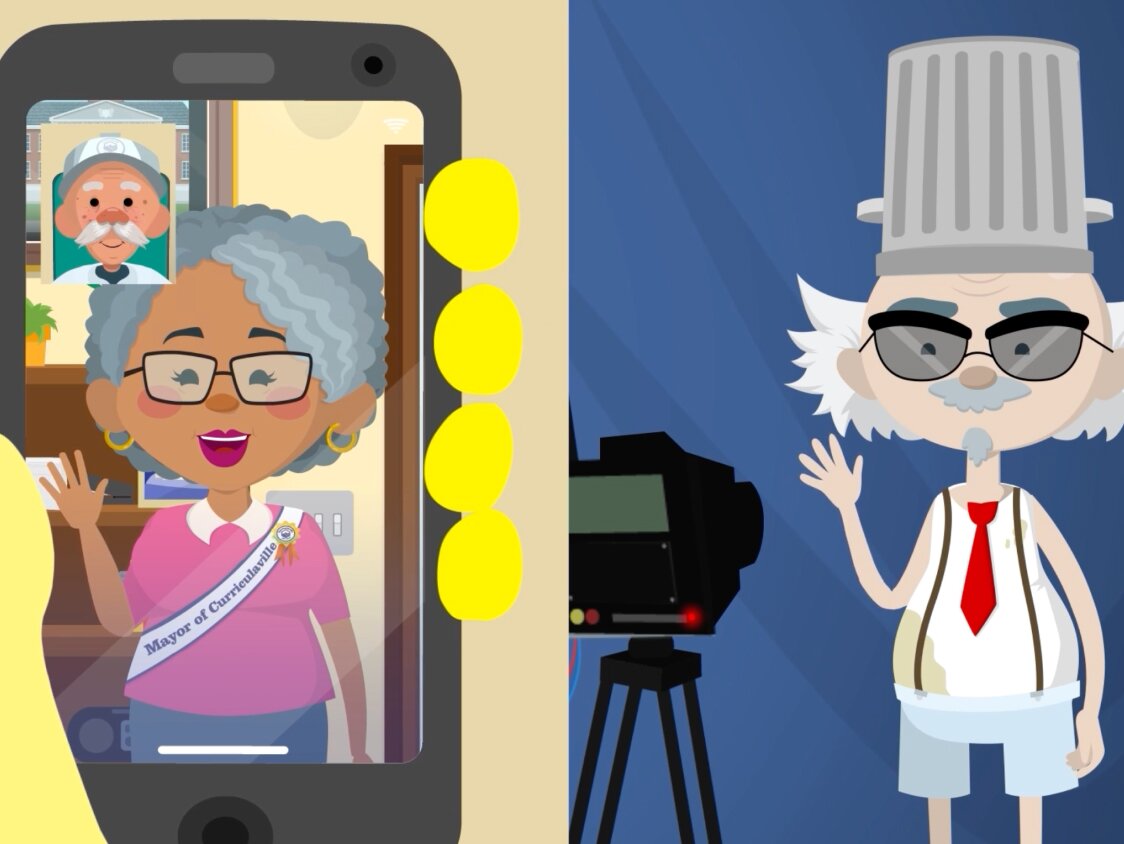
In this episode, the mayor of Sludge Springs, cooks up a deepfake to trick Curriculaville’s sanitation worker, Jacob, in hopes of sabotaging their clean town record.

This episode dives into how deepfakes are created, the risks they pose in daily life, and steps you can take to spot and protect against them. Will Jacob see through the scheme, or will AI win the day?

Huntress Managed SAT

Spear Phishing Simulation

Knowing what spear phishing is and actually spotting it in the moment are two different things. See how Huntress SAT closes that gap with a free simulation preview.

Watch the spear phishing simulationright arrow

FAQs about deepfakes

Deepfakes are AI-generated videos or audio clips that mimic a person’s likeness or voice to create fake yet convincing content. They’re a concern because they can be used for fraud, misinformation, and privacy violations, among other cybersecurity threats.

Cybercriminals use deepfakes for a variety of attacks, such as impersonating executives (CEO fraud) to approve fake wire transfers, spreading false information during critical events, or creating fake content for blackmail.

Look for signs like unnatural facial expressions or movements, audio and visual inconsistencies, mismatched lighting, or syncing issues between lip movement and sound. When content seems questionable, cross-check its credibility with reliable sources.

Yes, emerging AI detection tools analyze video and audio metadata to identify manipulation. Staying updated with these technologies can help you spot deepfake content more reliably.

Organizations should train employees on deepfake awareness, verify unusual requests through secondary channels, use authentication measures like MFA, and adopt endpoint protection tools to defend against threats associated with deepfakes.

Yes, deepfakes can enhance entertainment, provide cultural preservation, and streamline artistic or educational projects. The key is to use this technology ethically and responsibly to avoid harm.

High-value targets like corporations, political figures, and individuals with significant public profiles are at greater risk. However, deepfake scams can target anyone, so staying vigilant is critical for everyone.


Glitch effectBlurry glitch effect
Glitch effect

Additional Resources

  • Read more about What Is a Romance Scam? | Cybersecurity 101
    What Is a Romance Scam? | Cybersecurity 101
    What Is a Romance Scam? | Cybersecurity 101
    Learn what romance scams are, how they work, warning signs to watch for, and how cybersecurity professionals can help protect organizations and individuals.
  • Read more about What Is a Clickfake Interview? Definition, Tactics & Cybersecurity Risks
    What Is a Clickfake Interview? Definition, Tactics & Cybersecurity Risks
    What Is a Clickfake Interview? Definition, Tactics & Cybersecurity Risks
    Learn what a clickfake interview is, how cybercriminals use it for social engineering, and how to detect and defend against this emerging threat in cybersecurity.
  • Read more about What Is WormGPT?
    What Is WormGPT?
    What Is WormGPT?
    WormGPT is a malicious AI chatbot built for cybercrime. Learn what it is, how attackers use it, and how cybersecurity professionals can defend against it.
  • Read more about Initial Access in Cybersecurity: The Attack Stage Most Businesses Miss
    Initial Access in Cybersecurity: The Attack Stage Most Businesses Miss
    Initial Access in Cybersecurity: The Attack Stage Most Businesses Miss
    Every cyberattack starts somewhere. Learn how threat actors gain initial access to your systems, the techniques they use, and what your team can do to detect and block them early.
  • Read more about What is a negative digital footprint?
    What is a negative digital footprint?
    What is a negative digital footprint?
    A negative digital footprint can harm your online reputation and security. Learn what it is, why it matters, and how to protect yourself against its risks.
  • Read more about What is Brandjacking?
    What is Brandjacking?
    What is Brandjacking?
    Learn how brandjacking bypasses traditional security controls to exploit your brand identity. Discover detection strategies, real-world examples, and defense tactics.
  • Read more about Google Cloud: Definition, Uses, and Benefits of GCP
    Google Cloud: Definition, Uses, and Benefits of GCP
    Google Cloud: Definition, Uses, and Benefits of GCP
    What is Google Cloud Platform, and what can it do for you? Explore the core services, use cases, and advantages of GCP for cloud computing solutions.
  • Read more about What Is Pass the Hash (PtH) and How Does It Work?
    What Is Pass the Hash (PtH) and How Does It Work?
    What Is Pass the Hash (PtH) and How Does It Work?
    Learn what a Pass the Hash (PtH) attack is, how threat actors use it to move laterally across networks, and how you can defend against this common technique.
  • Read more about AI Security Specialists: Safeguarding Artificial Intelligence
    AI Security Specialists: Safeguarding Artificial Intelligence
    AI Security Specialists: Safeguarding Artificial Intelligence
    Learn what AI security specialists do, the skills they need, and how they protect AI systems from cyber threats.
Glitch effectGlitch effect

Provide an Impactful SAT Experience

Don’t just check a compliance box. Elevate your workplace’s security culture while giving your employees an enjoyable experience.

Try Huntress for Free
Huntress Managed Security PlatformManaged EDRManaged EDR for macOSManaged EDR for LinuxManaged ITDRManaged SIEMManaged Security Awareness TrainingManaged ISPMManaged ESPMBook a Demo
PhishingComplianceBusiness Email CompromiseEducationFinanceHealthcareManufacturingState & Local Government
Managed Service ProvidersResellersIT & Security Teams24/7 SOCCase Studies
BlogResource CenterCybersecurity 101Upcoming EventsSupport Documentation
Our CompanyLeadershipNews & PressCareersContact Us
Huntress white logo

Protecting 250k+ customers like you with enterprise-grade protection.

Privacy PolicyCookie PolicyTerms of UseCookie Consent
Linkedin iconTwitter X iconYouTube iconInstagram icon
© 2025 Huntress All Rights Reserved.

Join the Hunt

Get insider access to Huntress tradecraft, killer events, and the freshest blog updates.

By submitting this form, you accept our Terms of Service & Privacy Policy